
Wooden furniture never really goes out of style, but the way we use it keeps shifting. Some years it’s all sharp lines and dark stains; lately it’s softer, warmer, and a little more handmade. If you’ve been scrolling design feeds and saving more wood than you can keep track of, you’re not alone.
This is a roundup of ten wooden pieces having a genuine moment right now, the kind that show up again and again in well-styled rooms. For each one I’ve added a quick note on why it works and how to make it land in your own space. Whether you’re furnishing from scratch or just hunting for one piece to lift a room, there’s something here worth a closer look.
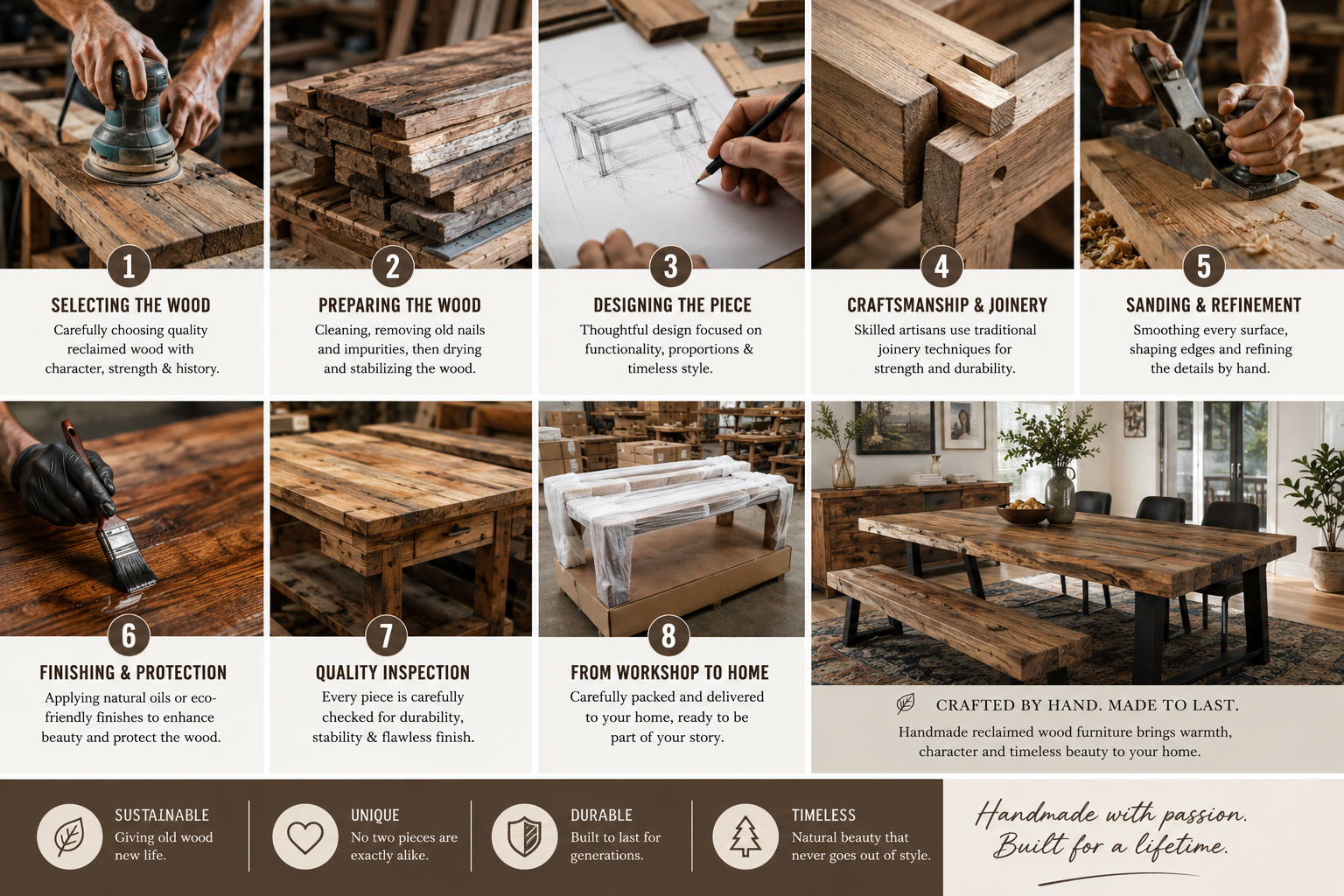
Table of Contents
- What Makes Furniture Truly Handmade?
- Selecting the Right Wood
- Preparing and Restoring Reclaimed Wood
- Designing the Furniture Piece
- Traditional Craftsmanship and Joinery
- Sanding, Shaping, and Refinement
- Finishing and Protection
- Quality Inspection
- From the Workshop to Your Home
- Why Handmade Reclaimed Wood Furniture Stands Out
- Tips for Choosing Handmade Furniture
- Frequently Asked Questions
- Conclusion
What Makes Furniture Truly Handmade?
Handmade furniture is created primarily through skilled craftsmanship rather than automated production lines. While artisans may use modern tools to improve precision, the majority of the work depends on human expertise.
Unlike mass-produced furniture, handmade pieces are individually crafted. This means each item has subtle variations in grain patterns, textures, and details that make it unique.
The process often involves:
- Individual wood selection
- Custom measurements
- Hand assembly
- Detailed finishing work
- Quality inspections by craftsmen
These elements contribute to furniture that feels personal and distinctive.
Selecting the Right Wood
Every great piece of furniture starts with quality wood.
For handmade solid wood furniture, the selection process is critical because the wood determines durability, appearance, and longevity. Craftsmen carefully evaluate each board for grain patterns, density, texture, and structural stability.
Popular hardwoods include:
Teak Wood
Known for its strength, natural oils, and resistance to moisture.
Oak
Valued for its durability and prominent grain patterns.
Walnut
Appreciated for its rich color and elegant appearance.
Reclaimed Wood
Recovered from old buildings, structures, and architectural elements, reclaimed wood offers both sustainability and character.
Each piece of reclaimed wood carries unique markings, textures, and imperfections that cannot be replicated by newly harvested timber.
Preparing and Restoring Reclaimed Wood
One of the most fascinating aspects of handmade furniture production is the preparation of reclaimed wood.
Before the wood can be transformed into furniture, it must undergo careful restoration.
Cleaning and Inspection
Old nails, screws, and debris are removed to ensure safety and structural integrity.
Drying and Stabilization
Wood moisture levels are checked to prevent future warping or cracking.
Surface Restoration
Craftsmen clean, plane, and prepare the wood while preserving its natural character.
The goal is not to erase the history of the wood but to enhance its beauty while ensuring it performs like premium furniture-grade material.
Designing the Furniture Piece
Every handcrafted piece begins with a design concept.
Designers and artisans work together to determine:
- Dimensions
- Functionality
- Proportions
- Style
- Structural requirements
Whether creating a dining table, console table, bookshelf, coffee table, or bench, thoughtful design ensures the furniture is both beautiful and practical.
Many handmade furniture workshops create prototypes or detailed sketches before production begins, helping craftsmen visualize every component.
Traditional Craftsmanship and Joinery
Once the wood is prepared and the design finalized, construction begins.
This stage showcases the skills that define true craftsmanship.
Precision Cutting
Each component is measured and cut individually.
Joinery Techniques
Strong joinery methods help create furniture that can last for decades.
Common techniques include:
- Mortise and tenon joints
- Dovetail joints
- Tongue and groove construction
- Wooden dowel joinery
These methods often provide greater strength than simple mechanical fasteners alone.
Hand Assembly
Each piece is carefully assembled, aligned, and checked before moving to the next stage.
The process takes time, but it results in superior durability and craftsmanship.
Sanding, Shaping, and Refinement
After assembly, the furniture enters the refinement phase.
This is where rough components transform into elegant finished pieces.
Sanding
Multiple rounds of sanding smooth the surface while preserving natural grain details.
Edge Detailing
Corners and edges are softened for comfort and visual appeal.
Final Adjustments
Artisans inspect every surface and connection point to ensure consistency.
This stage requires patience and a trained eye, as even minor imperfections become visible in the final product.
Finishing and Protection
The finishing process enhances the wood’s natural beauty while protecting it from daily use.
Depending on the desired look, craftsmen may apply:
- Natural oils
- Hard wax finishes
- Protective sealers
- Eco-friendly wood finishes
A high-quality finish highlights the grain patterns, texture, and color variations that make solid wood furniture unique.
Unlike heavy coatings that hide the wood, many handmade furniture makers prefer finishes that allow the natural character of the material to remain visible.
Quality Inspection
Before leaving the workshop, every piece undergoes detailed quality checks.
Artisans inspect:
- Structural stability
- Surface smoothness
- Finish consistency
- Joinery strength
- Dimensional accuracy
This final review helps ensure the furniture meets both functional and aesthetic standards.
Unlike mass production, where quality control may occur in large batches, handmade furniture is often inspected individually.
From the Workshop to Your Home
The journey doesn’t end when the furniture is completed.
Careful packaging and transportation play a major role in protecting handcrafted furniture.
Each piece is typically:
- Cleaned and inspected again
- Wrapped with protective materials
- Packed securely for shipping
- Prepared for safe delivery
When the furniture arrives in your home, it carries with it weeks of craftsmanship, attention to detail, and the story of its creation.
For many homeowners, this connection to the maker adds emotional value that extends beyond functionality.
Why Handmade Reclaimed Wood Furniture Stands Out
Handmade reclaimed wood furniture combines craftsmanship with sustainability.
Because reclaimed timber has already lived one life, it often displays distinctive grain patterns, weathered textures, and natural markings that cannot be manufactured.
Benefits include:
Unique Character
No two pieces are exactly alike.
Sustainability
Reusing existing wood helps reduce demand for newly harvested timber.
Durability
Older-growth wood is often denser and more stable.
Timeless Appeal
Natural materials and handcrafted construction rarely go out of style.
These qualities make reclaimed wood furniture a popular choice among homeowners and interior designers seeking authentic spaces.
Tips for Choosing Handmade Furniture
When shopping for handmade furniture, consider the following:
Examine Construction Quality
Look for strong joinery and solid wood construction.
Ask About Materials
Understand where the wood comes from and how it is sourced.
Consider Long-Term Value
Quality handmade furniture is often an investment designed to last for decades.
Appreciate Natural Variations
Small imperfections and grain differences are signs of authenticity.
Match Function with Design
Choose pieces that suit both your lifestyle and interior style.
Frequently Asked Questions
Is handmade furniture better than mass-produced furniture?
Handmade furniture typically offers superior craftsmanship, stronger construction, and greater uniqueness compared to mass-produced alternatives.
Why is reclaimed wood furniture popular?
Reclaimed wood furniture combines sustainability, durability, and distinctive character that cannot be replicated with new materials.
How long does handmade furniture take to make?
Production time varies depending on complexity, customization, and materials, but handcrafted furniture generally requires significantly more time than factory-made pieces.
Does reclaimed wood need special maintenance?
Most reclaimed wood furniture only requires regular dusting and occasional conditioning with recommended wood-care products.
Is handmade solid wood furniture worth the investment?
Many buyers consider it worthwhile because of its durability, longevity, craftsmanship, and timeless design.
Conclusion
Handmade furniture represents far more than wood and craftsmanship—it reflects patience, skill, and a commitment to creating pieces that can be enjoyed for generations. From carefully restoring reclaimed wood to applying the final finish, every stage contributes to a product with genuine character and lasting value.
Whether you’re furnishing a new home, designing an interior project, or searching for a statement piece, understanding how handmade furniture is made helps you appreciate the artistry behind every handcrafted creation. The next time you see a beautifully crafted wooden table, bench, or bookshelf, you’ll know the remarkable journey it took from the workshop to your home.