
Table of Contents
- Why Wood and Weather Are Always in Conversation
- Humidity: The Biggest Threat You’re Probably Ignoring
- Heat, Sunlight, and What They Do Over Time
- Seasonal Changes and Wood Movement
- From the Workshop to Your Home
- Why Reclaimed Wood Handles Climate Differently
- Ways to Protect Solid Wood Furniture in Every Climate
- FAQ
- Final Thoughts
Why Wood and Weather Are Always in Conversation
Wood is a living material—or rather, it was. Even after it’s been cut, shaped, and finished into a beautiful piece of furniture, it keeps responding to its environment. It breathes. It expands and contracts. It absorbs and releases moisture based on what’s happening around it.
That’s not a flaw. That’s what makes solid wood furniture so different from particle board or MDF. But it does mean that the climate inside your home—and the climate where you live—plays a much bigger role in how your furniture ages than most people realize.
Move a solid wood dining table from a dry climate to a coastal one, and you’ll see it respond. Leave a teak sideboard next to a radiator through winter, and it’ll tell you about it. This does not mean wood is delicate; it simply requires understanding.
Humidity: The Biggest Threat You’re Probably Ignoring
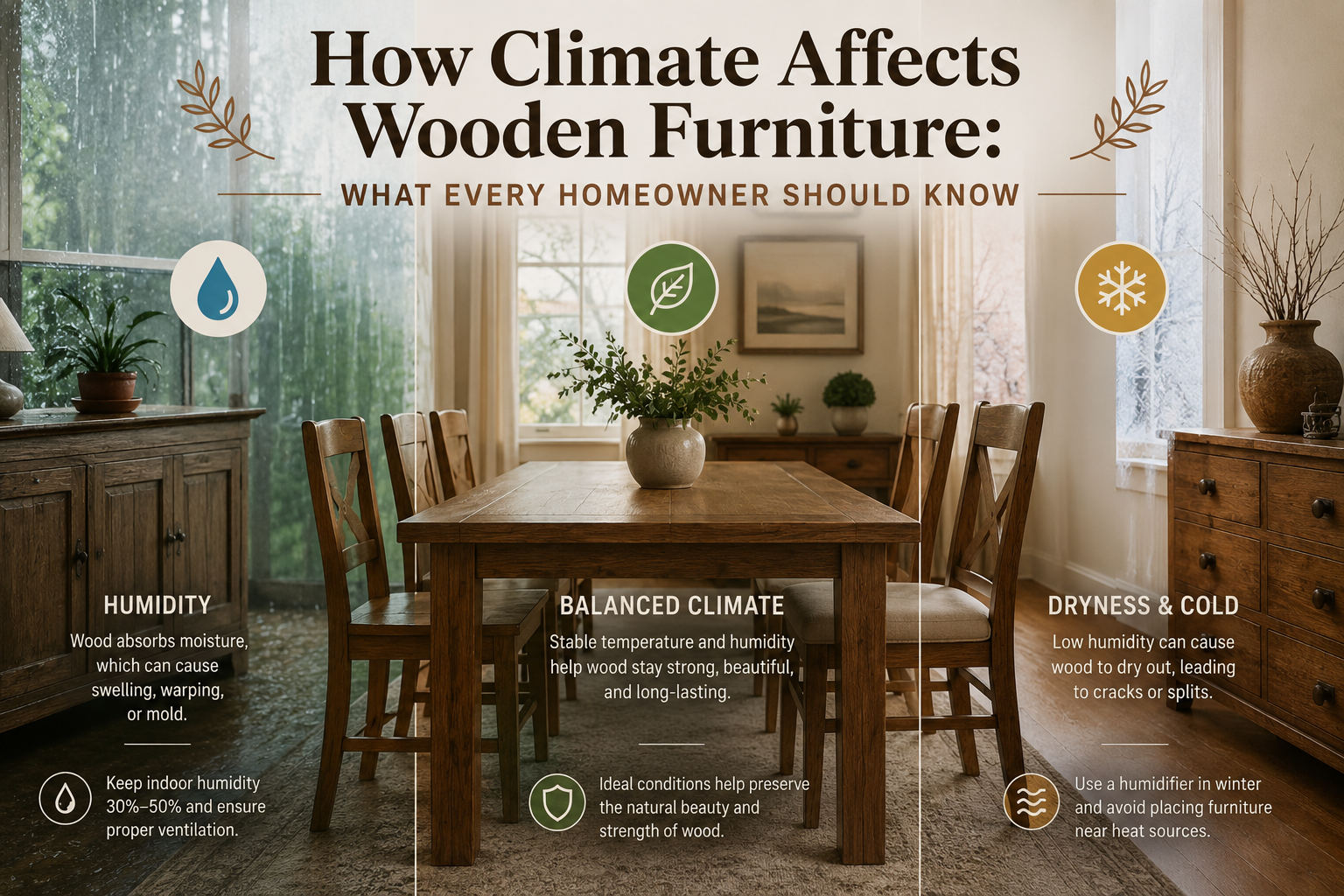
If there’s one thing that affects wood furniture more than anything else, it’s moisture in the air—what we call “relative humidity.” Wood fibers absorb moisture when humidity rises and release it when the air gets dry. This constant cycle causes the wood to swell and shrink.
In a well-made piece of solid wood furniture, this movement is accounted for. Good craftsmanship includes joinery and finishing techniques that give the wood room to breathe. But push humidity too far in either direction — above 70% or below 25% — and even the best-built furniture will show stress.
What High Humidity Does
When the air is heavily moisture-laden, wood absorbs it and expands. Drawers start sticking. Tabletops can develop small cracks along the grain as different parts expand at different rates. In extreme cases, especially with veneer or thinner pieces, you’ll see warping.
Coastal homes, basement rooms, and poorly ventilated spaces are the usual culprits. If you live somewhere like Mumbai, Chennai, or anywhere near the sea, your solid wood pieces are constantly working against warm, humid air.
What Low Humidity Does
Dry conditions pull moisture out of wood faster than it can naturally adjust. The result is shrinkage—and shrinkage means gaps, cracking, and, in severe cases, splitting along the grain.
Central heating is a major cause of this. It makes rooms incredibly dry through winter, often dropping indoor humidity below 30%. If you have solid wood floors or furniture and run your heating hard, you’ve probably noticed some of this happening already—that light crackling sound, small hairline gaps appearing.
Ideal indoor humidity for solid wood furniture sits between 40–60%. A basic hygrometer (a small device that measures humidity) costs almost nothing and tells you everything you need to know about your home’s air.
Heat, Sunlight, and What They Do Over Time
Heat and sunlight work more slowly than humidity, but they’re just as damaging when underestimated.
Direct Sunlight
UV rays bleach and dry out wood surfaces over time. Teak and sheesham both have natural oils that offer some protection, but prolonged direct sun will still fade the finish and dry out the surface. What you’re seeing when wood “lightens” unevenly near a window isn’t just discoloration—the wood itself is losing moisture and surface oils faster in those exposed spots.
The fix is simple: position furniture away from direct sunlight, use UV-filtering window film, or rotate pieces periodically if they’re near windows.
Radiators and Heat Sources
Placing a solid wood piece directly beside a radiator is one of the faster ways to stress it. The side closest to the heat source dries out much more quickly than the other side. This uneven moisture loss is what causes warping and surface cracking — the wood is literally pulling itself apart trying to adjust.
Keep solid wood furniture at least 60 cm away from any direct heat source. If that’s not possible, a bowl of water near the radiator or a small humidifier in the room makes a meaningful difference.
Seasonal Changes and Wood Movement
In regions with clearly defined seasons — including most of India’s interior and any home warmed during a European or North American winter — furniture experiences a regular yearly cycle.
Summer brings humidity. Wood swells slightly. Drawers get tighter, and joints snug up. Winter brings dry air, especially with heating on. Wood contracts. Gaps appear in joinery; surfaces feel slightly rough.
This isn’t a defect. It’s wood acting exactly as expected. The problem comes when owners panic and try to “fix” normal seasonal movement with fillers, excessive waxing, or heavy finishes that seal the wood completely and prevent it from breathing.
Wood that has been crafted, finished, and kept in a workshop retains the humidity of that environment. Once it enters your home, it begins to acclimatize to your conditions. Depending on how different your home’s humidity and temperature are from the workshop’s, this settling period can last anywhere from a few weeks to a couple of months.
During this time, don’t be alarmed by small creaks, subtle shifts, or very minor changes in how drawers sit. The piece is finding its equilibrium. After settling in, a solid wood piece built with care should retain its form dependably for many years, assuming stable conditions in your home.
To assist, ensure your home’s humidity levels stay steady; refrain from putting new furniture next to heat sources during the early months; and treat the surface with a light conditioning oil after one month if it feels dry.
Why Reclaimed Wood Handles Climate Differently
Reclaimed wood — old teak, sheesham, and similar hardwoods salvaged from demolished structures, old railway sleepers, or aged timber yards — has a distinct advantage when it comes to climate resilience.
Old-growth timber, which most reclaimed wood comes from, was cut from trees that grew slowly over decades. The grain is tighter, the natural oils are more concentrated, and the wood is generally denser than fast-grown modern timber. But more importantly, reclaimed wood has already gone through decades of climate cycles. It has already expanded, contracted, swelled, and dried countless times.
This means it’s significantly more dimensionally stable than freshly milled wood. It’s less prone to dramatic movement, more resistant to humidity swings, and better at maintaining its form across seasonal changes.
This is one of the reasons handmade furniture built from reclaimed teak and sheesham has such longevity—the material itself has already done its most dramatic adjusting long before it ever entered your home. When craftspeople work with reclaimed timber, they’re working with wood that’s already earned its stability.
Ways to Protect Solid Wood Furniture in Every Climate
You don’t need a complicated routine. A few consistent habits protect solid wood furniture far better than any single treatment.
Keep Humidity Stable
Use a humidifier in dry months, especially if you run central heating hard. Aim for 40–60% relative humidity. A hygrometer tells you where you stand.
Avoid Extreme Temperature Swings
Rooms that go from very hot to very cold frequently stress wood more than consistent warmth or consistent cool. Basements and rooms with poor insulation are harder on furniture.
Use the Right Finish
Oil-based finishes like teak or Danish oil feed the wood and maintain some breathability. Thick lacquer or polyurethane coatings seal the surface completely—fine for protection but less ideal for wood that needs to breathe. Ask what finish was used on your piece and use compatible products for maintenance.
Clean Gently
Wipe with a slightly damp cloth, never soaking wet. Avoid all-purpose cleaners, bleach, or anything silicone-based. Silicone in particular builds up over time and makes refinishing almost impossible.
Re-oil Annually
Once a year—more in dry climates—apply a thin coat of appropriate oil and wipe off the excess. It keeps natural wood surfaces from becoming dry and cracked.
FAQ
Does humidity really damage wood furniture that much?
Indeed, consistently high or low humidity is the leading cause of cracking, warping, and joint stress in solid wood furniture. Keeping indoor humidity between 40–60% prevents most climate-related damage.
Is teak or sheesham better for humid climates?
Both handle humidity well because of their natural oil content. Teak is especially renowned for its resistance to weather. Sheesham is harder and handles temperature swings well. For coastal or high-humidity homes, either species with an appropriate oil finish is a solid choice.
Why does my wooden drawer stick in summer?
Wood swells in humidity, so drawers become tighter in summer and looser in winter. This is normal seasonal movement. Lightly sanding the drawer sides (not the front face) solves persistent sticking without damaging the piece.
Is it okay to put solid wood furniture in a room that has air conditioning?
Air conditioning lowers humidity, which generally benefits wood. Just make sure the furniture isn’t sitting directly in the cold airflow from the unit—rapid localized drying causes uneven movement.
How frequently should I oil solid wood furniture?
Once a year is the baseline for most climates. In very dry climates or homes with heavy heating use, twice a year keeps the wood from drying out noticeably. Use a product matched to your wood species and existing finish.
Does reclaimed wood require different care?
Not dramatically different care—but reclaimed wood is typically more stable and forgiving than new timber. It still benefits from oiling and humidity control but tends to react less dramatically to environmental changes.
Final Thoughts
Wood furniture that’s built well and cared for correctly outlasts almost everything else you’ll put in a home. The people who end up frustrated with cracking, warping, or fading are almost always dealing with the same set of fixable problems: too dry in winter, too humid in summer, placed too close to a heat source, or finished with the wrong product.
None of this is difficult once you understand what to watch for. A hygrometer, proper wood oil, and attention to the positioning of your pieces—that’s essentially all it requires.
Solid wood furniture isn’t demanding. It just rewards being understood.
If you’re looking for pieces built with longevity in mind—furniture made from reclaimed teak and sheesham that’s already weathered decades before it reaches your home—take a look at what we make at Modern Karigar.
Check out our Etsy shop for more – Modern Karigar