
A dining table is more than just a place to enjoy meals; it’s where birthdays are celebrated, conversations unfold, homework gets done, and memories are made. Because it’s one of the most frequently used pieces of furniture in a home, it’s also exposed to daily wear, spills, scratches, heat, and sunlight.
Fortunately, keeping a dining table looking beautiful doesn’t require complicated maintenance. A few simple habits can preserve its finish, protect the wood, and extend its lifespan for decades.
Whether you own a modern dining table or a handcrafted reclaimed teak table, this guide covers practical tips that homeowners, interior designers, and furniture buyers can use to keep solid wood furniture looking its best.
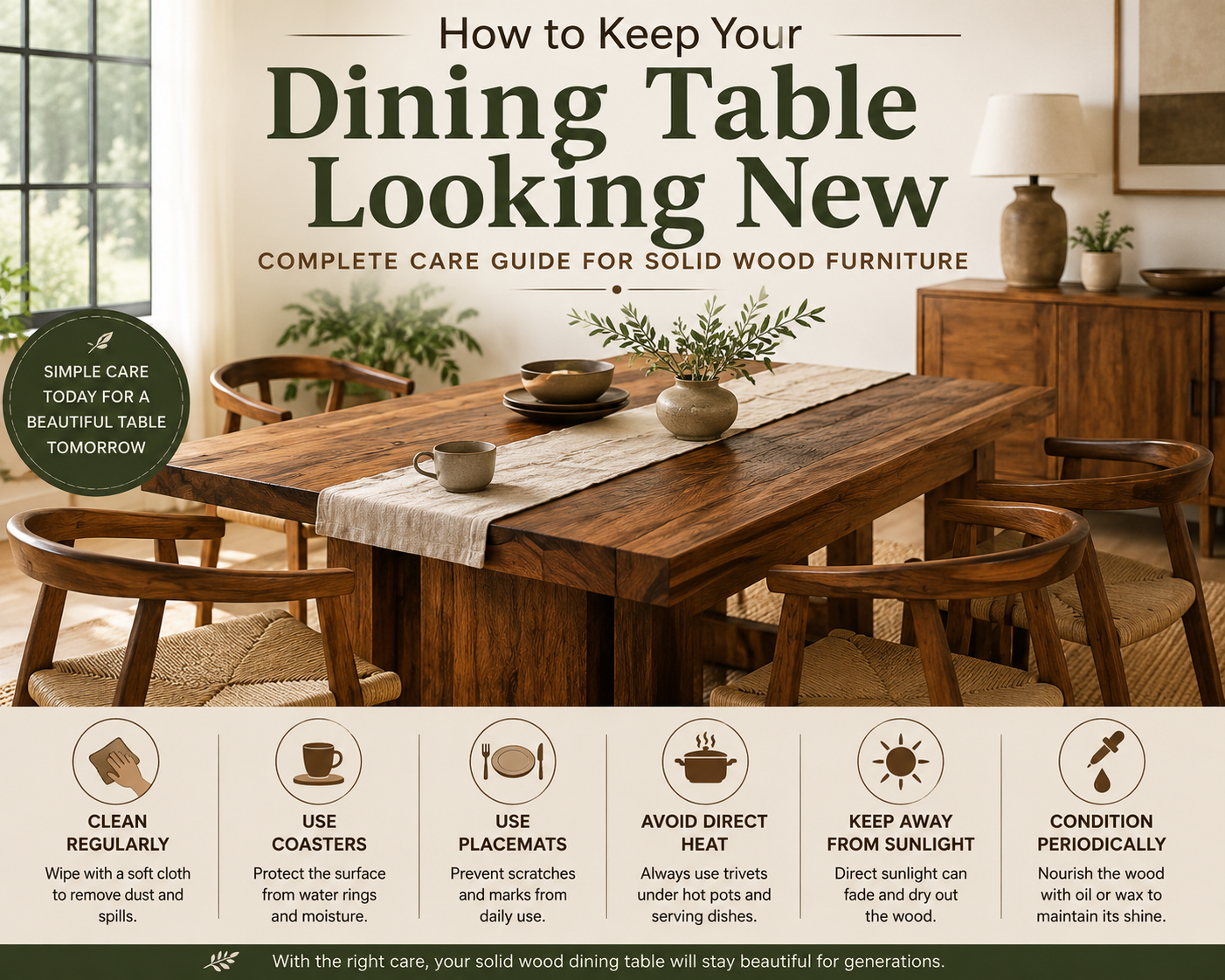
Table of Contents
- Why Dining Table Maintenance Matters
- Daily Cleaning Tips
- Protecting the Surface from Damage
- Managing Moisture and Humidity
- Preventing Sunlight Damage
- Caring for Different Wood Finishes
- Why Handmade Reclaimed Wood Ages Beautifully
- From the Workshop to Your Home
- Common Mistakes to Avoid
- FAQ
- Conclusion
Why Dining Table Maintenance Matters
Solid wood furniture is designed to last for generations, but even the highest-quality wood benefits from regular care.
Routine maintenance helps:
- Preserve the natural finish
- Prevent scratches and stains
- Reduce moisture damage
- Maintain structural stability
- Keep the wood looking rich and vibrant
- Protect your long-term investment
Instead of waiting until visible damage appears, small preventative steps make the biggest difference.
Daily Cleaning Tips That Truly Matter
Daily cleaning is the easiest way to keep your dining table looking fresh.
Use a Soft Cloth
Dust particles may seem harmless, but they can act like tiny abrasives over time. Wipe the surface regularly using a soft microfiber or cotton cloth.
Clean Spills Immediately
Water, coffee, wine, sauces, and acidic foods should never sit on wood for long periods. Promptly wipe spills with a damp cloth, then dry the surface completely.
Avoid Harsh Chemicals
Strong cleaners containing ammonia, bleach, or alcohol can gradually damage wood finishes.
Instead, use:
- Mild soap mixed with warm water
- Wood-safe furniture cleaners
- A lightly moistened cloth, then a dry cloth
Simple cleaning products are often the safest choice.
Protect Your Table from Everyday Damage
Most dining table damage occurs during everyday use, not accidents.
Always Use Placemats
Placemats help prevent scratches from dishes while reducing direct contact with hot or cold items.
Add coasters.
Cold drinks create condensation that may leave water rings on wooden surfaces.
Coasters are one of the simplest ways to prevent moisture damage.
Use Trivets for Hot Cookware
Never place hot pans, baking trays, or serving dishes directly on a wooden tabletop.
Excessive heat can affect the finish and sometimes cause discoloration.
Manage Moisture and Humidity
Wood responds to humidity by expanding and contracting naturally.
To minimize movement:
- Keep indoor humidity relatively consistent.
- Avoid placing the table near heating vents.
- Keep it away from fireplaces when possible.
- Use a humidifier during very dry seasons if needed.
Stable indoor conditions help solid wood maintain its shape and integrity.
Protect Against Sunlight
Natural light enhances a room, but prolonged direct sunlight can gradually fade wood finishes.
If your dining table sits near large windows:
- Rotate decorative items occasionally.
- Use sheer curtains during peak sunlight hours.
- Rearrange furniture every few months if possible.
These small adjustments help maintain even coloring across the tabletop.
Refresh the Finish When Needed
Even well-maintained furniture benefits from occasional care.
Depending on the finish, consider:
Wax Finishes
Apply a quality furniture wax occasionally to enhance the wood’s natural sheen.
Oil Finishes
Some solid wood tables benefit from periodic re-oiling to nourish the wood and maintain its appearance.
Matte Protective Finishes
Clean gently without abrasive pads or harsh polishing compounds.
Always follow the care recommendations provided for your specific finish.
Why Handmade Reclaimed Wood Furniture Ages Beautifully
One of the most rewarding qualities of handmade reclaimed wood furniture is the way it develops character over time.
Unlike mass-produced furniture made from engineered materials, reclaimed solid wood carries decades of natural history. Each grain pattern, subtle color variation, and texture tells a story that cannot be replicated.
When crafted by skilled artisans, reclaimed teak becomes exceptionally durable while retaining its unique personality. Minor aging effects usually improve its beauty rather than reduce it.
With thoughtful care, handmade reclaimed wood furniture can remain a cherished part of a home for generations, developing a rich patina that reflects years of everyday living.
From the Workshop to Your Home
Every handcrafted dining table begins long before it reaches your dining room.
The journey starts with carefully sourced reclaimed wood, selected for its strength, stability, and character. Craftsmen inspect each timber, prepare it by removing imperfections while preserving its natural beauty, and shape it using traditional woodworking techniques.
After assembly, the table is meticulously sanded and finished to highlight the wood’s grain while protecting the surface for everyday use. Finally, it is securely packaged for transport so it arrives safely at its new home.
Once placed in your dining space, regular maintenance ensures the craftsmanship invested during its creation continues to shine for years to come.
Common Dining Table Care Mistakes
Avoid these common habits that can shorten the life of solid wood furniture.
- Leaving spills unattended
- Sliding heavy objects across the surface
- Using abrasive scrubbers
- Placing hot cookware directly on the table
- Using harsh household chemicals
- Ignoring excessive sunlight exposure
- Allowing standing water to remain on the surface
Replacing these habits with simple protective measures keeps your table looking newer for much longer.
FAQ
How often is it necessary to clean the dining table?
Regular dusting and wiping after meals keep the table clean. A weekly thorough cleaning is generally enough for everyday maintenance.
Can I use disinfectant wipes on a wooden dining table?
Many disinfectant wipes contain chemicals that may affect wood finishes. It’s safer to use products specifically designed for wood furniture.
How do I remove water rings from a dining table?
Light water marks can sometimes fade naturally. Persistent marks may require furniture polish or professional refinishing, depending on the finish.
Is reclaimed teak wood durable enough for everyday use?
Yes. Reclaimed teak is naturally strong, stable, and well-suited for dining tables used daily.
How long can a solid wood dining table last?
With proper care, a well-crafted solid wood dining table can last for several decades and often becomes a family heirloom.
Conclusion
A beautiful dining table doesn’t stay beautiful by chance; it stays that way through consistent, simple care. Cleaning spills promptly, protecting the surface from heat and moisture, maintaining stable indoor conditions, and using gentle cleaning products all contribute to preserving its appearance.
Handmade solid wood furniture, especially pieces crafted from reclaimed teak, is designed to serve homes for generations. With thoughtful maintenance, your dining table won’t simply withstand everyday life; it will become even more meaningful as it gathers memories over the years.
If you’re considering adding a handcrafted reclaimed wood dining table to your home, explore our collection on the Modern Karigar Etsy store to discover timeless designs created for everyday living and lasting beauty.