
In a world dominated by automated production lines and machine-made furniture, traditional woodworking remains a testament to craftsmanship, patience, and timeless design. While modern tools have made certain processes more efficient, many experienced woodworkers continue to rely on centuries-old techniques that produce furniture with exceptional strength, character, and longevity.
These methods aren’t simply preserved for tradition’s sake; they continue to be used because they work. From carefully selecting reclaimed timber to shaping intricate joinery by hand, traditional woodworking creates furniture that tells a story while standing the test of time.
Whether you’re furnishing a new home, designing a cozy interior, or searching for furniture built to last for decades, understanding these techniques helps you appreciate the value behind every handcrafted piece.
Browse handcrafted reclaimed wood furniture in our Etsy shop at Modern Karigar.
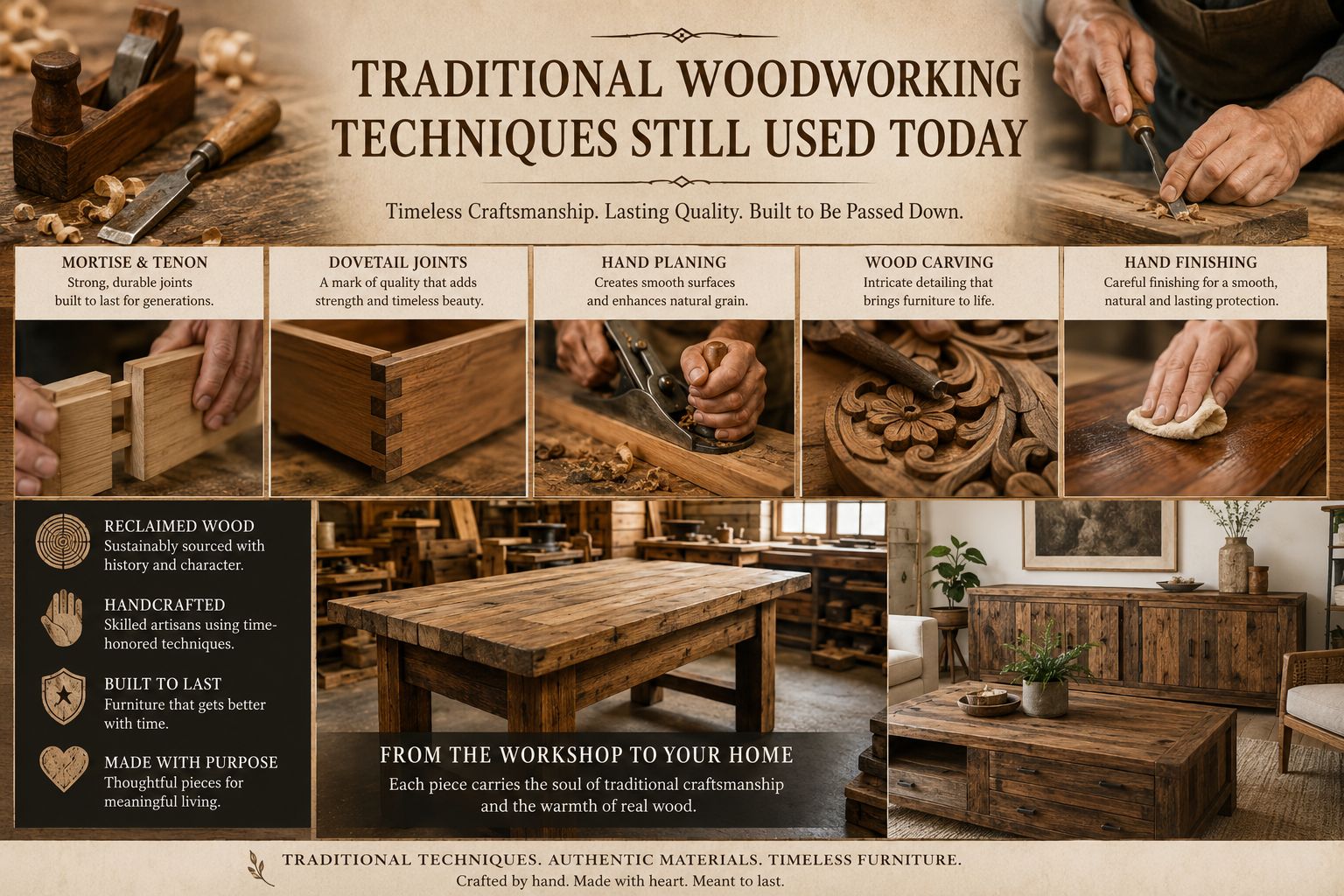
Table of Contents
- Why Traditional Woodworking Still Matters
- The History Behind Traditional Woodworking
- Classic Woodworking Techniques Still Used Today
- Mortise and Tenon Joinery
- Dovetail Joints
- Hand Planing
- Wood Carving
- Hand Sanding and Finishing
- Why Reclaimed Wood Works Perfectly with Traditional Craftsmanship
- The Journey from the Workshop to Your Home
- How to Identify Genuine Handmade Furniture
- Design Ideas for Modern Homes
- FAQ
- Conclusion
Why Traditional Woodworking Still Matters
Furniture trends may come and go, but quality craftsmanship never loses its appeal.
Traditional woodworking focuses on building furniture that becomes part of a home’s story rather than something that needs replacing after a few years. Skilled artisans prioritize structural integrity, carefully selected wood, and attention to detail over speed and mass production.
For homeowners and interior designers alike, handcrafted furniture offers something difficult to replicate with factory production individual character. Small variations in grain, texture, and hand-finished details make every piece unique.
These techniques also contribute to sustainability by encouraging repair, restoration, and long-term ownership instead of disposable furniture culture.
The History Behind Traditional Woodworking
Woodworking dates back thousands of years, with early craftsmen developing techniques that required precision rather than modern machinery. Many of these methods originated in Europe, Asia, and the Middle East before spreading worldwide through generations of skilled artisans.
Remarkably, the same joints and construction methods used centuries ago continue to be trusted today because they create incredibly durable furniture.
Even with advanced technology available, professional furniture makers often combine modern accuracy with traditional craftsmanship to achieve superior results.
Classic Woodworking Techniques Still Used Today
Mortise and Tenon Joinery
Perhaps the most respected woodworking joint, the mortise and tenon connection has been used for centuries in tables, chairs, cabinets, and doors.
A precisely cut tenon fits tightly into a matching mortise, creating exceptional strength without relying solely on screws or metal brackets.
This method allows furniture to withstand years of everyday use while maintaining structural stability.
Common Uses
- Dining tables
- Dining chairs
- Benches
- Console tables
- Bed frames
Dovetail Joints
Dovetail joints are instantly recognizable by their interlocking shape.
Often found in drawers and cabinets, they provide outstanding resistance against pulling forces while adding beautiful visual detail.
High-quality dovetail joinery is often considered a hallmark of premium handcrafted furniture.
Hand Planing
Before sanders became common, craftsmen used hand planes to flatten and smooth wood surfaces.
Many artisans still use this technique because it preserves the wood’s natural texture while revealing beautiful grain patterns that machines often leave hidden.
Hand planing also allows subtle adjustments that improve the overall fit of furniture components.
Wood Carving
Decorative carving transforms ordinary furniture into functional artwork.
Whether it’s elegant table legs, carved drawer fronts, or subtle edge profiles, handcrafted carving adds personality that cannot be perfectly duplicated by automated equipment.
Every carved detail reflects the maker’s skill and experience.
Hand Sanding and Finishing
Although machines handle initial sanding, final hand sanding remains essential for premium furniture.
Careful hand finishing ensures smooth surfaces while enhancing the natural beauty of solid wood.
Traditional oil finishes, waxes, and natural protective coatings allow the wood grain to remain visible while developing a rich patina over time.
Why Reclaimed Wood Works Perfectly with Traditional Craftsmanship
Reclaimed wood has become increasingly popular not only because it’s environmentally responsible but also because of its remarkable character.
Wood recovered from old buildings, barns, or architectural structures often comes from mature trees that are difficult to source today. Years of natural aging create tighter grain patterns and exceptional stability.
Traditional woodworking techniques complement reclaimed wood beautifully because experienced artisans understand how to work with its unique textures, knots, and natural imperfections rather than trying to hide them.
The result is furniture with authentic charm, rich history, and distinctive grain that simply cannot be replicated using newly manufactured materials.
From dining tables and coffee tables to console tables and sideboards, handmade reclaimed wood furniture combines sustainable materials with timeless craftsmanship, creating pieces that fit equally well in rustic, farmhouse, industrial, Scandinavian, and contemporary interiors.
The Journey from the Workshop to Your Home
Every handcrafted furniture piece follows a journey that begins long before it reaches your living room.
First, reclaimed wood is carefully inspected, cleaned, and prepared. Craftsmen evaluate each board for strength, grain direction, and natural character before deciding how it will be used.
The wood is then precisely cut, shaped, and assembled using traditional joinery techniques. Every joint is checked by hand, ensuring accuracy and long-lasting durability.
Once construction is complete, surfaces are carefully sanded, finished, and inspected multiple times before packaging.
Finally, the furniture is securely packed for international shipping, allowing homeowners around the world to receive pieces that reflect hours of skilled craftsmanship.
This thoughtful process ensures every item arrives ready to become part of a family’s everyday life.
How to Identify Genuine Handmade Furniture
If you’re shopping for quality furniture, look for these signs:
Visible Wood Grain
Natural variations indicate authentic solid wood rather than printed veneers.
Traditional Joinery
Look for dovetail joints or mortise and tenon construction instead of excessive screws and staples.
Individual Character
Minor variations are often signs of genuine craftsmanship rather than manufacturing defects.
Solid Construction
Quality handcrafted furniture feels substantial, stable, and well-balanced.
Quality Finish
A smooth, hand-applied finish enhances the wood without masking its natural beauty.
Design Ideas for Modern Homes
Traditional craftsmanship blends surprisingly well with contemporary interiors.
- Pair reclaimed wood dining tables with modern upholstered chairs.
- Add a handcrafted console table to minimalist entryways.
- Use rustic coffee tables to soften modern living spaces.
- Combine natural wood textures with neutral color palettes.
- Mix handcrafted furniture with metal lighting and linen fabrics for balanced interiors.
This combination creates warm, inviting spaces that never feel overly trendy.
FAQ
Why is traditional woodworking considered better?
Traditional woodworking emphasizes durability, precision, and craftsmanship, producing furniture designed to last for generations.
Does handmade furniture require more maintenance?
Not necessarily. Regular dusting and occasional conditioning are usually enough to keep solid wood furniture looking beautiful.
Why is reclaimed wood so popular?
Reclaimed wood offers unique character, environmental benefits, and exceptional durability due to its natural aging process.
Is handcrafted furniture worth the investment?
Many buyers value handcrafted furniture because of its durability, premium materials, ease of repair, and classic charm.
Can reclaimed wood furniture suit modern homes?
Absolutely. Reclaimed wood complements farmhouse, industrial, Scandinavian, minimalist, and contemporary interiors alike.
Conclusion
Traditional woodworking techniques continue to thrive because they produce furniture that values craftsmanship over shortcuts. Time-tested joinery, careful hand-finishing, and thoughtful material selection create pieces built to endure daily life while developing even more character over time.
When these traditional methods are paired with reclaimed wood, the result is furniture that blends history, sustainability, and lasting beauty. Instead of following short-lived trends, handcrafted solid wood furniture offers a timeless foundation for homes that appreciate authenticity and quality.
If you’re exploring handcrafted reclaimed wood furniture, you can naturally feature collections such as dining tables, coffee tables, console tables, benches, or storage furniture from your Etsy shop to help readers see these traditional techniques in real products.