
In an age of mass production, handcrafted solid wood furniture stands apart because every piece tells a story. Behind every dining table, coffee table, sideboard, or console is the careful work of skilled artisans who transform raw timber into furniture designed to last for generations.
Creating solid wood furniture isn’t simply about cutting wood and assembling parts. It’s a process that combines craftsmanship, patience, experience, and respect for natural materials. Every grain pattern, joint, and hand-finished surface reflects hours of skilled work that machines alone cannot replicate.
Whether you’re furnishing your first home, designing a luxury interior, or investing in heirloom-quality furniture, understanding how artisans create handmade solid wood furniture helps you appreciate the value behind every finished piece.
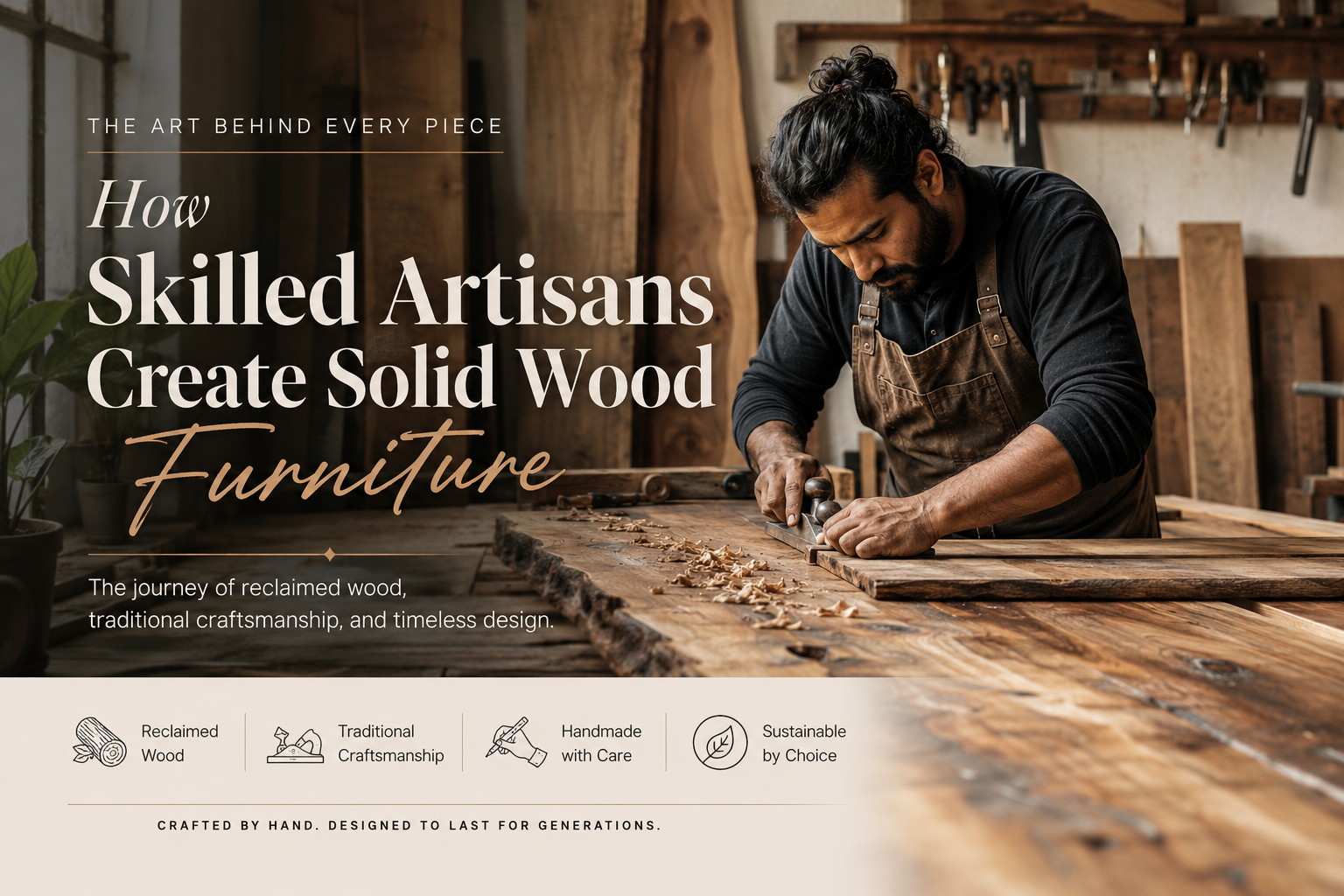
Table of Contents
- Why Handmade Furniture Still Matters
- Choosing the Right Wood
- The Art of Working with Reclaimed Wood
- Traditional Craftsmanship Techniques
- Precision Joinery: The Hidden Strength
- Hand Sanding and Natural Finishing
- From Workshop to Your Home
- Why Handmade Reclaimed Wood Furniture Ages Beautifully
- Tips for Choosing Artisan Furniture
- Frequently Asked Questions
- Conclusion
/
Why Handmade Furniture Still Matters
Mass-produced furniture is designed for efficiency, but handcrafted furniture is created with longevity in mind.
Skilled artisans pay attention to details that factory production often overlooks. Instead of rushing through hundreds of identical pieces, they examine each board individually, working with its unique grain, knots, and natural characteristics.
This approach creates furniture that feels authentic rather than manufactured. Small variations become part of the furniture’s character, making every piece one of a kind.
For homeowners and interior designers, this uniqueness often becomes the centerpiece of a room rather than simply another furnishing.
Choosing the Right Wood
The foundation of exceptional furniture begins long before construction starts.
Selecting Quality Timber
Experienced furniture makers carefully inspect every plank for:
- Grain direction
- Moisture content
- Structural stability
- Natural imperfections
- Overall durability
Not every board is suitable for every project. Wide table tops require stable timber, while decorative pieces may celebrate dramatic grain patterns and organic textures.
Proper wood selection ensures furniture remains beautiful and functional for decades.
The Art of Working with Reclaimed Wood
One of the most satisfying things about making furniture by hand is giving old wood a new lease of life.
Reclaimed wood often comes from historic buildings, old homes, warehouses, agricultural structures, and traditional architectural elements. Instead of allowing this valuable material to go to waste, skilled craftsmen carefully restore it for modern furniture.
Before construction begins, reclaimed wood goes through several important steps:
Cleaning
Old nails, screws, paint, and debris are carefully removed.
Inspection
Every board is checked for strength and stability.
Drying
Proper moisture levels help prevent future movement.
Preparation
The wood is trimmed while preserving its natural character.
Unlike newly milled lumber, reclaimed wood carries decades of history within its grain. Small marks, weathered textures, and natural color variation become distinctive design features rather than flaws.
Traditional Craftsmanship Techniques
Modern tools improve efficiency, but the true quality of handcrafted furniture comes from the artisan’s experience.
Measuring by Eye and Experience
Experienced woodworkers often make subtle adjustments based on the wood itself rather than relying solely on measurements.
Wood expands and contracts naturally, requiring thoughtful planning during construction.
Careful Hand Assembly
Every component is fitted together gradually.
Rather than forcing pieces into place, artisans test the fit repeatedly until everything aligns perfectly.
This patient approach improves both appearance and durability.
Precision Joinery: The Hidden Strength
Beautiful furniture isn’t just about what you see.
Strong joinery determines how well furniture performs over many years of daily use.
Common traditional woodworking joints include:
Mortise and Tenon
A classic technique used for table legs and structural frames.
Dovetail Joints
Often found in premium drawers because of their exceptional strength.
Finger Joints
Ideal for joining solid wood while maintaining durability.
These traditional methods reduce dependence on excessive hardware and help furniture remain sturdy through years of use.
Hand Sanding and Natural Finishing
Once construction is complete, the finishing process begins.
This stage requires just as much patience as building the furniture itself.
Artisans gradually sand every surface using progressively finer abrasives, creating a smooth finish while preserving the wood’s natural texture.
Instead of hiding the grain beneath thick coatings, many handcrafted pieces receive finishes that enhance the wood’s beauty while allowing its natural character to remain visible.
The result is furniture that feels warm, authentic, and pleasant to touch.
From Workshop to Your Home
Every handmade furniture piece follows a journey filled with craftsmanship.
It begins with carefully selected reclaimed timber before moving through cutting, shaping, assembly, sanding, finishing, quality inspection, and finally packaging.
Unlike factory production lines, each project moves through individual workstations where experienced hands inspect every stage.
Once completed, furniture is carefully packed to protect the craftsmanship during transportation.
When it finally arrives in your home, it carries not only the beauty of solid wood but also the time, patience, and expertise invested throughout its creation.
That connection between workshop and home is one reason handmade furniture often becomes a cherished part of family life for many years.
Why Handmade Reclaimed Wood Furniture Ages Beautifully
One of the greatest advantages of reclaimed solid wood furniture is how gracefully it matures.
Rather than wearing out, quality wood often develops additional character over time.
Natural oils deepen in color.
Grain patterns become richer.
Minor marks tell the story of everyday living.
Instead of looking old, well-crafted furniture often looks even more beautiful with age.
This lasting appeal makes handmade reclaimed wood furniture especially attractive for homeowners seeking timeless interior design.
Tips for Choosing Artisan Furniture
Before investing in handcrafted furniture, consider these practical tips.
Look for Solid-Wood Construction
Avoid furniture made primarily from particleboard or thin veneers.
Ask About Wood Origin
Understanding whether reclaimed or sustainably sourced timber is used helps you make informed decisions.
Examine Joinery
Quality craftsmanship is often visible inside drawers, beneath tables, and at structural connections.
Appreciate Natural Variation
Wood grain, knots, and color differences are signs of authenticity, not defects.
Buy for Longevity
Choose timeless designs that will remain beautiful through changing interior trends.
FAQ
Is handmade solid wood furniture worth the investment?
Yes. Quality craftsmanship, durable materials, and timeless design often result in furniture that lasts significantly longer than mass-produced alternatives.
Why is reclaimed wood popular?
Reclaimed wood offers unique character, rich history and reduces demand for newly harvested timber while creating distinctive furniture.
Does reclaimed wood require special maintenance?
Not usually. Regular dusting and occasional cleaning with wood-safe products are generally sufficient.
Why are no two handmade furniture pieces identical?
Natural wood grain, handcrafted techniques, and reclaimed materials create subtle differences that make every piece unique.
Can handcrafted furniture fit modern interiors?
Absolutely. Handmade solid wood furniture complements modern, rustic, Scandinavian, industrial, farmhouse, and contemporary interiors alike.
Conclusion
Creating handcrafted solid wood furniture is a blend of tradition, precision, and respect for natural materials. Every stage from selecting reclaimed timber to carefully finishing each surface reflects the skill and dedication of experienced artisans.
For homeowners and designers, understanding this process adds a deeper appreciation for the furniture they choose. Beyond its beauty, handmade furniture represents thoughtful craftsmanship, lasting durability, and a connection to materials that have already lived one life before becoming part of a new home.
If you’re exploring handcrafted reclaimed wood furniture for your next project, consider browsing collections that showcase artisan-made pieces, where every design reflects the individuality of the wood and the hands that shaped it. You can naturally feature collections such as reclaimed wood coffee tables, dining tables, console tables, or sideboards from your Etsy shop within this section.