
Furnishing a new home means making a lot of decisions quickly, and dining chairs are one of those choices that seem simple until you actually start comparing options. Upholstered chairs look inviting in photos, softer, more finished, and often more in line with a specific design style. Wooden chairs read as more practical, but practical isn’t always the deciding factor when you’re picturing how a room will look.
In fact there isn’t a single option that is superior to all the others. All of them have their own genuine advantages and genuine drawbacks, and the best choice will come down to how you actually intend to use the space rather than on which one looks better when photographed. The comparison here is centered on durability and how easy it is to clean since these are the two factors that are most important when the chairs are being used on a daily basis, many years after the initial decision about their styling has been made.
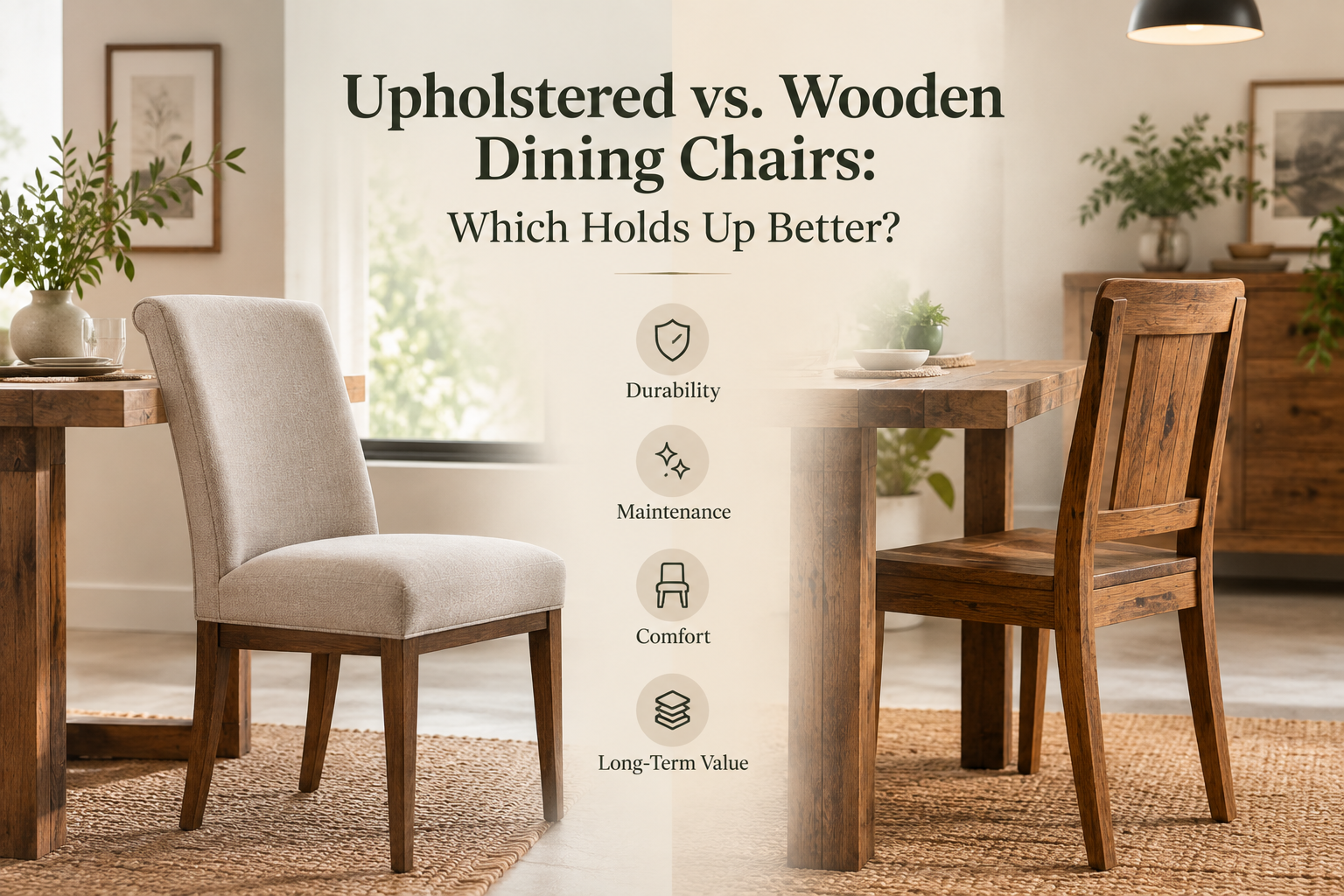
Table of Contents
- The Core Trade-Off Between the Two Materials
- Durability: How Each Holds Up Over Time
- Cleaning and Maintenance Compared
- Where Upholstered Chairs Genuinely Win
- Where Wooden Chairs Genuinely Win
- A Middle Ground Worth Considering
- From Workshop to Dining Room: How Wooden Chairs Are Made
- A Note on Reclaimed Wood for Dining Chairs
- FAQ
- Conclusion
The Core Trade-Off Between the Two Materials
Upholstered chairs trade some durability and cleaning ease for comfort and visual softness. Wooden chairs trade a bit of that softness for long-term durability and straightforward maintenance. Neither trade-off is wrong; it depends entirely on your household’s actual daily use, whether you have kids or pets, how often you entertain, and how much time you realistically want to spend on upkeep.
Understanding this trade-off clearly, rather than picking based on style alone, tends to produce a better long-term decision, especially for a dining area that gets used multiple times a day.
Durability: How Each Holds Up Over Time
Wooden Chairs
Solid wood chairs, particularly those built with proper joinery rather than glued or stapled construction, hold up to years of daily use without significant structural wear. The finish can show scuffs over time, but the underlying structure remains stable, and minor surface wear is often easy to address without replacing the piece. Well-built wooden chairs are also generally easier to repair; a wobbly leg can be re-glued or reinforced, which isn’t typically possible with upholstered furniture once the frame or padding starts to fail.
Upholstered Chairs
Upholstery fabric wears differently than wood. High-traffic dining use, chairs being pulled in and out multiple times a day, can compress cushioning and wear fabric at contact points faster than people expect, sometimes within just a few years of regular use. Higher-quality upholstery with a durable fabric weave lasts considerably longer than budget options, but even well-made upholstered chairs generally have a shorter practical lifespan than solid wood chairs built with the same level of care.
Cleaning and Maintenance Compared
Wooden Chairs
Spills wipe up quickly and cleanly from a wood surface, and most everyday messes, food, drink, and general grime don’t require anything beyond a damp cloth. This matters significantly in households with young children or anyone who eats meals regularly at the dining table rather than occasionally, since dining chairs are one of the most frequently soiled pieces of furniture in a home.
Upholstered Chairs
Fabric requires more deliberate cleaning, spot treatment for stains, occasional professional cleaning depending on the fabric type, and ongoing vigilance around spills that can set into the material if not addressed quickly. Some upholstery fabrics are treated with stain-resistant coatings, which help, but even treated fabric generally requires more active maintenance than a wood surface does.
Where Upholstered Chairs Genuinely Win
It would be dishonest to frame this comparison as wood winning across the board, because upholstered chairs have real, legitimate advantages. Comfort is the clearest one: padded seating is simply more comfortable for extended sitting, particularly for households that use the dining table for long meals, work, or hosting guests who linger at the table. Upholstered chairs also soften a room acoustically and visually, which matters in open-plan spaces where hard surfaces can make a room feel loud or visually stark.
For dining rooms used infrequently, formal spaces reserved mostly for holidays and special occasions, the durability trade-off matters less, since the chairs simply aren’t absorbing the same daily wear a busier household’s dining chairs would.
Where Wooden Chairs Genuinely Win
Wooden chairs make the most sense for households with genuinely frequent daily use, families with kids, anyone who eats most meals at the table rather than elsewhere in the home, or anyone who prioritizes low-maintenance furniture over maximum comfort. They’re also the more practical choice in homes with pets, since fur, dander, and accidental messes are considerably easier to manage on a wood surface than embedded in upholstery.
For anyone furnishing a new home without yet knowing exactly how the space will be used long-term, wooden chairs carry less risk, since they hold up reasonably well regardless of how heavily the dining area ends up being used.
A Middle Ground Worth Considering
A mixed approach, wooden chairs on the sides that see the most daily use, upholstered chairs at the head positions used less frequently, or a bench with a wood surface paired with a couple of upholstered accent chairs lets a dining set balance comfort and durability rather than choosing one exclusively. This is a practical option worth considering if comfort and cleaning ease both matter to your household, rather than treating the decision as strictly binary.
From Workshop to Dining Room: How Wooden Chairs Are Made
A solid wood dining chair takes more structural planning than it might appear from the outside, since chairs bear repeated weight and stress at multiple joints, the seat, the legs, and the backrest every time someone sits down or scoots in. Builders working with reclaimed timber account for this directly, choosing boards for stability and shaping each joint individually rather than relying on the kind of glued, mass-produced joinery common in lower-cost furniture.
That individual attention is part of why a well-built wooden dining chair holds up to years of daily use without the wobble or structural failure that cheaper, factory-built chairs often develop within a much shorter timeframe.
A Note on Reclaimed Wood for Dining Chairs
Dining chairs take more physical stress than almost any other furniture in a home, with constant sitting, standing, and sliding in and out from the table. Reclaimed wood tends to hold up particularly well to this kind of repeated use, since it’s already well-seasoned and stable by the time it becomes furniture. It also brings visible grain and warmth that a purely functional dining chair often lacks. Pieces like this reclaimed acacia wood dining chair or this reclaimed teak wood dining chair bring that durability and character together, offering a low-maintenance option that still carries real design presence at the table.
FAQ
Are wooden dining chairs more durable than upholstered ones?
Generally yes, particularly for households with frequent daily use. Solid wood construction with proper joinery tends to outlast upholstery fabric and cushioning, which wear faster under repeated daily contact.
Which is easier to clean, wood or upholstered dining chairs?
Wood is generally easier and faster to clean, since most spills wipe up with a damp cloth. Upholstery requires more deliberate spot cleaning and can absorb stains if not addressed quickly.
Are upholstered chairs ever the better choice?
Yes, particularly for comfort during longer meals or in dining rooms used infrequently, where the durability trade-off matters less since the chairs see less daily wear.
Can I mix wood and upholstered chairs at the same table?
Yes, this is a common and practical approach, often placing wood chairs on the sides that see the most daily use and upholstered chairs at the head positions.
Is reclaimed wood a good material for dining chairs specifically?
Yes. It tends to be denser and more stable than newer lumber, which matters for chairs that bear repeated weight and movement stress at multiple joints throughout daily use.
Conclusion
Neither upholstered nor wooden dining chairs are universally better; the right choice depends on how your household actually uses the dining space day to day. For durability and easy cleaning, wooden chairs generally have the advantage, particularly in busy households with kids or pets. For comfort and softness, upholstered chairs still have a real place, especially in less frequently used dining rooms. If durability and low maintenance matter most for your new home, it’s worth looking closely at solid wood options built to handle daily use well.