
Japandi gets described a lot as a “trend,” but it’s really more of a philosophy that happens to look good in photos. It takes the restraint and craftsmanship of Japanese design and pairs it with the warmth and function of Scandinavian style, and the result is a home that feels calm without feeling empty. Fewer pieces, chosen carefully, do more visual and functional work than a room full of matched sets ever could.
Furniture is where Japandi actually lives or dies, more than paint color or accessories. A room can have the right neutral palette and still feel busy if the furniture is heavy, ornate, or mismatched in tone. This guide walks through what to actually look for in Japandi furniture, piece by piece, so you can build a calmer room around choices that fit the style rather than just approximate it.
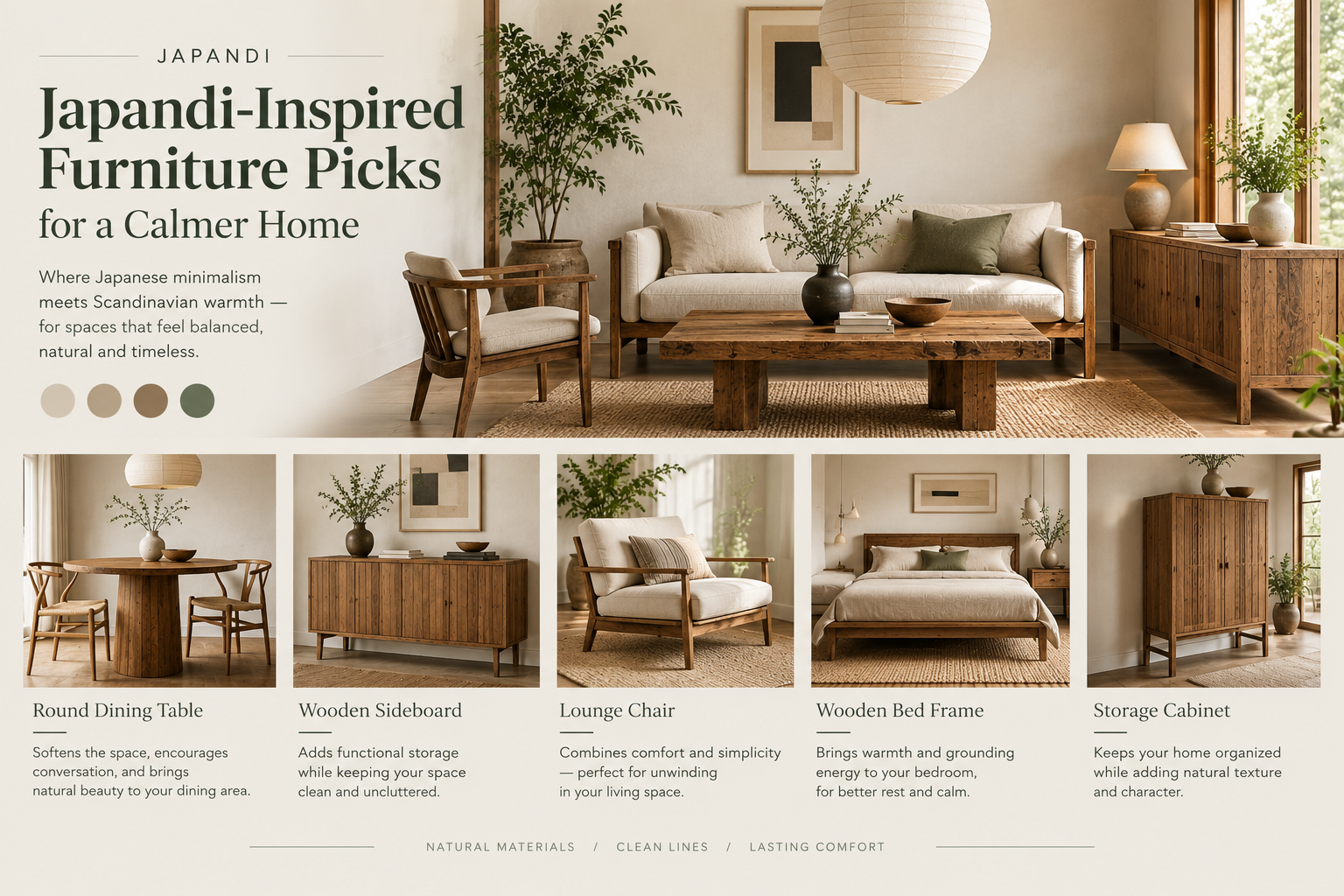
Table of Contents
- What Japandi Actually Means for Furniture
- The Dining Table: Round Shapes and Warm Wood
- Seating: Simple Lines Over Ornamentation
- The Console: A Quiet Anchor, Not a Centerpiece
- Mirrors and Light in a Japandi Room
- The Coffee Table: Low, Grounded, Uncluttered
- From Workshop to Home: Where Craftsmanship Fits Japandi
- A Note on Reclaimed Wood as a Natural Fit for the Style
- FAQ
- Conclusion
What Japandi Actually Means for Furniture
Japandi furniture generally shares a few consistent traits: natural materials, particularly wood, low or grounded silhouettes, minimal ornamentation, and joinery or construction that’s visible and honest rather than hidden. It avoids high-gloss finishes, bright colors, and heavily carved or decorative detailing, all of which read as busier than the style calls for.
What it isn’t is bare minimalism for its own sake. Japandi rooms still feel warm and lived-in; they just get there through a smaller number of well-chosen pieces rather than layers of decor. That distinction matters when you’re actually shopping, since a truly empty room isn’t the goal; a considered one is.
The Dining Table: Round Shapes and Warm Wood
A round dining table fits Japandi particularly well, since the soft, continuous shape avoids the sharp angles that can make a room feel more formal or rigid. Solid wood with visible grain, rather than a painted or laminate surface, brings in the natural material Japandi relies on, and a warm mid-tone finish keeps the room feeling grounded without leaning too dark or too stark.
A round solid wood dining table with clean, simple legs and real wood grain hits this balance well, working as a genuine anchor for a Japandi dining space without any unnecessary detailing pulling focus away from the material itself.
Seating: Simple Lines Over Ornamentation
Japandi dining chairs and seating generally favor straight, simple silhouettes over anything with heavy carving, scrollwork, or elaborate detailing. A chair with a visible wood frame, a woven or simple upholstered seat, and legs that taper slightly rather than flaring out dramatically tends to read as calmer and more in line with the style.
A reclaimed teakwood dining chair with clean lines and visible wood grain pairs naturally with a round table like the one above, since both pieces share the same restrained, material-forward approach rather than competing for attention.
The Console: A Quiet Anchor, Not a Centerpiece
In a Japandi space, a console table should support the room rather than dominate it. Look for a design with a simple, straight silhouette, minimal or no hardware, and a wood tone that stays in the same warm, natural family as the rest of the room’s furniture. Avoid consoles with heavy detailing or elaborate leg turning, since that level of ornamentation pulls the piece toward a more traditional or rustic style rather than the calm restraint Japandi calls for.
A reclaimed teak console table with clean lines works well in an entryway or hallway, giving the space a functional surface without adding visual noise to the room.
Mirrors and Light in a Japandi Room
A well-placed mirror does real work in a Japandi room, since natural light is central to the calm, airy feeling the style relies on. A simple wood-framed mirror, without an ornate or heavily carved border, fits the aesthetic while still bouncing light through the space. Keep the frame thin to moderate in width rather than chunky, since a very heavy frame can start to feel more rustic than Japandi.
A reclaimed teak wood mirror frame with a clean, understated edge brings in that natural wood material while staying visually quiet enough not to compete with the rest of the room.
The Coffee Table: Low, Grounded, Uncluttered
Japandi living rooms tend to favor a coffee table that sits low to the ground with simple, straight or gently tapered legs, avoiding anything ornately carved or overly bulky. The surface should stay largely uncluttered; a single tray with one or two objects is generally enough, since the goal is a grounded, calm anchor point rather than a display surface.
A reclaimed teakwood coffee table with a low profile and visible wood grain works as exactly this kind of anchor, letting the material do the visual work rather than relying on decoration piled on top.
From Workshop to Home: Where Craftsmanship Fits Japandi
Japandi’s emphasis on honest materials and visible craftsmanship lines up closely with how solid wood furniture actually gets made. A piece built from reclaimed timber starts with wood sorted by hand for grain and stability, then shaped and joined individually rather than run through a repeatable, uniform manufacturing process. That slower, more considered process is part of what gives handmade furniture the kind of quiet, honest presence Japandi design is built around, since the joinery and grain are meant to be seen, not hidden under paint or heavy lacquer.
A Note on Reclaimed Wood as a Natural Fit for the Style
Reclaimed wood suits Japandi particularly well because the style values visible material honesty over polish. The grain variation, subtle color shifts, and natural imperfections in reclaimed timber are exactly the kind of quiet detail Japandi rooms are built to showcase, material that looks considered rather than manufactured. If you’re building a calmer room around this style, it’s worth browsing a shop like Modern Karigar for reclaimed wood pieces that bring that same restrained, natural character into your space.
FAQ
What makes furniture “Japandi” rather than just minimalist?
Japandi combines Japanese restraint with Scandinavian warmth, so it favors natural materials, visible wood grain, and simple silhouettes rather than the starker, often colder look of pure minimalism.
Is there a required wood tone for Japandi furniture?
Warm, mid-tone woods generally suit the style best, since very dark or very pale finishes can push a room toward a different aesthetic, though there’s flexibility depending on the rest of the room.
Can I mix Japandi furniture with pieces I already own?
Yes, as long as the new pieces share a similar restraint, simple lines, natural materials, and minimal ornamentation, so they don’t clash with more ornate or heavily finished existing furniture.
Is Japandi furniture typically designed to be low to the ground?
Not exclusively, but lower profiles are common, particularly for coffee tables and some seating, since they contribute to the grounded, calm feeling central to the style.
Does reclaimed wood fit the Japandi aesthetic?
Yes, very naturally. The style values honest, visible material character over polish, which is exactly what reclaimed wood’s natural grain and history provide.
Conclusion
Japandi furniture isn’t about owning less for the sake of it; it’s about choosing pieces with enough material honesty and restraint that a room needs less to feel complete. A round table, simple chairs, a quiet console, an understated mirror, and a low coffee table, chosen with attention to wood grain and clean lines, can build a genuinely calmer home without feeling sparse. If you’re working toward this kind of space, it’s worth starting with one or two anchor pieces in solid, natural wood and building outward from there.