Farmhouse style has been around long enough to go through several phases. It went through the all-white, shiplap-and-signage era, then a backlash, and now something more settled. The version showing up in 2026 keeps the warmth and the natural materials but drops a lot of the clutter. Rooms feel more collected than themed, and the furniture does more of the talking.
This guide covers the furniture ideas that keep appearing in 2026 farmhouse design, from wood tones to shapes to storage, and how to use them without turning your home into a trend exhibit. A quick note: design trends are directional, not rules, and designers disagree about plenty. Choose what works best for your space and skip the rest.
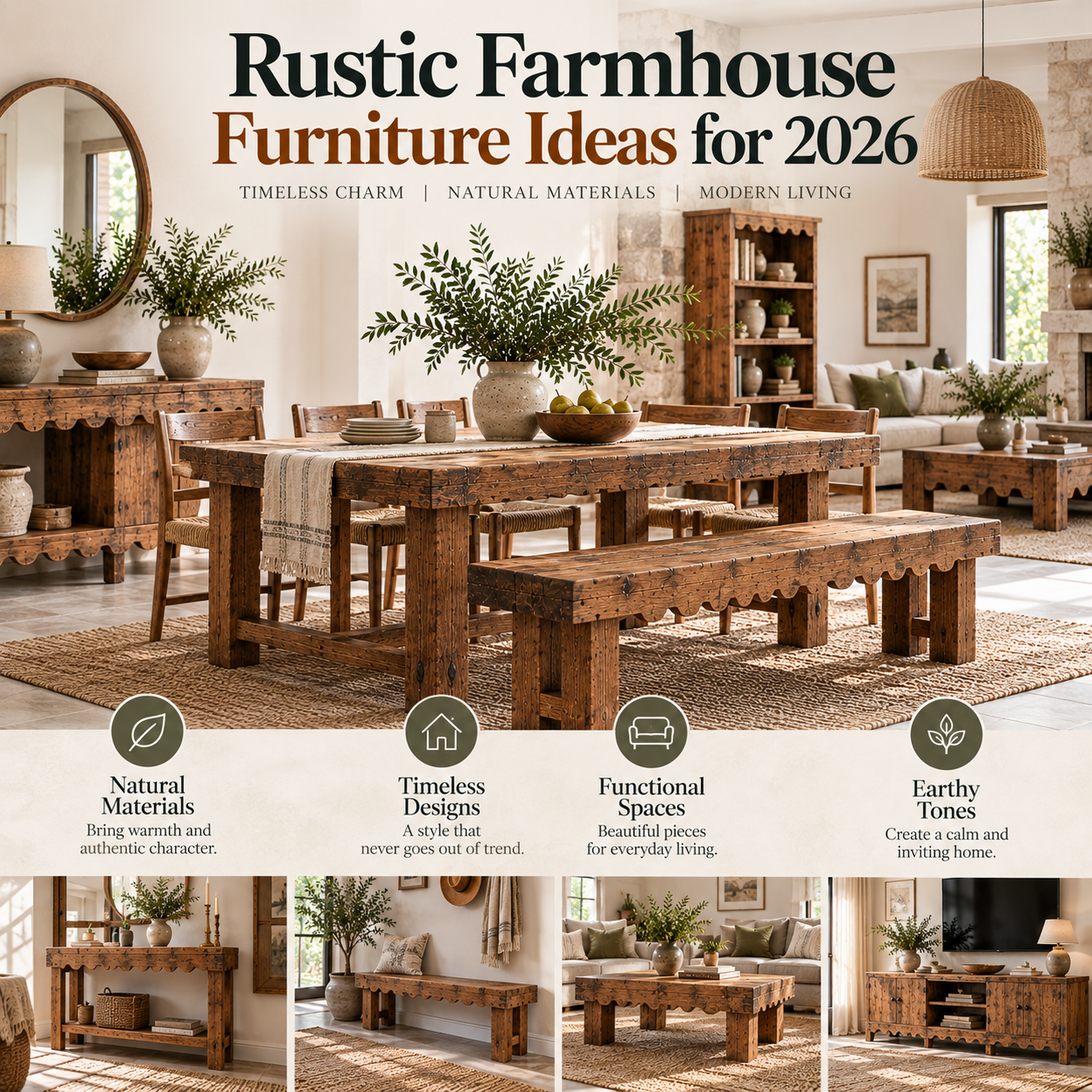
Table of Contents
- What “Farmhouse” Means in 2026
- Warmer Wood Tones
- Real Grain and Honest Imperfection
- Simpler Shapes, Less Ornament
- Tables Built Around the Wood
- Storage That Works Harder
- Mixing Rustic and Modern
- Palettes and Hardware
- From Workshop to Farmhouse
- A Note on Reclaimed Wood
- FAQ
- Conclusion
What “Farmhouse” Means in 2026
The current take on farmhouse leans toward refined rustic. It still values natural materials, comfort, and a lived-in feel, but with cleaner lines and less decoration piled on top. Think of it as a farmhouse with the volume turned down: fewer themed accessories and more attention to the quality and character of the furniture itself.
That shift matters if you’re buying pieces. Instead of chasing a look made of props, you’re choosing a few good items that carry the style on their own.
Warmer Wood Tones
One of the most consistent themes is warmth. Cool, washed-out greige and all-white schemes are giving way to richer, honeyed, and mid-tone woods. Tables, shelves, and floors in warmer tones make a room feel cozier and more grounded.
You don’t need to replace everything to get this. A single dining table or console in a warm wood can shift the whole room. If your space leans cool, adding one substantial warm-toned piece often does more than repainting.
Real Grain and Honest Imperfection
Buyers increasingly want furniture that looks like what it is. Visible knots, natural color variation, and hand-finished surfaces are valued instead of being sanded away. The appeal is authenticity: a piece that shows its grain and history feels more personal than one with a uniform, factory-perfect surface.
This is where solid and reclaimed wood do well. The natural variation that mass production tries to hide is exactly what people are looking for. When you shop, look for pieces where the grain is visible rather than painted over.
Simpler Shapes, Less Ornament
Heavily carved, distressed-on-purpose furniture is fading. The newer direction favors straightforward shapes with sturdy proportions: thick tabletops, simple legs, and clean edges. The wood is the star, and the form stays out of its way.
That doesn’t mean plain. A well-proportioned table with substantial legs and a beautiful top has plenty of presence. It just lets the material and craftsmanship carry the look instead of decoration.
Tables Built Around the Wood
Dining tables continue to be the centerpiece of a farmhouse space, with a growing preference for designs that highlight the tabletop: broad planks, noticeable joins, and a textured surface. A lengthy table with uncomplicated legs is perfect for family dinners and gatherings, and it matures beautifully over time.
When choosing, think about how you’ll use it. A table that seats your regular household comfortably matters more than the biggest one available. Round tables are also popular for smaller or squarer rooms, and benches can replace some chairs for a relaxed, communal feel.
Storage That Works Harder
Farmhouse rooms are being asked to do more, so furniture that hides clutter is in demand. Sideboards, hutches, and cabinets with closed storage keep surfaces calm, which suits the move toward simpler styling. Open shelving still has a place, but it works best when you edit what goes on it.
Multifunctional pieces help, too: a bench with storage in the entryway, a console with drawers, a coffee table that holds blankets. In a lived-in home, furniture that earns its space is worth more than furniture that only looks good.
Mixing Rustic and Modern
A lot of current design commentary describes farmhouse as a blend: rustic character paired with cleaner, more modern elements. Some designers suggest letting the modern side carry most of the room, perhaps 60 to 70 percent, and using rustic pieces as accents. Others prefer rustic-led rooms. It’s a matter of taste, but the principle holds that a mix tends to look more collected than a single style repeated everywhere.
A practical way to do this is to pair one or two solid wood statement pieces with simple upholstery, modern lighting, and uncluttered surfaces. The wood furniture brings the warmth, and the restraint keeps it from feeling heavy.
Palettes and Hardware
On color, earthy and muted tones are common: creamy whites, sage, terracotta, dusty blue, and deeper moody shades. These pair easily with warm wood.
Hardware is where opinions split. Matte black remains popular, while some designers argue for mixed metals, aged brass, or iron finishes for a more collected look. There’s no single correct answer. Choose what works with your lighting and wood tone, and keep it consistent across a room.
From Workshop to Farmhouse
Farmhouse furniture is meant to last, and how it’s built decides whether it does. A solid wood piece begins as timber sorted by hand for grain and stability, then shaped and joined individually. Joinery matters more than decoration here: pieces that rely on strong joints rather than glue and staples hold up to the daily use a farmhouse table gets.
That slow, careful process is part of the appeal for many buyers. You’re not just getting a style; you’re getting something made to be used hard and kept for years.
A Note on Reclaimed Wood
Reclaimed wood fits this moment well because its character is already built in: natural grain, tonal variation, and a visible sense of history. It also answers the interest in sustainability, since it gives older timber a second life instead of cutting new. If you’re looking for pieces that bring that kind of authenticity to a farmhouse room, it’s worth browsing a shop like Modern Karigar to see how reclaimed wood looks and is built in finished pieces.
FAQ
Is farmhouse style still popular in 2026?
Yes, though it has evolved. The current version is warmer, simpler, and more focused on natural materials than the heavily themed farmhouse of a few years ago.
What wood tones suit farmhouse furniture now?
Warm, mid-tone, and honeyed woods are common, replacing cooler greige and all-white schemes.
How do I mix rustic and modern in one room?
Pair one or two solid wood statement pieces with clean-lined upholstery and simple lighting, and keep surfaces uncluttered.
Is distressed furniture still in style?
Heavily distressed, artificially aged pieces are less popular than furniture with natural grain and honest wear.
Is reclaimed wood a good choice for farmhouse furniture?
Yes. Its natural variation and sense of history suit the style, and many buyers value the sustainability angle.
Conclusion
Farmhouse in 2026 is warmer, simpler, and more honest about its materials. Choose a few well-made pieces with visible grain and sturdy construction, mix them with cleaner modern elements, and keep the styling restrained. You’ll end up with a room that feels collected rather than themed and furniture that lasts well beyond any trend. If you’re planning a refresh, it’s worth starting with one solid wood piece and building around it.