Walnut finish is one of those colour names that does a lot of work in furniture marketing. It evokes warmth, richness, and something solid and considered. But ‘walnut’ covers a wide tonal range, from a pale, golden-brown that photographs almost like honey to a deep, near-espresso brown that can anchor a room or swallow a small one.
The choice between light walnut and dark walnut isn’t purely about preference. It’s about how each finish interacts with your room’s proportions, its natural light, its existing floor and wall tones, and the atmosphere you’re trying to create. Get it right and the furniture feels inevitable, as though it was always meant to be there. Get it slightly wrong and the room feels either heavier than intended or somehow incomplete.
This guide works through the practical side of the decision: what each finish actually looks like in use, how they behave in different rooms, what factors should guide the choice, and how to style each one once you’ve made it.
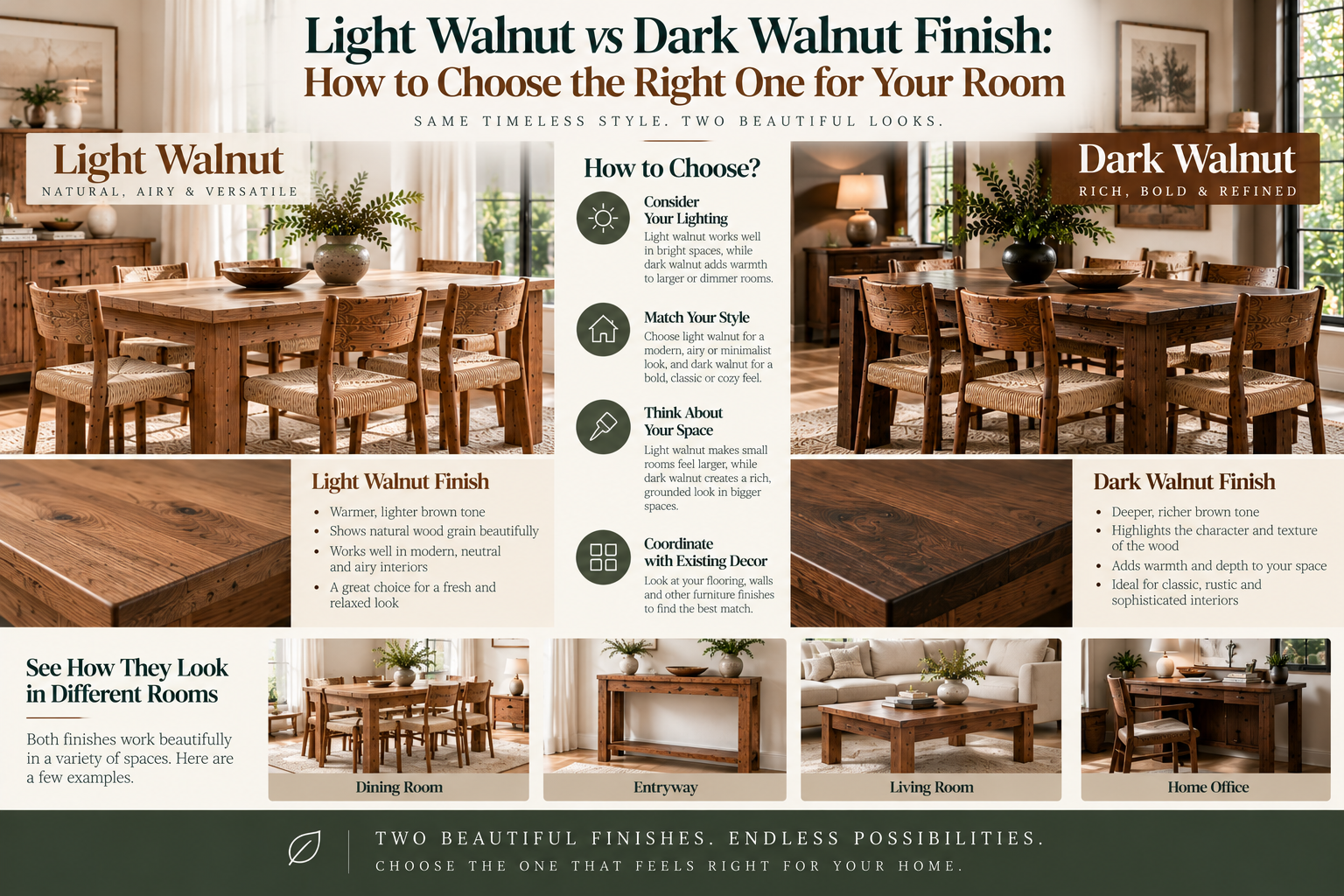
Table of Contents
- Understanding Walnut Finishes
- How Light and Dark Read in a Room
- Practical Decision Factors
- From the Workshop to Your Room
- Design Ideas: Styling Each Finish
- The Verdict: How to Choose for Your Room
- FAQ
- Final Thoughts
Understanding Walnut Finishes
A clarification worth making upfront: ‘walnut finish’ doesn’t always mean the piece is made from walnut wood. It usually refers to a stain or oil colour applied to another hardwood teak, acacia, mango, or oak, for example, that shifts the surface tone toward the walnut range. The distinction matters because the same stain applied to two different species can look quite different: the underlying grain, density, and absorption rate of the base timber all affect the final colour.
With that in mind, here’s what each finish typically delivers:
Light Walnut
Light walnut sits in the warm gold-to-medium-brown range. Think honey, caramel, and light amber, the tones you associate with unstained teak or lightly oiled oak. The grain of the underlying timber tends to read more clearly in a light walnut finish because the stain doesn’t obscure the natural colour variation. On reclaimed wood, light walnut often reveals the full character of the timber: mineral streaks, tonal shifts between heartwood and sapwood, the particular warmth of aged grain.
Light walnut finishes tend to photograph well and read as natural and unfussy; they don’t demand attention but reward it. In a room, they add warmth without darkening it.
Dark Walnut
Dark walnut sits in the deep brown-to-near-espresso range, the rich, saturated tones associated with American black walnut furniture in its prime. The darker stain reduces the visible variation in the wood’s surface: grain is still present but the tonal contrast is lower, giving the piece a more uniform, sophisticated appearance.
Dark walnut reads as more deliberate and considered than light walnut. It has more visual weight, which means it anchors a room more firmly for better or worse, depending on the space.
How Light and Dark Read in a Room
Light Walnut in Different Room Contexts
In a naturally bright room south or west-facing, with large windows and pale walls, light walnut is almost always the right choice. It reinforces the warmth without competing with the light. The furniture sits in the room rather than dominating it, and the natural tones pick up and amplify the warmth of afternoon sun in a way that darker finishes absorb rather than reflect.
In a smaller or darker room, light walnut keeps the space from closing in. A small dining room with a dark walnut table can feel enclosing by early evening; the same room with a light walnut table retains a sense of openness. This is one of the most practical arguments for the lighter finish in compact spaces.
Light walnut also works well in rooms with mixed materials: pale stone, concrete, linen, and natural plaster. It bridges natural materials without competing with any of them.
Dark Walnut in Different Room Contexts
Dark walnut finds its rightful place in spaces that can accommodate its presence. A large dining room, a wide open-plan living area, and a generously proportioned study these spaces benefit from furniture that has genuine visual weight. A light walnut table in a very large, high-ceilinged room can look slightly lost; a dark walnut piece grounds the space and gives it a center of gravity.
North-facing rooms present an interesting case. They tend toward cool, grey light for much of the day. A dark walnut finish, counterintuitively, can work well here if the surrounding palette is warm enough deep greens, terracotta, or ochre because it reads as rich rather than heavy in that context. In a cool-toned north-facing room, however, dark walnut risks making the space feel sombre.
Dark walnut is also particularly effective as a contrast piece in a predominantly light room; a single dark walnut coffee table or sideboard in a white or off-white room creates a focal point rather than competing with a consistent palette.
Practical Decision Factors
Beyond gut instinct and atmospheric preference, a few concrete factors will usually settle the question.
Room Size and Natural Light
As a rule, smaller rooms and darker rooms favour lighter finishes; larger rooms with good natural light can carry either. If you’re uncertain about a room’s light levels, observe it at different times of day; the light at 9am, at noon, and at 6pm in winter will tell you more than a single site visit.
For a room under 15 square meters, light walnut is almost always the safer choice. The visual weight of dark walnut in a compact room can make the furniture feel like it’s taking up more floor space than it physically occupies; a perceptual effect that shapes how the room feels to live in.
Matching Existing Floor and Cabinet Tones
This is where many buyers go wrong. The instinct is often to match the dark floor with dark furniture. But matching tones flattens a room. A more effective approach is to choose a finish that’s adjacent to your floor tone rather than identical.
For medium-to-dark floorboards (mid-oak, walnut, aged parquet), light walnut furniture creates a tonal layering effect similar in warmth but lighter in value, which gives both the floor and the furniture visual definition. For pale or white-washed floors, either finish works, but dark walnut creates a stronger contrast that suits rooms designed with a graphic, high-contrast aesthetic.
With white kitchen cabinets, dark walnut island chairs or a dark bar stool make a strong, confident statement. With natural wood kitchen cabinets, light walnut is less likely to clash.
How Each Shows Daily Wear
Light walnut surfaces show dust more readily than dark ones, particularly if the grain is open and the surface has a matte finish. Dark walnut hides dust better but shows fingerprints and water marks more obviously. Neither is better; they’re different trade-offs depending on how much you want to interact with maintenance.
For high-use surfaces like dining tables, coffee tables, and bar stools light walnut is more forgiving of casual scratches, which tend to blend into the lighter, more varied surface. On dark walnut, a pale scratch catches the light and is more noticeable against the deep background.
From the Workshop to Your Room
Applying a walnut finish to handmade reclaimed wood yields a distinct result compared to the same stain on new-cut or engineered timber, and it’s important to grasp this difference before finalizing your finish choice.
Reclaimed wood has a more varied surface than new timber. The grain is tighter, the tonal variation is greater, and the history of the material shows through in subtle ways: small character marks, shifts in absorption where the wood’s density changes, the occasional mineral streak. When a light walnut stain is applied to a reclaimed teak or acacia surface, it saturates some of those variations and brings others forward. The result is a finish that looks genuinely individual: not uniform, not printed, but a direct expression of that specific piece of timber.
Dark walnut on reclaimed wood behaves differently. The deeper pigment tends to unify the surface, reducing the visible contrast of the grain while deepening the overall warmth. Character marks that would be visible in a lighter finish become more subtle; the dark finish doesn’t erase the wood’s history, but it layers over it in a way that creates a different kind of depth: richer, more enveloping, and less obviously varied.
This is why the same light-versus-dark decision that applies to new-cut timber applies differently to handmade reclaimed pieces. With reclaimed wood, the lighter finish usually reveals more of the material’s character. The darker finish creates something more unified and opulent. Neither is the better answer; they’re different expressions of the same underlying material.
For craftsmen working with reclaimed timber, the finish decision is made alongside an understanding of the specific plank: its grain character, its natural tone, and its figure. A particularly beautiful piece of reclaimed teak with strong grain variation might be finished light specifically to let that character show. A plank with a more uniform appearance might benefit from the depth that a dark walnut stain provides. That responsiveness to the specific material is what makes handmade reclaimed wood furniture visually unlike anything factory-produced.
Browse handmade reclaimed wood furniture in light and dark walnut finishes at Modern Karigar →
Design Ideas: Styling Each Finish
Styling Light Walnut
In a living room: Light walnut coffee tables or side tables pair naturally with linen sofas, jute rugs, and ceramic accessories. The warmth of the timber and the warmth of natural textiles are complementary without being identical; the combination feels layered and considered without effort. Add a simple plant and a neutral throw and the room is done.
In a dining room: Light walnut dining tables work especially well with upholstered dining chairs in off-white, sage, or dusty rose. The contrast between the bare wood table and soft chair upholstery creates a comfortable mix of formal and informal that suits contemporary family dining. Avoid overly ornate tableware; simple ceramics and linen napkins let the timber speak.
In a home office: Light walnut desks keep a workspace feeling energized rather than heavy. Pair with a leather chair in tan or cognac for a classic combination, or with a contemporary mesh chair in black for a more modern contrast. Keep desk accessories minimal and the grain does the rest.
Styling Dark Walnut
In a living room: Dark walnut makes a strong statement as a coffee table or console in a room with pale walls. The contrast creates a visual anchor without requiring much styling on the surface itself: a single vase or a stack of books. In a room with darker walls (deep green, navy, charcoal), dark walnut reads as luxurious and immersive rather than heavy.
In a dining room: Dark walnut dining tables suit more formal dining rooms and spaces where evening entertaining is a priority. Warm, low overhead lighting; a pendant with warm-toned bulbs amplifies the richness of the surface. Pair with timber or woven-back chairs rather than upholstered chairs for a look that feels sophisticated without being fussy.
As a contrast piece: One of the most effective ways to use dark walnut is as a single piece in a lighter room. A dark walnut sideboard in an otherwise pale hallway, or a dark walnut bedside table in a white bedroom, creates a deliberate, considered accent without committing the entire room to a dark palette.
FAQ
What is the difference between a light walnut and a dark walnut finish?
Both are finish tones applied to wood to achieve a walnut-range colour. Light walnut produces a warm gold-to-medium-brown tone closer to honey or caramel and allows the natural grain of the timber to read clearly. Dark walnut produces a deep brown-to-near-espresso tone that has more visual weight and creates a more uniform surface appearance. The underlying timber species affects how each stain looks: the same finish on teak will look different from the same finish on oak or acacia.
Does dark walnut make a room look smaller?
It can, but it doesn’t have to. In a small room, a dark walnut dining table or large piece of furniture can create a sense of heaviness that reinforces the room’s limitations. In a large, well-lit room, the same piece grounds the space and adds richness. The key is proportion: a single dark walnut accent piece in a small room can work beautifully; a room full of dark walnut furniture in a compact space will feel enclosed.
Which walnut finish is easier to maintain?
Light walnut shows dust more easily but is more forgiving of scratches and minor surface marks; they tend to blend into the lighter, more varied surface. Dark walnut hides dust better but shows fingerprints and pale scratches more clearly against the deep background. For busy households with children, light walnut is generally more forgiving on high-use surfaces like dining tables. For decorative pieces that are touched less frequently, the maintenance difference is minimal.
Does a walnut finish look different on reclaimed wood vs new wood?
Yes, noticeably. Reclaimed timber has a more varied surface, tighter grain, greater tonal variation, and character marks from its previous life. A walnut stain applied to reclaimed wood interacts with that variation: the lighter finish reveals the character of the timber; the darker finish creates depth while reducing the visible contrast of the grain. On new, uniform timber, the same finishes produce a more even, predictable result. Neither is better; they’re different expressions of the finish.
Can I mix light and dark walnut finishes in the same room?
Yes, with care. The general principle is to anchor the room with one dominant finish and use the other as an accent. A room with a light walnut dining table and a dark walnut sideboard works because the contrast is intentional and controlled. A room where four or five pieces are a mix of light and dark without a clear hierarchy tends to feel unsettled. Limit the contrast to two pieces maximum, and make sure they’re different furniture types (table + storage piece, rather than two tables).
The Verdict: How to Choose for Your Room
Most rooms have a clear answer once you’ve worked through the practical factors:
Choose light walnut if:
- The room is small, compact, or has limited natural light
- You want the grain character of the timber to be fully visible
- The existing floor or cabinet tone is medium-to-dark and you want tonal layering rather than matching
- The room is used daily by a family and the furniture will take regular contact
- The interior style is Japandi, organic modern, Scandinavian, or naturally warm and earthy
Choose dark walnut if:
- The room is large and needs furniture with genuine visual weight to ground it
- You want a single statement piece as an accent in a predominantly light room
- The interior style is more formal, moody, or contemporary-luxe
- The floors are pale and you want strong contrast
- The piece will be a decorative accent rather than a daily-use surface
If the room genuinely works with either good light, neutral floors, or a flexible style light walnut is the lower-risk choice. It adapts more easily as rooms evolve. Dark walnut commits more fully to a direction, which is its strength when the direction is clear.
Final Thoughts
Light walnut and dark walnut aren’t competing finishes; they’re tools for different rooms and different intentions. The decision is practical before it’s aesthetic: room size, existing tones, daily use, and the direction you want the space to go. Get those factors clear and the finish choice usually follows.
On handmade reclaimed wood, both finishes do something a factory piece can’t replicate they interact with a surface that already has character and history, producing a result that’s genuinely individual. The finish reveals or deepens what’s already there, rather than concealing a substrate that was never meant to be seen.
If you’re looking for handmade reclaimed wood furniture available in light or dark walnut finishes, real timber, and real craftsmanship, the Modern Karigar collection on Etsy is worth exploring.