
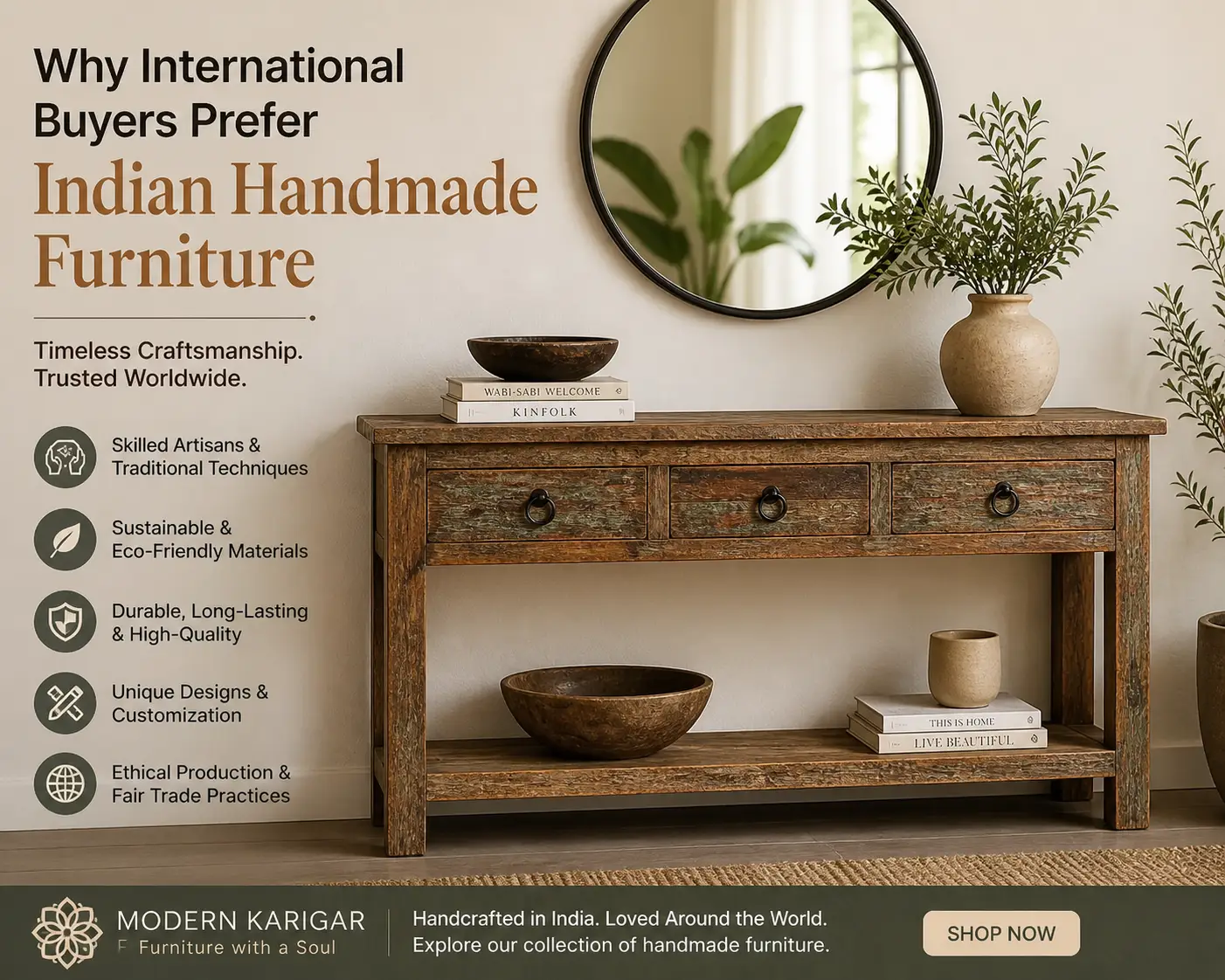
Indian furniture manufacturers have evolved beyond traditional styles. Today, they offer a wide spectrum from rustic wood furniture with raw, natural finishes to sleek modern furniture designed for contemporary homes.
This versatility allows global buyers to
- Customize designs based on market trends
- Mix rustic textures with modern interiors
- Offer exclusive collections in retail or online stores
For example, a reclaimed teak dining table can feature clean lines for a modern aesthetic while retaining the warmth and character of rustic wood.
5. High Customization Capabilities
Unlike large-scale factories, Indian handmade furniture workshops are highly flexible. International buyers can request:
- Custom dimensions
- Specific finishes (natural, walnut, matte, distressed)
- Unique hardware or joinery styles
This level of customization is a major advantage for interior designers, boutique furniture stores, and eCommerce brands looking to differentiate their offerings.
6. Competitive Pricing with Premium Quality
India offers a strong value proposition: premium craftsmanship at competitive pricing. Lower labor costs, combined with efficient production ecosystems, allow exporters to deliver high-quality teak furniture and reclaimed wood furniture at prices that are often more attractive than European or American counterparts.
For international buyers, this translates into:
- Higher profit margins
- Competitive retail pricing
- Access to luxury-grade furniture without excessive costs
7. Strong Export Ecosystem
India has built a reliable export infrastructure for furniture. From packaging standards to global shipping compliance, manufacturers are experienced in handling international orders.
Buyers benefit from:
- Secure packaging for long-distance transit
- Compliance with international quality standards
- Smooth logistics and documentation
Regions like Rajasthan, in particular, have become hubs for handcrafted wooden furniture exports.
8. Unique Aesthetic Appeal
Every piece of Indian handmade furniture stands out. Whether it’s the grain of reclaimed teak, the texture of hand-polished surfaces, or the character of aged wood, these elements create a visual depth that mass-produced furniture cannot replicate.
This uniqueness is highly valued in international markets where consumers are moving away from uniform, catalog-style interiors toward more personalized spaces.
9. Growing Demand for Ethical and Handmade Products
Global consumers are becoming more conscious of where and how products are made. Handmade solid wood furniture from India aligns with this shift by offering the following:
- Ethical production practices
- Support for artisan communities
- Transparent sourcing of materials
For brands and retailers, this also strengthens their storytelling and brand positioning.
Conclusion
The growing preference for Indian handmade furniture among international buyers is not a trend; it’s a shift driven by quality, sustainability, and authenticity. From reclaimed wood furniture to premium teak furniture, India offers a compelling mix of traditional craftsmanship and modern design adaptability.
For buyers seeking durable, customizable, and eco-friendly furniture, Indian manufacturers provide a reliable and value-driven solution. As global demand continues to evolve, handmade solid wood and rustic wood furniture from India are well-positioned to lead the market.