
Solid wood furniture has a quiet way of becoming part of daily life. A dining table gathers family meals, a console holds keys and flowers, a cabinet stores the things you reach for every week, and a bench near the door becomes part of your coming-home routine.
When a piece is made by hand, especially from reclaimed wood, it carries even more meaning. The grain, knots, small marks, and natural color variations all tell a story. Unlike factory-made furniture that may be replaced after a few years, handmade solid wood furniture is often chosen with the hope that it will stay in the home for decades.
The good news is that solid wood is not difficult to care for. It simply needs the right habits. A little attention to cleaning, humidity, sunlight, spills, and surface protection can keep a piece looking beautiful and feeling strong for many years.
This guide explains how to maintain reclaimed wood furniture, solid wood dining tables, rustic wood furniture, and other handcrafted furniture in a simple, realistic way.
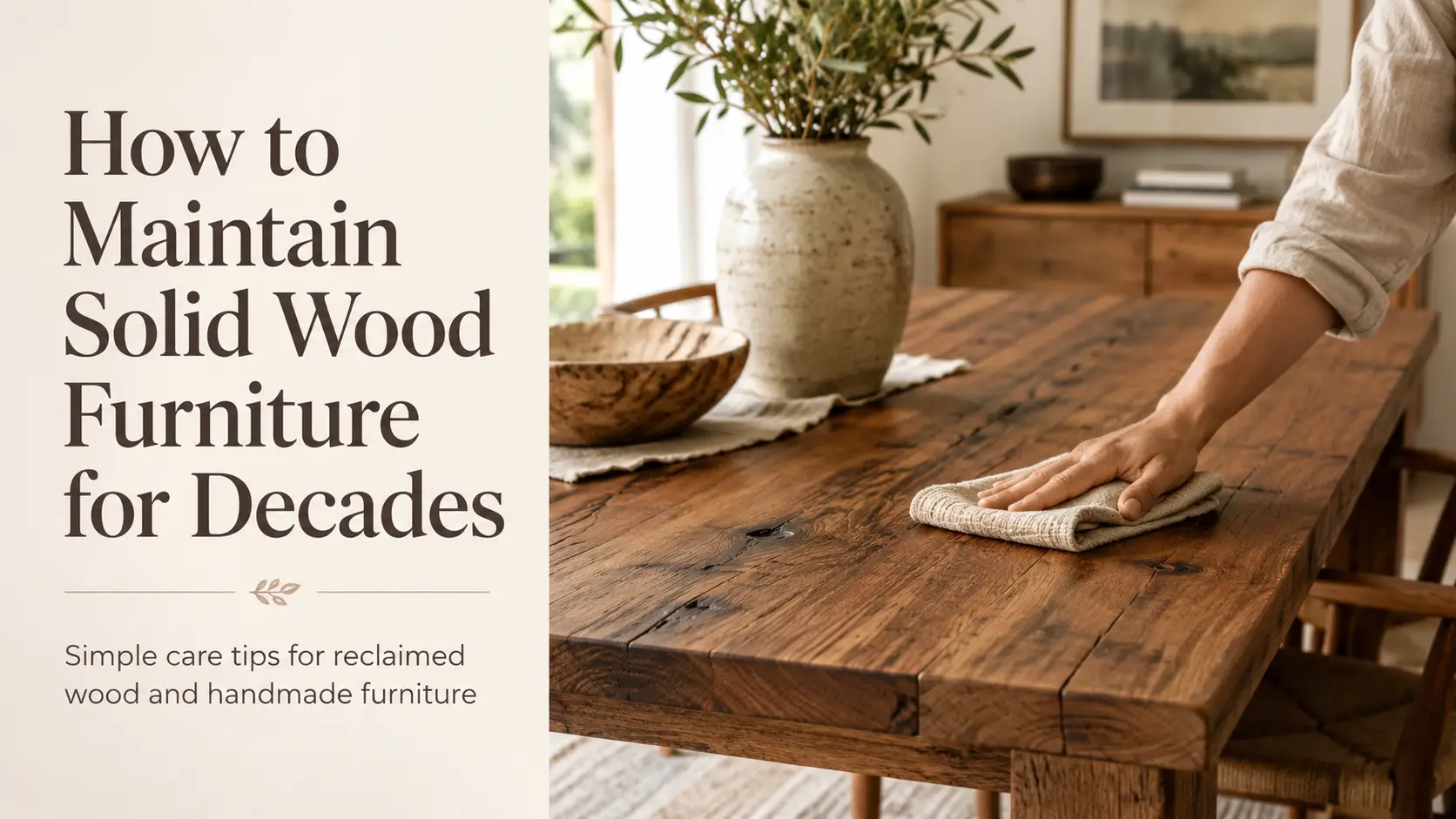
Table of Contents
- Why Solid Wood Furniture Ages So Well
- Understanding Reclaimed Wood Furniture
- From Workshop to Your Home: Why Early Care Matters
- Daily and Weekly Cleaning Habits
- How to Protect a Solid Wood Dining Table
- Humidity, Sunlight, and Seasonal Wood Movement
- Caring for Handmade Reclaimed Wood Furniture
- Long-Term Maintenance Tips
- Design Ideas for Natural Wood Home Décor
- FAQ
- Conclusion
Why Solid Wood Furniture Ages So Well
Solid wood has been used in homes for generations because it is strong, repairable, and naturally beautiful. Unlike many synthetic materials, real wood can develop character over time rather than simply wearing out.
A small scratch, a softened edge, or a gentle change in color can add warmth to a piece. This is especially true with handmade solid wood furniture, where the material is already celebrated for its natural grain and individuality.
That does not mean solid wood should be neglected. It is durable, but it is also a natural material. How to Protect a Solid Wood Dining Table: When cared for properly, a well-made piece can last not just years, but decades.
The Difference Between Wear and Damage
One of the first things to understand is the difference between natural aging and actual damage.
Natural aging may include slight color deepening, subtle surface softening, or a richer patina. Damage is different. Water rings, deep heat marks, cracks from extreme dryness, or loose joints usually happen when furniture is exposed to harsh conditions.
The goal of maintenance is not to keep furniture looking brand new forever. It is to help it age beautifully.
Understanding Reclaimed Wood Furniture
Reclaimed wood furniture is made from timber that has been salvaged and reused. The wood may come from old barns, workshops, warehouses, beams, flooring, or other structures. Instead of being discarded, it is cleaned, prepared, and given a new purpose.
This type of furniture often has marks that newer wood does not have. You may see nail holes, saw marks, weathered grain, color variation, or small imperfections. These details are part of its charm.
Because reclaimed wood has already lived a life, it often brings depth and personality to a room. It suits rustic wood furniture styles, farmhouse interiors, industrial homes, modern spaces, and natural wood home décor.
Why Reclaimed Wood Needs Thoughtful Care
Reclaimed wood can be very strong, but its character-rich surface may need slightly different attention than a polished, factory-smooth piece. Textured areas can collect dust. Older grain patterns may absorb moisture differently. Finishes can vary depending on whether the piece is designed to look raw, rustic, refined, or contemporary.
The best approach is gentle, consistent care.
From Workshop to Your Home: Why Early Care Matters
The furniture-making process begins long before a finished piece enters your home. In the workshop, reclaimed timber is selected, cleaned, inspected, cut, joined, sanded, and finished. Makers pay attention to the grain, moisture condition, structure, and final use of the piece.
A solid wood dining table, for example, needs a finish that can handle everyday meals. A cabinet may need stable joinery and smooth drawers. A bench may need softened corners and a durable surface.
Once the piece leaves the workshop and arrives in your home, the environment changes. Temperature, sunlight, humidity, heating systems, air conditioning, and daily use all begin to affect the wood.
Give the furniture time to settle into the room. Avoid placing it immediately beside a radiator, fireplace, heating vent, damp wall, or bright window. Let the piece adjust naturally to your home’s conditions.
Daily and Weekly Cleaning Habits
Maintaining solid wood furniture does not require complicated products. In fact, simple care is usually best.
Dust Regularly
Dust might appear harmless, but over time, it can cause the surface to lose its shine. . Use a soft, dry cloth to remove dust from tabletops, shelves, legs, and carved or textured areas.
For rustic wood furniture with deeper grain, use a soft brush or cloth to reach small grooves. Avoid rough scrubbing pads, as they can scratch the finish.
Clean With a Slightly Damp Cloth
Dust might appear harmless, but over time, it can cause the surface to lose its shine to lose its shine. Wipe the surface gently, then dry it with another clean cloth.
The drying step is important. Water should never sit on solid wood for long. Even if the piece has a protective finish, repeated moisture exposure can eventually leave marks or weaken the surface.
Avoid Harsh Cleaners
Strong chemical cleaners, bleach, ammonia-based sprays, and abrasive products can damage the finish. They may strip away protection, create cloudy areas, or leave residue.
For most handmade reclaimed wood furniture, mild cleaning is enough. If a spill is sticky, use a small amount of gentle soap diluted in water, then wipe and dry immediately.
How to Protect a Solid Wood Dining Table
A solid wood dining table is often the hardest-working piece in the home. It sees hot plates, cold glasses, children’s crafts, laptops, serving dishes, and daily meals.
Use Coasters, Placemats, and Trivets
This simple habit makes a big difference. Coasters prevent water rings. Placemats protect against scratches from plates and cutlery. Trivets keep hot pans and dishes from marking the finish.
Heat and moisture are two of the most common causes of table damage. A few protective layers can prevent years of frustration.
Wipe Spills Quickly
Wine, coffee, oil, citrus, and sauces should be wiped up as soon as possible. Some liquids can stain or affect the finish if left sitting.
Blot spills rather than spreading them around. Then clean gently and dry the area.
Rotate Decorative Objects
If you keep a vase, bowl, candle, or tray on the table, move it occasionally. Leaving the same object in one place for months can create uneven fading or pressure marks, especially in bright rooms.
Humidity, Sunlight, and Seasonal Wood Movement
Wood naturally expands and contracts as humidity changes. This is normal. Even expertly made custom wood furniture will respond to the environment.
Keep Humidity Balanced
Very dry air can cause wood to shrink or crack. Excess moisture can cause swelling or movement. A stable indoor environment is best.
In dry seasons, especially when heating systems are running, a humidifier can help. In damp rooms, good ventilation is important. The goal is not perfection, but avoiding extreme changes.
Avoid Direct Sunlight
Sunlight can fade or darken wood over time, depending on the species and finish. Reclaimed wood furniture can be especially expressive in color, so prolonged direct sunlight may create uneven tones.
Place furniture away from harsh sunlight when possible. Curtains, blinds, or UV-filtering window treatments can help protect pieces in bright rooms.
Keep Furniture Away From Heat Sources
Radiators, fireplaces, underfloor heating hot spots, and heating vents can dry out wood. Leave space between solid wood furniture and direct heat.
Caring for Handmade Reclaimed Wood Furniture
Handmade reclaimed wood furniture has a beauty that comes from both craftsmanship and history. The goal is to protect the piece without removing the character that made you choose it.
Respect the Texture
Some reclaimed pieces are smooth and refined. Others intentionally preserve saw marks, knots, or weathered surfaces. Dust textured areas carefully, and avoid filling every natural mark with polish or wax unless the maker recommends it.
Do Not Over-Polish
Too much polish can build up and make the surface feel sticky or cloudy. Many modern finishes do not need frequent polishing at all.
Before applying wax, oil, or polish, check what type of finish your furniture has. Oil-finished wood may need occasional re-oiling. Lacquered or sealed surfaces may only need gentle cleaning.
Keep the Original Character
Small marks are often part of reclaimed wood’s appeal. Not every scratch needs to be repaired immediately. Over time, these signs of life can blend into the natural patina.
That said, deep gouges, loose joints, or finish damage should be handled before they become worse.
Long-Term Maintenance Tips
A few seasonal habits can help handcrafted furniture last for decades.
Inspect the Furniture Twice a Year
Look over your furniture every six months. Check for loose screws, wobbly legs, sticky drawers, dry patches, or areas where the finish looks worn.
Catching small issues early makes repairs easier.
Refresh the Finish When Needed
Depending on use, some pieces may benefit from a finish refresh. A dining table may need attention sooner than a bedroom dresser. A coffee table used daily may show wear faster than a console table.
If the surface looks dry, dull, or uneven, ask the maker or a wood furniture professional what treatment is suitable.
Lift, Do Not Drag
When moving solid wood furniture, lift it rather than dragging it. Dragging can stress joints, damage legs, or scratch floors.
For larger custom wood furniture, remove drawers or detachable parts before moving. This reduces weight and protects the structure.
Repair Instead of Replace
One of the best things about handmade solid wood furniture is that it can often be repaired. Scratches can be softened, surfaces can be refinished, joints can be strengthened, and hardware can be replaced.
This is one reason solid wood supports sustainable furniture design. Long-lasting furniture creates less waste and reduces the need for frequent replacement.
Design Ideas for Natural Wood Home Décor
Well-maintained wood furniture becomes a foundation for beautiful interiors. Whether your home is rustic, modern, traditional, or minimal, natural wood brings warmth and balance.
Pair Wood With Soft Textures
Solid wood looks beautiful with linen, wool, cotton, leather, and woven materials. A reclaimed wood dining table can feel softer with upholstered chairs or a simple linen runner.
Mix Rustic and Modern Elements
Rustic wood furniture does not have to make a room feel old-fashioned. Pair a reclaimed wood console with modern lighting, clean-lined artwork, or simple ceramic pieces. The contrast keeps the space fresh.
Let One Piece Lead the Room
A large handcrafted furniture piece, such as a dining table or cabinet, can become the anchor of a space. Keep surrounding décor simple so the wood grain remains visible and appreciated.
Use Custom Wood Furniture for Difficult Spaces
Awkward corners, narrow hallways, and unusual room layouts often benefit from custom wood furniture. A made-to-measure bench, shelf, or table can improve function while adding natural character.
FAQ
How often should I clean solid wood furniture?
Dust solid-wood furniture weekly and clean spills immediately. For everyday care, a soft dry or slightly damp cloth is usually enough.
Can reclaimed wood furniture last for decades?
Yes. Reclaimed wood furniture can last for decades when it is properly made and maintained. Regular cleaning, balanced humidity, and protection from heat and moisture all help extend its life.
What is the best way to protect a solid wood dining table?
Use coasters, placemats, and trivets. Wipe spills quickly, avoid placing hot pans directly on the surface, and keep the table away from strong sunlight or direct heat.
Should I oil handmade reclaimed wood furniture?
It depends on the finish. Some oil-finished furniture may need occasional re-oiling, while sealed or lacquered pieces may not. Always check the care instructions for your specific piece before applying oil or wax.
Is solid wood furniture good for sustainable furniture design?
Yes, especially when it is built to last. Handmade solid wood furniture made from reclaimed timber supports sustainable furniture design by reusing existing materials and reducing the need for disposable furniture.
How do I remove scratches from wood furniture?
Light scratches may blend in with gentle buffing or an appropriate wood care product. Deep scratches should be assessed by a professional or the original maker, especially on custom wood furniture.
Can I place solid wood furniture near a window?
You can, but avoid prolonged direct sunlight. Strong sun can cause fading, darkening, or uneven color changes. Window treatments can help protect the wood.
Conclusion
Solid wood furniture does not need fussy care. It needs thoughtful care. Dust it regularly, clean gently, protect it from heat and moisture, and give it a stable place in your home.
The reward is furniture that grows more meaningful with time. A handmade table, cabinet, bench, or shelf can gather years of use and still remain beautiful. Reclaimed wood adds another layer to that story, connecting the past life of the material with the daily life of your home.
For homeowners, designers, and furniture buyers, choosing handmade solid wood furniture is not just about appearance. It is about quality, sustainability, and living with pieces that feel real. With the right maintenance, those pieces can serve your home for decades and still have plenty of life left to give.
When you are ready to bring lasting natural wood into a space, look for furniture made with care, honest materials, and a finish suited to the way you live.