
Furniture has always been more than something we sit on, eat at, or store our belongings in. It shapes the way a room feels. It affects how people gather, relax, work, and live. For years, mass-produced furniture dominated the market because it was fast, affordable, and easy to find. But something is changing.
Homeowners, interior designers, and thoughtful furniture buyers are beginning to look beyond quick trends. They want pieces with character. They want quality that lasts. They want furniture that feels personal, not disposable.
This shift is creating a promising future for the handmade furniture industry. Craftsmanship, sustainability, natural materials, and meaningful design are becoming more important than ever. Handmade solid wood furniture, especially furniture made from reclaimed wood, fits naturally into this new way of thinking about the home.
The future of furniture may be more modern, more design-conscious, and more connected to technology, but at its heart, it is also returning to something very old: skilled hands, honest materials, and pieces made with care.
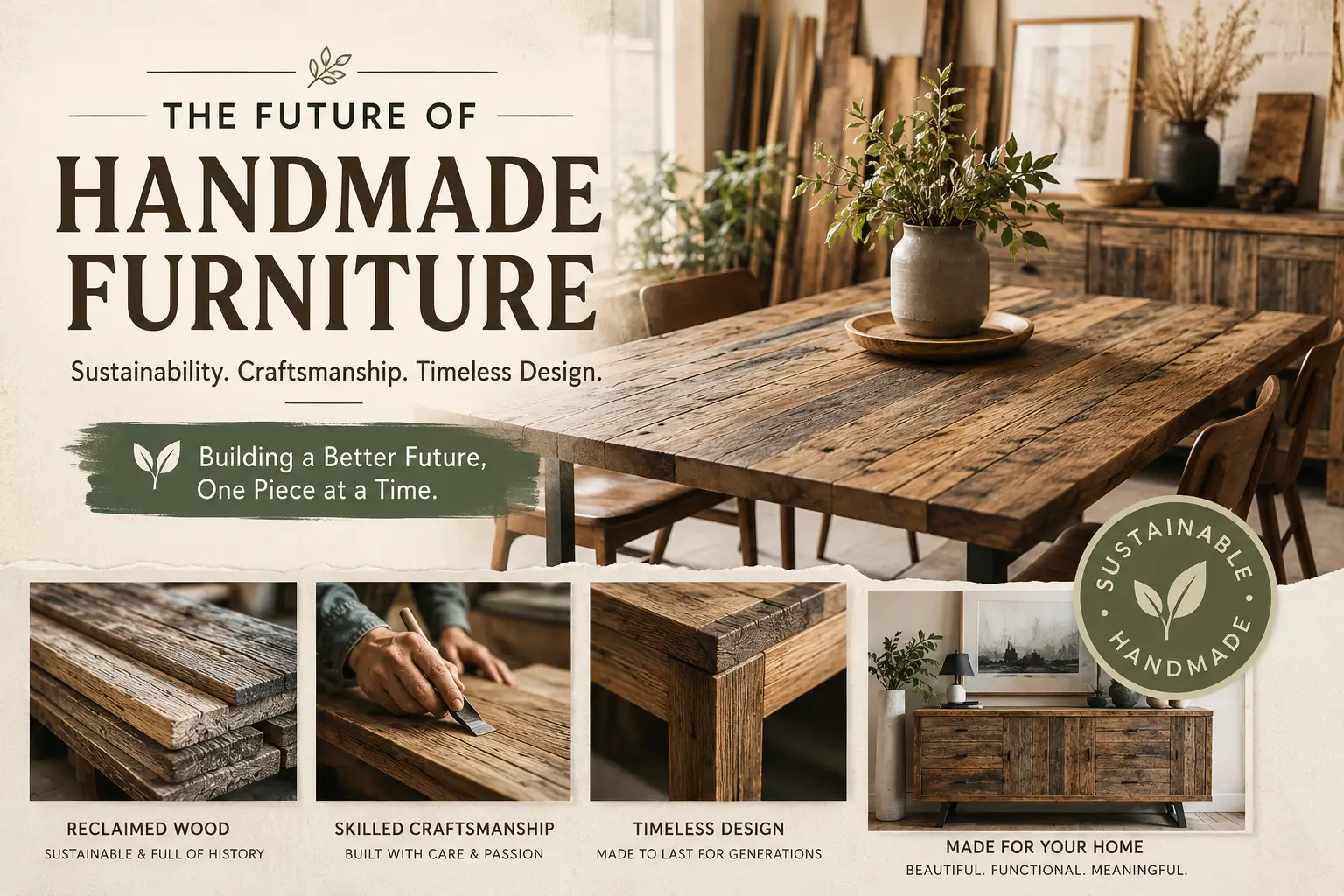
Table of Contents
- Why Handmade Furniture Is Gaining Attention Again
- Sustainability Will Shape the Future of Furniture
- The Rise of Handmade Reclaimed Wood Furniture
- Customization and Personal Design Choices
- Technology and Traditional Craftsmanship Can Work Together
- From Workshop to Your Home: The Journey of a Handmade Piece
- Practical Tips for Choosing Handmade Furniture
- Design Ideas for Modern Homes
- FAQ
- Conclusion
Why Handmade Furniture Is Gaining Attention Again
For a long time, furniture buying was often treated as a quick decision. A sofa, dining table, or cabinet was chosen because it matched the room, fit the budget, and could be delivered quickly. That still matters, of course. But many buyers are now asking better questions.
Who made this piece?
What material is it made from?
Will it last?
Can it be repaired?
Does it feel unique?
These questions are pushing handmade furniture back into the spotlight.
Handmade furniture carries a sense of individuality that factory-made pieces often lack. Small variations in grain, texture, shape, and finish give each piece its own quiet personality. For homeowners, that means a room feels less like a showroom and more like a lived-in space. For interior designers, handmade pieces offer depth, warmth, and a natural focal point.
Another reason for this renewed interest is quality. Buyers are becoming more aware of the difference between solid wood furniture and low-cost materials that may not hold up over time. A handmade solid wood table, bench, sideboard, or bed is often seen as a long-term investment rather than a temporary purchase.
The future of handmade furniture is not about rejecting modern living. It is about creating furniture that fits modern life while holding onto the values of durability, beauty, and human skill.
Sustainability Will Shape the Future of Furniture
Sustainability is no longer a niche concern in interior design. It is becoming a major part of how people choose products for their homes. Furniture is a big part of that conversation because it uses materials, energy, packaging, transport, and, eventually, disposal.
Mass-produced furniture can sometimes encourage a “use and replace” mindset. When a piece breaks, goes out of style, or feels worn, it is often discarded. Handmade furniture encourages a slower approach. It is usually built to last, repair, refinish, and adapt.
Why Sustainable Furniture Matters
Sustainable furniture helps reduce waste and supports more responsible use of natural resources. Solid wood furniture, when properly made and cared for, can last for decades. In some homes, it becomes the kind of piece that is passed from one generation to another.
This matters for buyers who want their homes to reflect their values. A dining table made with care and built to endure tells a different story than a table bought for one season of use.
The Move Toward Circular Design
The future of the furniture industry will likely focus more on circular design. That means furniture should not be created with a short life cycle in mind. Instead, it should be made to be repaired, reused, restored, or repurposed.
Handmade furniture already supports this idea in many ways. A cabinet door can be repaired. A bench can be restained. Even small marks and signs of wear can become part of the furniture’s character rather than a reason to throw it away.
The Rise of Handmade Reclaimed Wood Furniture
One of the most meaningful trends in the future of handmade furniture is the growing appreciation for reclaimed wood. Reclaimed wood comes from old buildings, barns, factories, flooring, beams, doors, or other structures where the wood has already lived one life before becoming furniture.
Handmade reclaimed wood furniture offers something rare: sustainability and story in the same piece.
The marks in reclaimed wood are not flaws in the usual sense. Nail holes, saw marks, weathered grain, knots, color variation, and aged texture all add depth. They make each table, shelf, cabinet, or bed feel grounded and authentic.
For modern interiors, reclaimed wood brings warmth to clean spaces. In rustic interiors, it feels natural and familiar. In industrial-style homes, it pairs beautifully with metal, concrete, and exposed brick. In minimalist rooms, one reclaimed wood piece can prevent the space from feeling cold.
Why Reclaimed Wood Fits Future Homes
Future homes are likely to become more intentional. People may own fewer pieces, but they will expect those pieces to work harder, last longer, and feel more meaningful. Handmade reclaimed wood furniture fits this perfectly because it combines function, character, and environmental responsibility.
It also appeals to interior designers who want texture and visual interest without relying on overly decorative elements. A reclaimed wood dining table, for example, can anchor a room while still feeling natural and understated.
Customization and Personal Design Choices
Another important part of the future handmade furniture industry is customization. Buyers increasingly want furniture that fits their room, lifestyle, and personal taste.
A mass-produced piece may come in two finishes and three sizes. Handmade furniture can often offer more flexibility. Dimensions, wood tone, edge style, base design, finish, storage details, and overall proportions can be adjusted to suit the space.
What Custom Furniture Solves
Custom handmade furniture is especially helpful when dealing with awkward spaces, open-plan homes, or specific design goals. A narrow console table for an entryway, a reclaimed wood dining table for a large family, a floating shelf for a feature wall, or a storage bench for a hallway can be designed with real use in mind.
This is valuable for homeowners who want their furniture to feel integrated rather than forced. It is also useful for designers working on projects where scale, material, and finish need to be just right.
Personal Does Not Mean Overdesigned
Good handmade furniture does not have to be complicated. In many cases, the best custom choices are subtle: the right height, the right wood tone, the right finish, the right amount of texture. These details may seem small, but they affect how a piece feels every day.
Technology and Traditional Craftsmanship Can Work Together
The future of handmade furniture does not mean every tool must be old-fashioned. Technology can support craftsmanship without replacing it.
Digital design tools can help furniture makers plan proportions, test layouts, and communicate ideas clearly with clients. Better machinery can improve precision during certain stages of production. Online platforms can help buyers discover independent makers and understand the process behind each piece.
Still, the defining quality of handmade furniture remains human judgment. A craftsperson knows how to read the grain, choose the right board, refine the surface, and make decisions that machines cannot fully understand.
A Better Buyer Experience
Technology can also make the buying process easier. Customers may be able to view finish samples, see room mockups, track progress, or understand care instructions through digital tools. This transparency builds trust.
For handmade furniture brands, the opportunity is not to become more like mass manufacturers. It is to use technology where it helps, while keeping craftsmanship at the center.
From Workshop to Your Home: The Journey of a Handmade Piece
One of the most beautiful things about handmade furniture is the journey it takes before arriving in your home.
It often begins with material selection. In the case of reclaimed solid wood, this step is especially important. Boards are chosen not only for strength but also for character. The maker looks at grain direction, age marks, texture, tone, and how each piece of wood might work within the final design.
Next comes preparation. Reclaimed wood may need cleaning, drying, trimming, sanding, or careful inspection. Old nail holes, cracks, and weathered edges are considered thoughtfully. Some marks are preserved because they add personality; others are stabilized so the furniture remains strong and usable.
Then the shaping begins. The wood is cut, joined, fitted, and refined. This stage is where skill matters most. A handmade table, cabinet, or bench is not simply assembled. It is balanced, adjusted, and finished by someone who understands both structure and beauty.
The finishing process brings the piece to life. A natural oil, stain, wax, or protective finish can enhance the grain while helping the furniture withstand daily use. The best finishes do not hide the wood. They allow it to breathe visually.
Finally, the piece leaves the workshop and enters the home. That transition matters. A handmade piece is not just delivered; it becomes part of a room’s rhythm. It holds morning coffee, family meals, books, flowers, keys, conversations, and quiet moments.
That is the real value of handmade furniture. It begins as raw material and craft, but it becomes part of everyday life.
Practical Tips for Choosing Handmade Furniture
Buying handmade furniture is different from buying a standard factory-made item. A little preparation can help you choose well.
1. Think About How the Piece Will Be Used
A dining table for daily family meals needs a durable finish. A coffee table in a busy living room should handle cups, books, and movement. A bedroom bench may be more decorative but still needs proper stability.
Before choosing a piece, picture how it will be used on an ordinary day.
2. Measure Carefully
Handmade furniture often has presence, especially solid wood pieces. Measure your room, doorways, walkways, and surrounding furniture. For dining tables, leave enough space for chairs to move comfortably. For consoles or sideboards, consider wall space and traffic flow.
3. Ask About the Wood and Finish
Good furniture makers should be able to explain the material and finish. Ask whether the wood is solid, reclaimed, sealed, stained, or naturally finished. Also ask how to care for it.
4. Look for Strong Construction
Details such as joinery, base support, drawer movement, and surface finish matter. Handmade furniture should feel sturdy and well-balanced, not just attractive.
5. Choose Timeless Over Trendy
Trends change quickly. Solid wood furniture lasts longer than most design trends, so it is wise to choose shapes and finishes you will still enjoy years from now.
Design Ideas for Modern Homes
Handmade furniture works across many interior styles. The key is balance.
For Minimalist Interiors
Use one strong handmade piece as a focal point. A reclaimed wood dining table or low media console can warm up a clean, simple room without adding clutter.
For Rustic or Farmhouse Spaces
Choose furniture that highlights natural grain, weathered texture, and honest construction. Pair reclaimed wood with linen, ceramic, woven baskets, and soft neutral colors.
For Industrial Interiors
Reclaimed wood looks especially good with metal legs, black accents, concrete floors, and exposed lighting. The contrast between aged wood and industrial materials feels bold but welcoming.
For Contemporary Homes
Select cleaner silhouettes with natural wood texture. A handmade sideboard, floating shelf, or coffee table can soften modern lines and make the space feel more personal.
For Small Spaces
Consider custom benches, nesting tables, wall-mounted shelves, and slim consoles. Handmade furniture does not have to be large. A well-designed small piece can make a room more functional and beautiful.
FAQ: The Future of Handmade Furniture
Is handmade furniture worth the investment?
Yes, for many buyers, handmade furniture is worth it because it offers better durability, individuality, and long-term value. Solid wood handmade pieces can often be repaired, refinished, or adapted over time.
Why is reclaimed wood popular in furniture design?
Reclaimed wood is popular because it is sustainable, full of character, and visually unique. It brings natural texture and history into a home while helping reduce demand for newly harvested wood.
Will handmade furniture stay relevant in modern interiors?
Handmade furniture is likely to remain relevant because buyers are looking for quality, authenticity, and sustainable choices. It also works well with many styles, from rustic to contemporary.
How do I care for handmade solid wood furniture?
Use coasters, wipe spills quickly, avoid harsh cleaners, and keep furniture away from extreme heat or moisture. Depending on the finish, occasional oiling or refinishing may help maintain the surface.
Can handmade furniture be customized?
In many cases, yes. Handmade furniture can often be customized by size, finish, wood type, base style, storage needs, or design details. This makes it a good choice for specific rooms and design projects.
Conclusion
The future of the handmade furniture industry looks thoughtful, sustainable, and deeply connected to the way people want to live. As buyers move away from disposable furniture and toward pieces with lasting value, craftsmanship will continue to matter.
Handmade solid wood furniture, especially pieces made from reclaimed wood, offers more than function. It brings warmth, story, texture, and responsibility into the home. It suits the needs of homeowners who want meaningful interiors, designers who value unique materials, and furniture buyers who care about quality.
A well-made piece does not need to shout for attention. It simply belongs. And over time, that quiet sense of belonging may be exactly what makes handmade furniture the future.
For anyone planning a home refresh, renovation, or design project, exploring handmade furniture is a thoughtful place to begin.