
One of the first things people notice about handmade solid wood furniture is not always the shape or design. Often, it is the grain.
Wood grain gives furniture its personality. It creates movement across a tabletop, depth in a cabinet door, warmth in a bench, and texture in a dining table. No two grain patterns are exactly alike, which is one reason handmade wood furniture feels more personal and natural than mass-produced alternatives.
For homeowners and interior designers, understanding wood grain patterns can completely change the way furniture is viewed and selected. Grain affects more than appearance. It influences texture, finish absorption, durability, visual balance, and the overall mood of a space.
This becomes even more interesting in handmade reclaimed wood furniture, where the wood often carries years of natural aging, weather exposure, and unique markings that cannot be artificially recreated.
Whether you are choosing a dining table, sideboard, bench, coffee table, or cabinet, understanding wood grain patterns helps you appreciate the craftsmanship behind the piece and choose furniture that fits your home naturally.
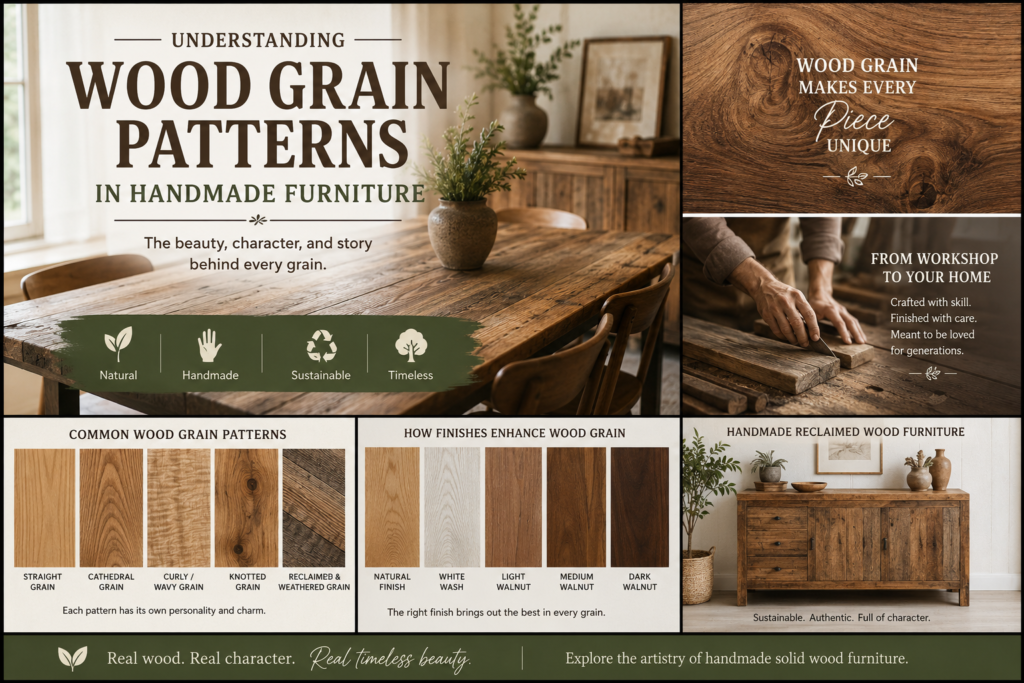
Table of Contents
- What Is Wood Grain?
- Why Wood Grain Matters in Handmade Furniture
- Common Wood Grain Patterns Explained
- How Grain Patterns Affect Interior Design
- Understanding Grain in Reclaimed Wood Furniture
- Choosing the Right Grain Pattern for Your Space
- How Finishes Change the Appearance of Wood Grain
- From Workshop to Your Home: The Journey of Wood Grain
- Practical Tips for Buying Handmade Wood Furniture
- FAQ Section
- Conclusion
What Is Wood Grain?
Wood grain refers to the visible pattern created by the natural growth of a tree. These patterns form through the arrangement of fibers, annual growth rings, knots, and natural movement within the wood.
Every tree grows differently depending on climate, age, water, soil conditions, and environmental stress. That means every board cut from solid wood carries unique visual characteristics.
Some grain patterns appear calm and subtle. Others experience a sense of movement and drama. Certain woods display straight lines, while others show swirling, cathedral-like curves or irregular organic textures.
This natural variation is one of the defining qualities of handmade solid wood furniture.
Unlike printed surfaces or synthetic materials, real wood grain has depth. It changes slightly under different lighting conditions and becomes richer over time as the furniture ages.
Why Wood Grain Matters in Handmade Furniture
Wood grain plays a major role in how furniture looks and feels within a space.
In mass-produced furniture, grain is often hidden beneath heavy stains, veneers, or synthetic coatings. Handmade furniture typically allows the wood’s natural character to remain visible.
This creates furniture that feels warmer, more authentic, and visually alive.
Grain Adds Visual Movement
A large dining table with flowing grain patterns naturally draws the eye across the surface. A cabinet with balanced grain creates harmony. A bench with textured reclaimed wood feels grounded and organic.
Grain acts almost like artwork built directly into the material.
Grain Influences Style
Different grain patterns suit different interiors.
- Straight grain often feels modern and clean
- Heavy texture works well in rustic spaces
- Soft flowing grain complements minimalist interiors
- Reclaimed grain patterns add warmth and depth
Interior designers frequently use wood grain intentionally to shape the atmosphere of a room.
Grain Makes Every Piece Unique
Even if two furniture pieces share the same design, their grain patterns will never match perfectly. This individuality is one of the reasons handmade furniture feels more personal.
A reclaimed wood dining table may contain weathered markings, old nail holes, subtle cracks, or grain variations that tell the story of the wood’s previous life.
These details create character rather than perfection.
Common Wood Grain Patterns Explained
Understanding different grain patterns helps buyers make more thoughtful furniture choices.
Straight Grain
Straight grain runs in consistent parallel lines.
Characteristics
- Clean and minimal appearance
- Balanced visual flow
- Common in modern and Scandinavian interiors
- Creates a calm aesthetic
Straight-grain furniture works well in spaces where simplicity and subtle texture are important.
Cathedral Grain
Cathedral grain creates curved arch-like patterns across flat wood surfaces.
Characteristics
- Dramatic flowing movement
- Natural visual depth
- Popular in dining tables and desktops
- Creates warmth and richness
This pattern is commonly seen in reclaimed wood furniture because older boards often reveal more pronounced grain structures.
Curly or Wavy Grain
Curly grain appears almost rippled under light.
Characteristics
- Reflective texture
- Decorative appearance
- Adds movement and visual interest
- Often used as an accent detail
This type of grain is highly valued because it feels naturally artistic.
Knotted Grain
Knots occur where branches once grew from the tree.
Characteristics
- Rustic and organic feel
- Adds personality
- Common in reclaimed wood furniture
- Creates visual contrast
While some homeowners actively look for knots because they give the furniture a more authentic feel, others prefer cleaner surfaces.
Reclaimed and Weathered Grain
Reclaimed wood often contains irregular patterns formed through age, wear, and natural exposure.
Characteristics
- Layered texture
- Color variation
- Visible age marks
- Strong rustic character
This type of grain is difficult to replicate artificially, which is why reclaimed wood furniture remains highly valued in interior design.
How Grain Patterns Affect Interior Design
Wood grain can completely influence the mood of a room.
Minimalist Interiors
In minimalist spaces, subtle straight grain works beautifully because it adds warmth without creating visual clutter.
A simple reclaimed wood garden bench with soft grain can prevent modern interiors from feeling cold or overly sterile.
Rustic and Farmhouse Interiors
Heavier grain patterns, knots, and reclaimed textures suit farmhouse and rustic interiors naturally.
These spaces benefit from furniture that feels imperfect in an intentional and beautiful way.
Contemporary Interiors
Modern interiors often balance clean architecture with natural materials.
Wood grain helps soften hard surfaces like concrete, metal, and glass. A handmade dining table with visible grain can become the focal point of an otherwise minimal room.
Layering Texture Through Grain
Interior designers often layer materials carefully. Wood grain works especially well with:
- Linen fabrics
- Stone surfaces
- Ceramics
- Natural fibers
- Matte metals
These combinations create spaces that feel balanced and lived-in rather than overly polished.
Understanding Grain in Reclaimed Wood Furniture
Handmade reclaimed wood furniture offers some of the most interesting grain patterns because the wood has already aged naturally over time.
Older wood often develops deeper tonal variation and more pronounced texture than freshly milled lumber.
Why Reclaimed Grain Feels Different
Reclaimed wood has typically experienced decades of natural expansion, contraction, weather exposure, and use. These conditions create rich visual detail that newer wood may not yet have.
That is why reclaimed wood furniture often feels warmer and more layered visually.
Natural Imperfections Become Character
Small cracks, filled nail holes, patches, texture variation, and weathered grain are common in reclaimed wood furniture.
These details should not always be viewed as flaws. In many cases, they are what give the furniture authenticity.
Handmade reclaimed wood furniture embraces individuality rather than trying to hide it completely.
Choosing the Right Grain Pattern for Your Space
Not every grain pattern suits every room equally.
For Calm and Airy Interiors
Choose lighter finishes with subtle grain movement. These work well in Scandinavian, Japandi, and modern interiors.
For Warm and Cozy Spaces
Richer walnut finishes and pronounced grain patterns create warmth and depth.
These are ideal for dining rooms, reading corners, and rustic-inspired homes.
For Statement Furniture Pieces
A dramatic cathedral grain dining table or reclaimed wood coffee table can become the centerpiece of a room naturally.
When the grain is bold, keep surrounding décor simpler to allow the furniture to stand out.
How Finishes Change the Appearance of Wood Grain
Finishes affect how visible the grain becomes.
Natural Finish
Natural finishes usually highlight the authentic texture and tone of the wood while maintaining a soft appearance.
White Wash Finish
White wash finishes soften contrast and create an airy coastal or farmhouse feel.
Walnut Finishes
Walnut tones deepen the grain pattern and make movement within the wood more visible.
Dark walnut finishes often create a richer, more dramatic atmosphere.
Matte vs Gloss
- Matte finishes feel organic and understated
- Gloss finishes reflect more light and emphasize grain contrast
Many handmade furniture makers prefer softer finishes because they allow the wood texture to remain natural.
From Workshop to Your Home: The Journey of Wood Grain
Every handmade furniture piece begins with material selection.
For furniture makers working with reclaimed wood, choosing boards is not simply about dimensions. It is about understanding the grain itself.
Some boards may be selected for calm, balanced grain. Others may be chosen because they contain dramatic movement, knots, or weathered textures that add character.
The wood is then cleaned, prepared, cut, and arranged carefully so the grain flows naturally across the furniture piece.
Skilled craftspeople often spend significant time deciding how boards should align. On dining tables especially, grain placement affects the entire visual balance of the piece.
Once sanded and finished, the grain becomes even more visible. The furniture then leaves the workshop and enters a home where the wood continues to age naturally over time.
Sunlight, daily use, touch, and environment slowly deepen the personality of the wood even further.
That evolving character is part of what makes handmade furniture feel alive.
Practical Tips for Buying Handmade Wood Furniture
Look at Grain Closely
Do not only evaluate shape and dimensions. Study the grain itself. Consider whether you want calm consistency or more dramatic variation.
Understand Natural Variation
Solid wood furniture will never look perfectly uniform. Small tonal shifts and grain differences are normal and often desirable.
Match Grain to Room Mood
Choose softer grain for minimalist spaces and stronger texture for rustic or layered interiors.
Ask About Finish Types
Finishes can completely change how grain appears in person. Request finish samples when possible.
Appreciate Character Marks
Especially in reclaimed wood furniture, marks, knots, and texture variation are often part of the beauty rather than defects.
FAQ Section
What is wood grain in furniture?
Wood grain refers to the natural pattern formed by the fibers and growth rings within wood. It creates the visible texture and movement seen on solid wood furniture.
Why is wood grain important in handmade furniture?
Wood grain affects the appearance, texture, character, and overall style of furniture. It also makes each handmade piece unique.
What type of wood grain is best for modern interiors?
Straight or subtle grain patterns often work best in modern interiors because they create a cleaner and calmer appearance.
Why does reclaimed wood have more character?
Reclaimed wood has naturally aged over time, creating richer grain texture, tonal variation, and visible history within the material.
Do wood finishes affect grain visibility?
Yes. Natural and walnut finishes often enhance grain visibility, while white wash finishes soften contrast and create a lighter appearance.
Conclusion
Wood grain is one of the most important and beautiful elements of handmade solid wood furniture. It adds movement, texture, individuality, and warmth in ways synthetic materials simply cannot replicate.
Understanding grain patterns helps homeowners and designers choose furniture more thoughtfully. Whether subtle and refined or bold and weathered, grain shapes how furniture interacts with light, space, and surrounding décor.
Handmade reclaimed wood furniture takes this even further by preserving the natural history and character of aged wood. The result is furniture that feels grounded, authentic, and timeless.
For anyone furnishing a home thoughtfully, paying attention to wood grain is not a small detail. It is often what transforms furniture from functional to meaningful.