
A coffee table often sits quietly at the center of a living room, but its impact on the space is much larger than many people realize. It connects seating arrangements, balances the room visually, provides practical surface space, and often becomes one of the most frequently used furniture pieces in the home.
The right coffee table can make a living room feel warm, complete, and thoughtfully designed. The wrong one can make the space feel crowded, disconnected, or impractical.
Choosing a coffee table is not only about finding something attractive. Size, height, proportion, material, shape, texture, and functionality all influence how well it fits into everyday living. A table that looks beautiful in a showroom may not work comfortably in a real home if it interrupts movement or feels out of scale.
Handmade solid wood coffee tables, especially those crafted from reclaimed wood, have become increasingly popular because they combine practicality with natural warmth and timeless character. Their grain patterns, texture, and handcrafted details help living spaces feel more grounded and personal.
Whether you are furnishing a large family living room, a small apartment, or a carefully styled interior project, understanding how to choose the right coffee table can completely change the feel of the room.
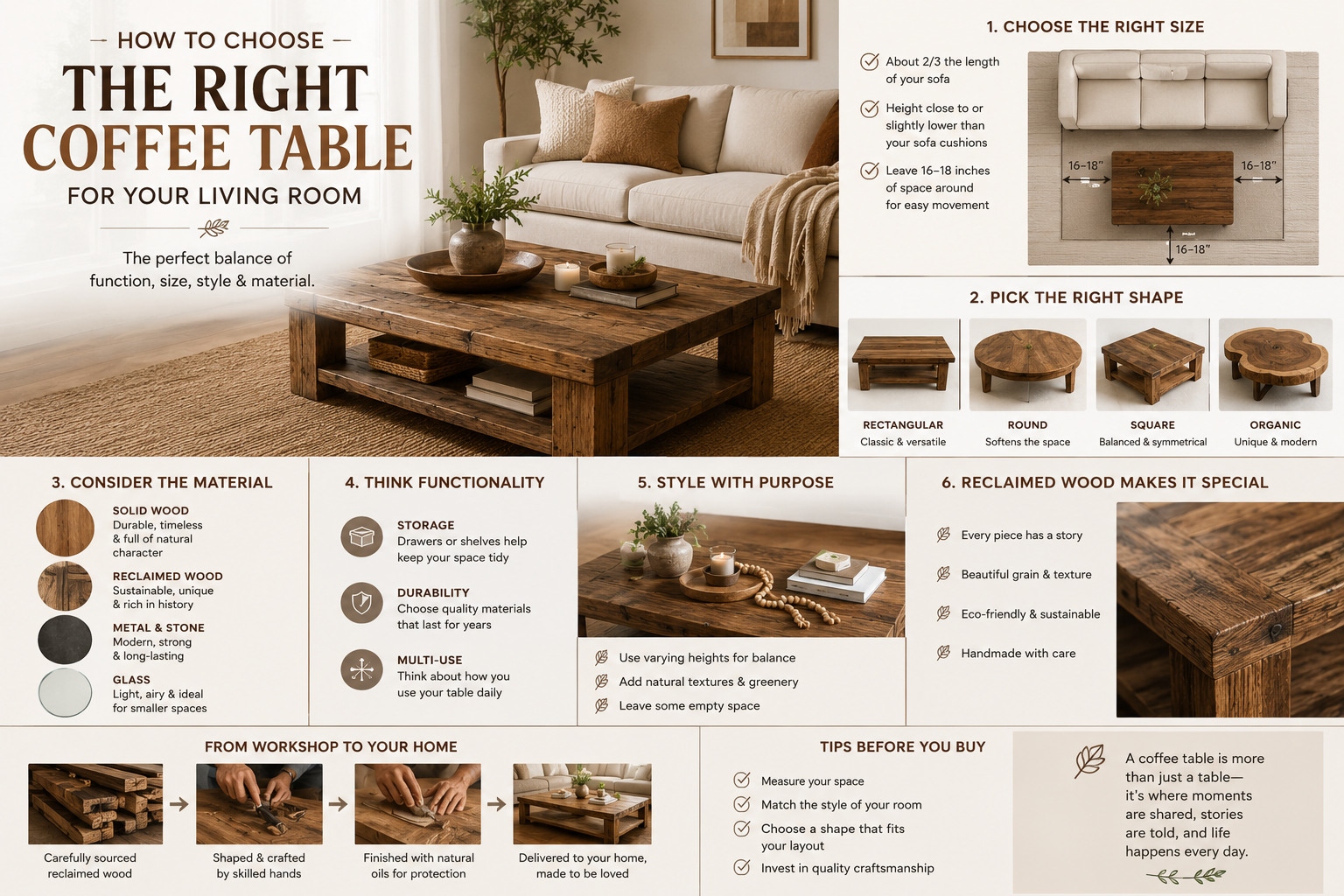
Table of Contents
- Why the Coffee Table Matters in Living Room Design
- Choosing the Right Coffee Table Size
- How Shape Affects the Room
- Understanding Coffee Table Materials
- Why Handmade Reclaimed Wood Coffee Tables Stand Out
- Functional Features to Consider
- Styling Tips for Coffee Tables
- Matching Coffee Tables to Interior Styles
- From Workshop to Your Home
- Practical Buying Tips
- FAQ Section
- Conclusion
Why the Coffee Table Matters in Living Room Design
A living room’s standard coffee table is often used as the centerpiece of the space. It sits at the center of conversation areas and naturally draws attention because it occupies the space between seating pieces.
Beyond appearance, a coffee table affects how people move, gather, and interact within the room.
A Functional Everyday Surface
Coffee tables hold far more than coffee. They often become a place for books, trays, candles, remote controls, flowers, laptops, drinks, and everyday items.
A well-designed table supports daily living without overwhelming the room.
A Balance Between Comfort and Style
The best coffee tables balance functionality with visual simplicity. They should feel practical enough for everyday use while still contributing to the room’s atmosphere.
Natural wood coffee tables often work especially well because they soften interiors and add warmth without requiring excessive decoration.
Choosing the Right Coffee Table Size
One of the most important things to consider when selecting a coffee table is its dimensions.
An elegant table that is too big might make the living area feel tiny. A table that is too small may look disconnected from the seating arrangement.
Coffee Table Length
A coffee table should generally be around two-thirds the length of the sofa.
This creates visual balance while leaving enough space for movement around the room.
Coffee Table Height
The ideal height is usually level with the sofa cushions or slightly lower.
A table that is too high can feel awkward and interrupt sightlines. A lower table generally creates a more relaxed and modern feel.
Leaving Enough Walking Space
Comfortable spacing matters.
Try to leave:
- Around 16–18 inches between the coffee table and sofa
- Enough clearance for natural movement around the room
This helps the space feel open and functional.
How Shape Affects the Room
The shape of a coffee table changes the flow and feeling of the living room.
Rectangular Coffee Tables
Rectangular tables are versatile and work well in larger seating arrangements.
Best For:
- Standard sofas
- Sectionals
- Long living rooms
Handmade reclaimed wood rectangular tables often become strong focal points because the grain naturally draws the eye across the surface.
Round Coffee Tables
Round tables soften spaces visually and improve movement in tighter rooms.
Best For:
- Small living rooms
- Homes with children
- Softer or organic interiors
They also help break up spaces filled with straight lines.
Square Coffee Tables
Square tables create symmetry and work well with sectional seating arrangements.
Best For:
- Balanced layouts
- Large seating zones
- Modern interiors
Organic and Irregular Shapes
More organic shapes are becoming popular in modern interiors because they feel softer and more natural.
These designs pair beautifully with reclaimed wood because the material itself already contains natural movement and texture.
Understanding Coffee Table Materials
The material affects not only the appearance of the table but also its durability, maintenance, and overall atmosphere.
Solid Wood Coffee Tables
One of the most classic and adaptable materials is still solid wood.
Why Homeowners Prefer Solid Wood
- Durable and long-lasting
- Warm and natural appearance
- Ages beautifully over time
- Works across many design styles
Wood grain also introduces texture naturally without needing bold patterns or excessive décor.
Glass Coffee Tables
Glass creates a lighter visual feel and works well in smaller rooms because it allows more openness visually.
However, it may require more maintenance and often lacks the warmth that wood brings.
Metal and Stone Combinations
Metal bases and stone tops can feel modern and architectural, though they sometimes create a colder atmosphere without softer materials nearby.
That is why many designers balance metal or stone with wood textures elsewhere in the room.
Why Handmade Reclaimed Wood Coffee Tables Stand Out
Handmade reclaimed wood furniture carries a character that newer manufactured materials often cannot replicate.
Every reclaimed wood coffee table contains natural grain variation, texture, and subtle imperfections shaped by time.
Natural Warmth and Texture
Reclaimed wood immediately makes living rooms feel warmer and more lived-in.
The grain patterns, aged texture, and tonal variation create visual depth that feels authentic rather than overly polished.
Every Table Feels Unique
No two reclaimed wood boards are exactly alike.
Some surfaces contain:
- Visible grain movement
- Small knots
- Natural weathering
- Filled nail holes
- Subtle texture variation
These details make each handmade coffee table feel individual.
Sustainability and Longevity
Reclaimed wood furniture also appeals to homeowners who value sustainability and long-lasting craftsmanship.
Giving older wood a second life reduces waste while preserving the beauty of natural materials.
Functional Features to Consider
A coffee table should support the way the room is actually used.
Storage Options
Some coffee tables include:
- Drawers
- Lower shelves
- Hidden storage compartments
These features are useful for families or smaller living rooms where extra storage matters.
Open vs Closed Designs
Open-base tables create a lighter appearance and help rooms feel less crowded.
Closed or chunkier designs create a more grounded and substantial presence.
Multi-Functional Use
In smaller homes, coffee tables may also serve as:
- Casual work surfaces
- Dining spaces
- Game tables
- Display areas
Choosing a durable solid wood surface becomes especially important in these situations.
Styling Tips for Coffee Tables
Styling should feel natural rather than overly arranged.
Use Different Heights
Combining objects of varying heights creates visual balance.
For example:
- A candle
- A small stack of books
- A ceramic vase
- A low tray
Leave Empty Space
The table doesn’t need to be decorated in every aspect.
Negative space helps the room feel calm and practical.
Add Natural Elements
Wood coffee tables pair beautifully with:
- Linen textures
- Ceramics
- Stone objects
- Plants
- Woven baskets
These materials create warmth and balance naturally.
Matching Coffee Tables to Interior Styles
Modern Interiors
Choose cleaner lines with subtle grain patterns and lighter finishes.
Reclaimed wood helps prevent modern spaces from feeling too cold.
Rustic and Farmhouse Spaces
Heavier grain, visible texture, and natural finishes work beautifully here.
A reclaimed wood coffee table often becomes the centerpiece of the room naturally.
Minimalist Homes
Simple shapes and balanced proportions are key.
The beauty comes from the material itself rather than excessive detail.
Industrial Interiors
Wood and metal combinations fit industrial spaces especially well.
Darker materials like brick and concrete are softened by reclaimed wood.
From Workshop to Your Home
Every handmade reclaimed wood coffee table begins with material selection.
Furniture makers carefully choose reclaimed boards based on grain, tone, strength, and character. Some pieces may feature dramatic grain movement, while others are selected for calmer textures.
The wood is then cleaned, prepared, shaped, and assembled carefully by skilled craftspeople. During construction, attention is given not only to structure but also to how the grain flows across the surface.
Natural finishes help preserve the authentic appearance of the wood while protecting it for everyday use.
Once completed, the coffee table leaves the workshop and becomes part of daily life within the home. It may hold coffee cups, books, conversations, family gatherings, or quiet evenings over many years.
That evolving relationship between furniture and home is part of what makes handmade solid wood furniture meaningful.
Practical Buying Tips
Measure Before Buying
Always measure:
- Sofa length
- Walking space
- Seating arrangement
- Existing furniture height
This prevents the table from feeling oversized or disconnected.
Prioritize Durability
Coffee tables experience daily use, so durable materials matter.
Solid wood generally ages better than lightweight manufactured surfaces.
Think Long-Term
Trends change quickly. Choosing timeless materials and balanced proportions helps the furniture remain relevant for years.
Understand Natural Variation
Especially with reclaimed wood furniture, grain patterns and texture variation are normal and desirable.
These details make the piece unique.
FAQ Section
What size coffee table should I choose?
A coffee table should usually be about two-thirds the length of the sofa and close to the sofa cushion height.
Are reclaimed wood coffee tables durable?
Yes. Properly crafted reclaimed wood furniture is highly durable because older wood is often dense and naturally aged.
What shape coffee table works best in small living rooms?
Round or oval coffee tables usually work best in smaller rooms because they improve movement and soften the layout.
How do I style a coffee table without cluttering it?
Use a few balanced decorative objects with varying heights and leave some empty space for a clean, natural look.
Why are solid wood coffee tables popular?
Solid wood coffee tables are durable, timeless, warm, and versatile across many interior styles.
Conclusion
Choosing the right coffee table is about more than finding a piece that looks attractive in the room. The best coffee tables balance function, comfort, proportion, and material in a way that supports everyday living naturally.
Handmade solid wood coffee tables, especially those crafted from reclaimed wood, bring warmth, texture, and individuality into living spaces. Their grain patterns, natural imperfections, and craftsmanship create furniture that feels authentic rather than temporary.
Whether styled in a modern apartment, rustic home, minimalist interior, or layered family living room, a thoughtfully chosen coffee table helps the entire space feel more connected and complete.
The ideal coffee table is frequently more than just furniture for both designers and homeowners. It becomes a regular part of life.