
Living in a small apartment doesn’t mean compromising on style, comfort, or functionality. In fact, limited space often inspires smarter design decisions—ones that prioritize efficiency without sacrificing aesthetics.
Whether you’re working from home, designing a cozy studio, or optimizing a compact living area, choosing the right furniture becomes essential. The goal is simple: make every square foot count.
In this guide, we’ll explore two highly effective space-saving furniture solutions—both centered around one of the most important elements in modern homes: the workspace. More specifically, we’ll look at two thoughtfully designed writing desks that balance practicality, durability, and visual appeal.
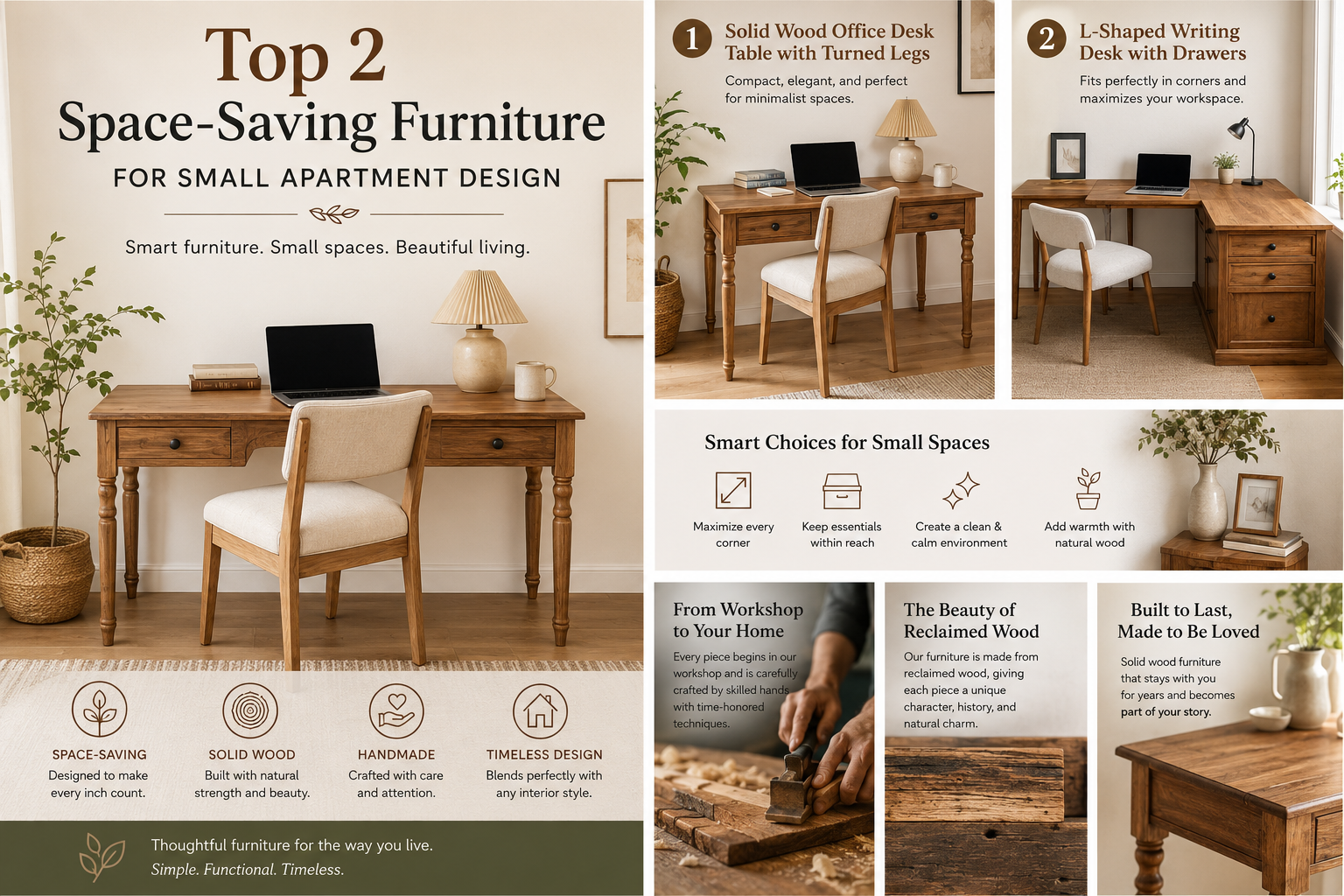
Table of Contents
- Why Space-Saving Furniture Matters
- What Makes a Desk Ideal for Small Spaces
- Solid Wood Office Desk Table with Turned Legs
- L-Shaped Writing Desk with Drawers
- Design Tips for Small Apartment Workspaces
- From Workshop to Your Home
- The Value of Handmade Reclaimed Wood Furniture
- FAQs
- Conclusion
Why Space-Saving Furniture Matters
Small apartments demand intentional design. Unlike larger homes, where excess space can mask inefficiencies, compact living spaces require every item to serve a purpose.
Space-saving furniture helps you:
- Reduce clutter
- Improve movement flow
- Create multi-functional areas
- Maintain a clean and calm environment
A well-designed desk, for example, doesn’t just provide a workspace—it can define a room, enhance productivity, and even add character to your interior.
What Makes a Desk Ideal for Small Spaces
Before choosing any desk, consider these key factors:
1. Proportion and Scale
Oversized furniture can overwhelm a small room. A well-proportioned desk should fit naturally within the space.
2. Storage Efficiency
Built-in drawers or shelves reduce the need for additional furniture.
3. Visual Lightness
Design elements like slim legs or open bases make a piece feel less bulky.
4. Durability
In small spaces, furniture often serves multiple roles—so it needs to last.
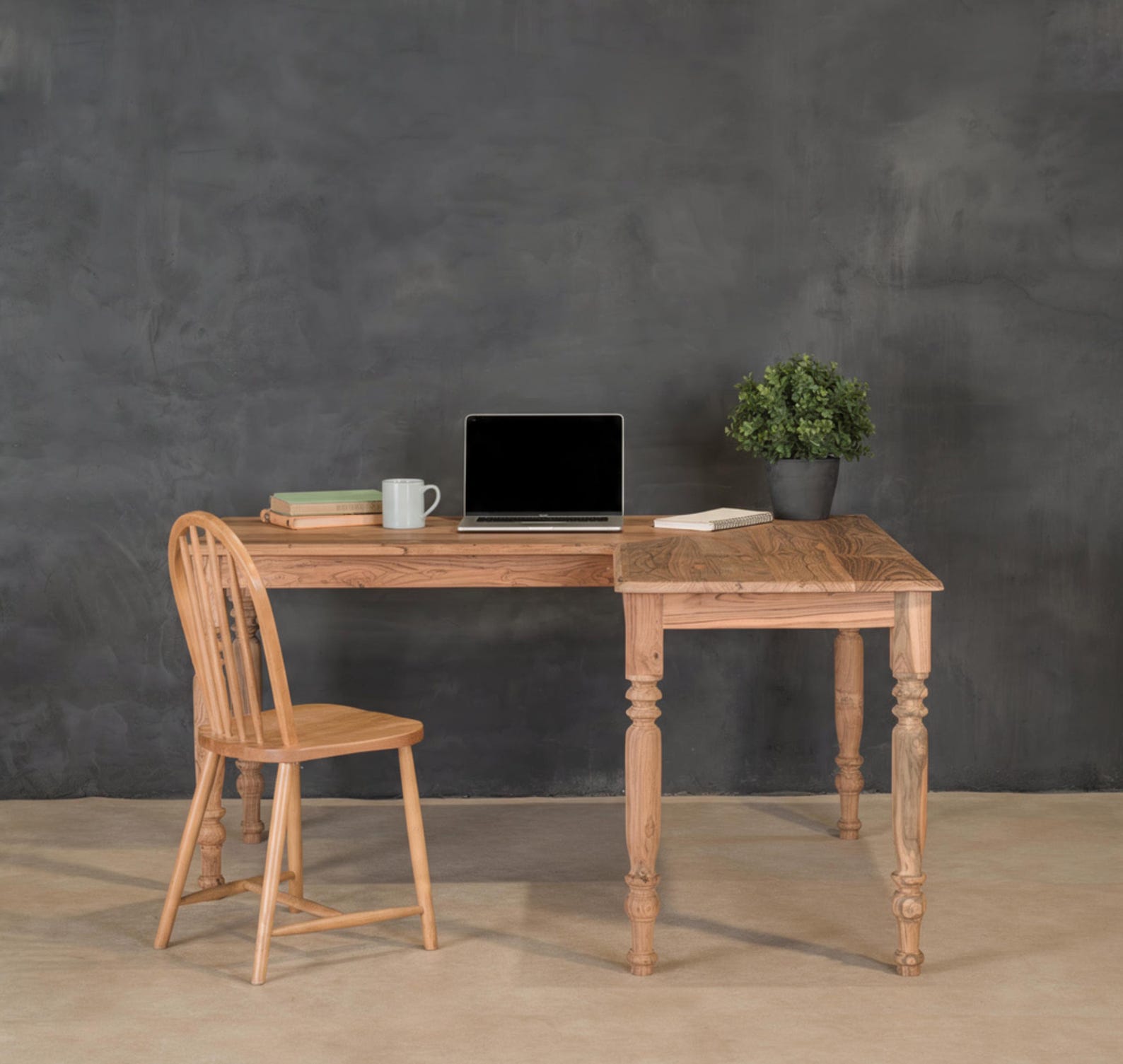
1. Teak Wood Office Desk Table with Turned Legs
This desk is a perfect example of how traditional craftsmanship can meet modern spatial needs.
Why It Works in Small Spaces
The defining feature here is its turned legs. While subtle, they create a sense of openness and elegance. Unlike bulky frames, this design allows light and air to flow around the desk, making the room feel less crowded.
Key Benefits
- Compact yet functional surface
- Timeless aesthetic that blends with multiple styles
- Visually lightweight structure
- Ideal for bedrooms, corners, or shared spaces
Best Placement Ideas
- Against a wall for a minimal setup
- Near a window for natural light
- As a dual-purpose console + workspace
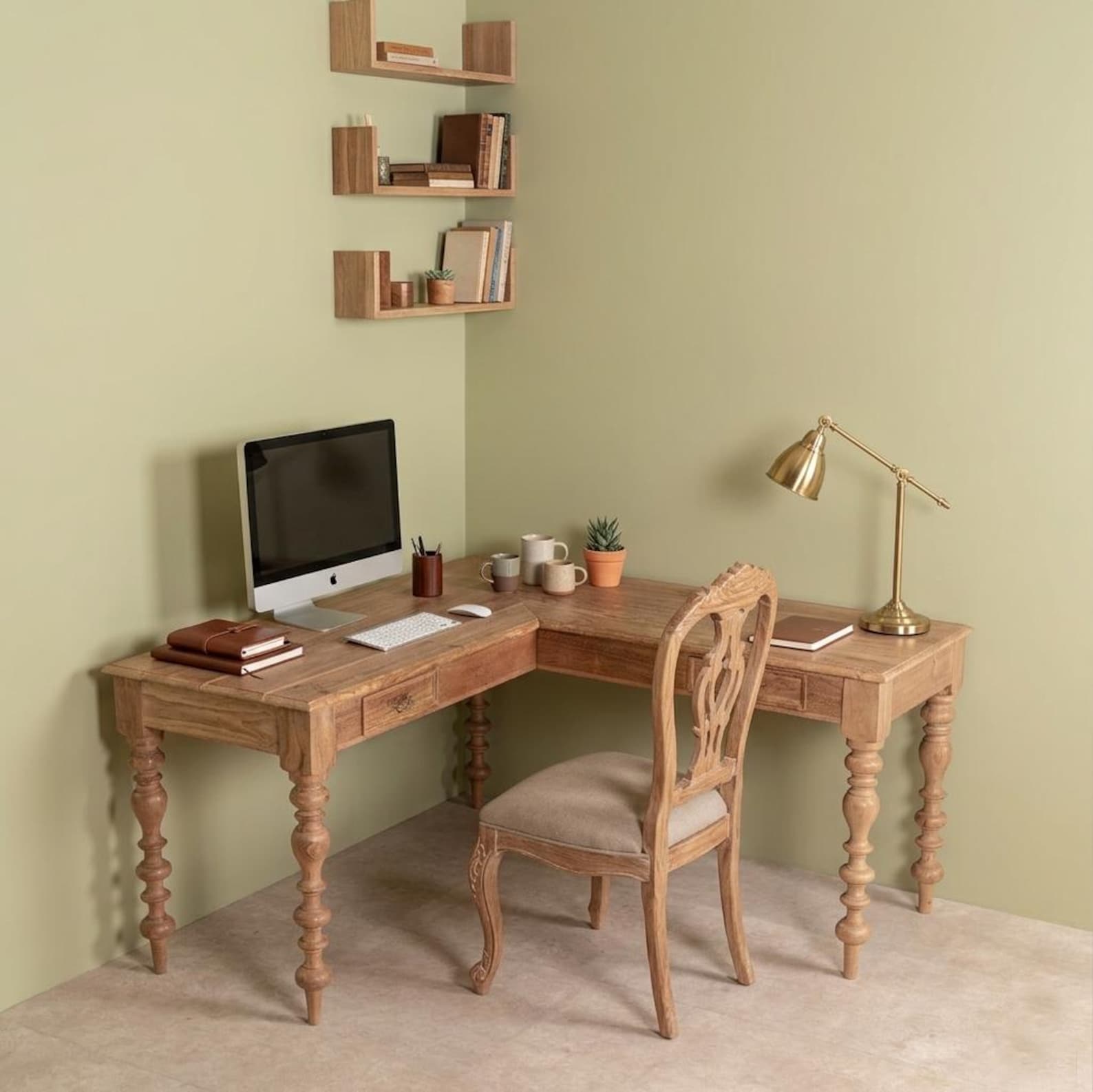
2. L-Shaped Writing Desk with Drawers
When it comes to maximizing corners—often the most underutilized part of a room—nothing works better than an L-shaped desk.
Why It Works in Small Spaces
Instead of occupying central space, this desk hugs the corner, unlocking unused areas and creating a dedicated workstation without interfering with the rest of the room.
Key Benefits
- Maximizes corner space
- Provides larger working surface
- Integrated drawers reduce clutter
- Ideal for multitasking setups
Best Placement Ideas
- Corner of a studio apartment
- Shared workspaces
- Combined office + living areas
Design Tips for Small Apartment Workspaces
Keep It Minimal
Avoid overcrowding your desk. Stick to essentials.
Use vertical space.
Wall shelves or hanging organizers can free up desk surface.
Choose Neutral Tones
Natural wood tones create warmth without overwhelming the space.
Prioritize Lighting
A well-lit workspace feels larger and more inviting.
Multi-Functional Furniture
Choose pieces that can adapt—like a desk that also works as a console.
From Workshop to Your Home
Behind every well-crafted piece of furniture is a story—one that begins long before it reaches your living space.
In many traditional workshops, the process starts with selecting the right wood. Each plank is inspected for grain, strength, and character. From there, it’s carefully cut, shaped, and assembled by skilled hands.
Unlike mass-produced furniture, where speed is often prioritized, handcrafted pieces take time. Every detail—from joinery to finishing—is done with intention.
By the time a desk arrives in your home, it carries not just functionality, but also the marks of craftsmanship—subtle variations, textures, and finishes that make each piece unique.
The Value of Handmade Reclaimed Wood Furniture
Reclaimed wood furniture brings a distinct character that newer materials often lack.
Each piece of wood has a past—perhaps it was part of an old structure, a door, or a beam. When repurposed, it carries forward its history in the form of grain patterns, textures, and natural imperfections.
Beyond aesthetics, reclaimed wood is also known for:
- Strength and durability
- Unique visual appeal
- Reduced material waste
In small apartments, where every piece matters, furniture made from reclaimed wood can add depth and personality without requiring additional decor.
FAQs
1. What is the best desk for a small apartment?
Compact desks or corner desks, like L-shaped designs, work best as they maximize space without overcrowding.
2. Are solid wood desks suitable for small spaces?
Yes, especially when designed thoughtfully. Solid wood desks offer durability and can visually enhance a space.
3. How do I make my small workspace look bigger?
Use light colors, keep surfaces clean, and position furniture near natural light sources.
4. Is an L-shaped desk too big for a small room?
Not necessarily. When placed in a corner, it actually saves central space and improves layout efficiency.
5. Why choose handmade furniture over factory-made?
Handmade furniture often offers better craftsmanship, uniqueness, and long-term durability.
Conclusion
Designing a small apartment is less about limitation and more about intention. The right furniture doesn’t just fit your space—it transforms it.
A well-designed desk, whether compact or corner-based, can redefine how you live and work within your home. By choosing pieces that combine thoughtful design with lasting materials, you create a space that feels both functional and personal.
If you’re considering upgrading your workspace, start with pieces that are built to last and designed to adapt—because in small spaces, every choice matters.