
Furniture does more than fill a room—it helps define how a home feels, functions, and reflects the people who live there. While mass-produced furniture remains widely available, many homeowners are turning toward handmade furniture as a more meaningful and long-lasting investment.
Handcrafted pieces offer something that factory-made furniture often cannot: individuality, quality craftsmanship, and a connection to the materials and makers behind every design. Whether it’s a dining table built from reclaimed teak wood or a custom console crafted by skilled artisans, handmade furniture brings authenticity into modern homes.
As homeowners become more conscious of sustainability, durability, and personal style, handmade furniture continues to grow in popularity. Here are seven compelling reasons why.
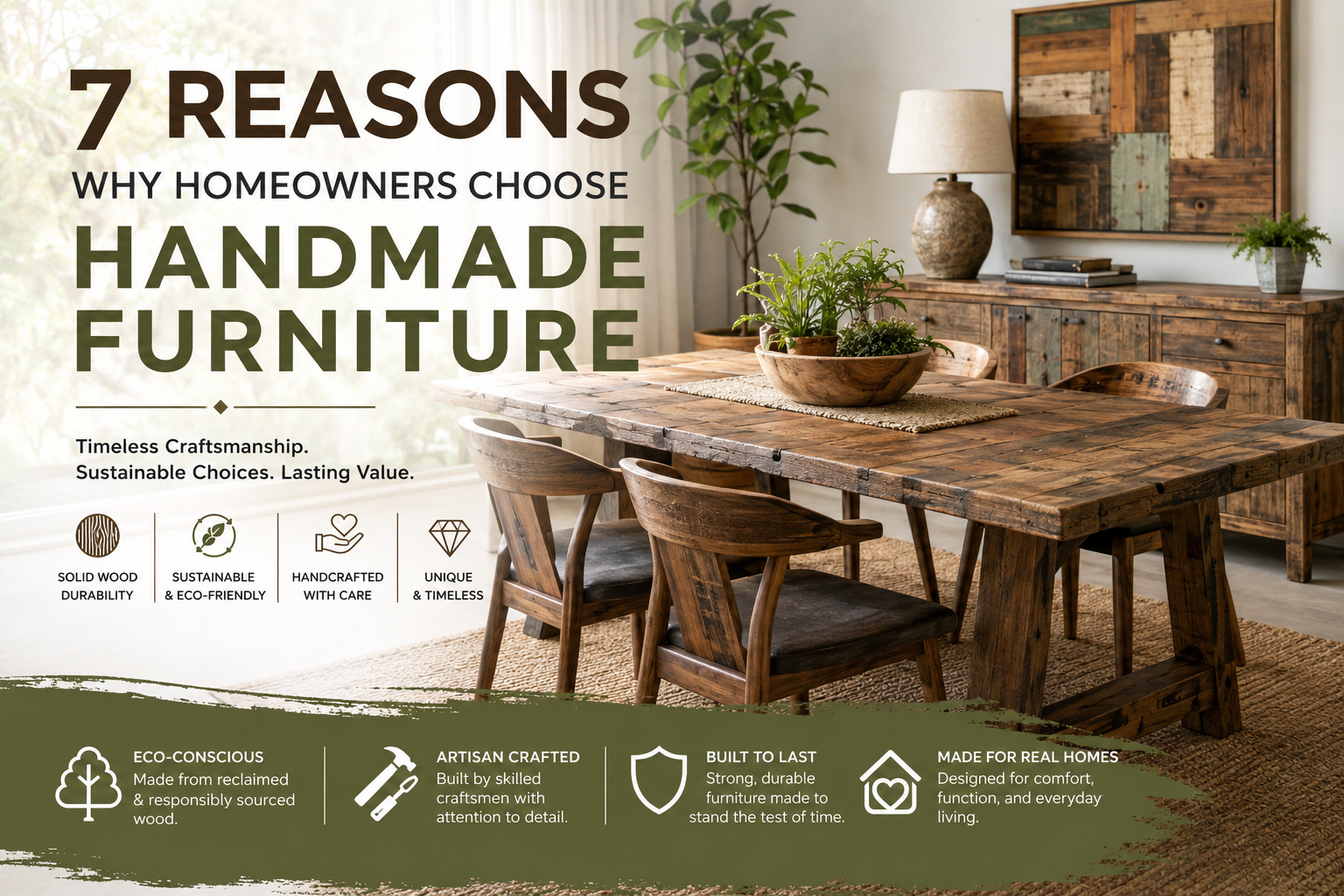
Table of Contents
- Superior Craftsmanship and Attention to Detail
- Built to Last for Generations
- Every Piece Has a Unique Story
- Sustainable and Environmentally Responsible
- Customization for Your Space and Lifestyle
- Elegant Design That Never Goes Out of Style
- Supporting Skilled Artisans and Traditional Craftsmanship
- From Workshop to Your Home: The Journey of Handmade Furniture
- FAQ
- Conclusion
1. Superior Craftsmanship and Attention to Detail
One of the biggest reasons homeowners choose handmade furniture is the exceptional level of craftsmanship involved.
Unlike mass-produced furniture manufactured on assembly lines, handmade pieces are created by artisans who carefully shape, join, sand, and finish every component. This hands-on approach allows for greater precision and quality control throughout the production process.
Why It Matters
- Stronger joinery techniques
- Better finishing quality
- Greater attention to wood grain and natural characteristics
- Reduced manufacturing defects
Every detail, from smooth edges to carefully selected timber, contributes to a finished product that feels refined and thoughtfully made.
2. Built to Last for Generations
Many homeowners have grown frustrated with furniture that begins showing wear after only a few years. Handmade furniture is often built using solid wood and traditional woodworking methods that prioritize longevity.
Rather than relying heavily on particle board, veneers, or low-cost materials, handcrafted furniture frequently uses durable hardwoods capable of withstanding daily use.
Long-Term Value
A well-made dining table, coffee table, or cabinet can remain functional and beautiful for decades when properly maintained.
Investing in quality often means:
- Fewer replacements
- Lower long-term costs
- Better structural integrity
- Increased resale or heirloom value
For many homeowners, durability is just as important as aesthetics.
3. Every Piece Has a Unique Story
Every item of furniture made by hand is specific.
Natural wood variations, artisan techniques, and handcrafted construction create subtle differences that make each item distinctive. These imperfections are often what give furniture its character and charm.
The Beauty of Natural Materials
Wood grain patterns, knots, texture variations, and natural markings ensure every piece feels authentic.
Instead of looking identical to thousands of other products in a warehouse, handmade furniture offers individuality that helps create a more personal living space.
Homeowners increasingly appreciate furniture that feels collected rather than manufactured.
4. Sustainable and Environmentally Responsible
Sustainability has become a major factor in furniture purchasing decisions.
Many buyers are looking for ways to reduce waste and make environmentally conscious choices for their homes. Handmade furniture often aligns well with these values, particularly when responsibly sourced materials are used.
Handmade Reclaimed Wood Furniture’s Elegance
Because it provides ancient wood a second chance at life, handmade reclaimed wood furniture has become increasingly popular.
Wood recovered from old buildings, barns, doors, and architectural structures can be transformed into beautiful furniture while reducing demand for newly harvested timber.
Benefits include:
- Reduced environmental impact
- Less material waste
- Preservation of old-growth wood
- Unique character and texture
The natural weathering and history found in reclaimed wood often create visual depth that cannot be replicated with newly milled lumber.
5. Customization for Your Space and Lifestyle
Every home is different.
Room dimensions, storage needs, design preferences, and daily routines vary significantly from one homeowner to another. Handmade furniture offers flexibility that mass-produced furniture often cannot.
Popular Customization Options
Size Adjustments
Perfect for challenging spaces, apartments, or large open-plan homes.
Wood Selection
Different wood species create different visual styles and performance characteristics.
Finish Options
Homeowners can often choose colors, stains, or natural finishes that complement their interior design.
Functional Features
Additional shelving, storage compartments, or specialized dimensions can be incorporated into custom pieces.
This level of customization allows homeowners to design areas that really represent their way of life.
6. Elegant Style That Never Goes Out of Style
Furniture trends come and go.
However, handcrafted furniture often focuses on timeless design principles rather than short-lived trends. Pieces with well-considered construction, high-quality materials, and clean lines last for many years.
Designing for Longevity
Timeless furniture works across various design styles, including:
- Modern
- Rustic
- Farmhouse
- Scandinavian
- Transitional
- Contemporary
Because these pieces are less trend-dependent, homeowners are less likely to replace them during future renovations.
The result is a home that feels curated rather than constantly changing with seasonal trends.
7. Supporting Skilled Artisans and Traditional Craftsmanship
Choosing handmade furniture is also a way to support skilled craftspeople who have spent years developing their woodworking expertise.
Behind every handcrafted piece is a team of artisans who understand materials, construction techniques, and design principles.
Preserving Craft Traditions
Many traditional woodworking methods have been passed down through generations. Supporting handmade furniture helps preserve these valuable skills and encourages the continuation of craftsmanship in a world increasingly dominated by automation.
For many homeowners, knowing who made their furniture adds meaning and value to the final product.
From Workshop to Your Home: The Journey of Handmade Furniture
One of the most rewarding aspects of handmade furniture is understanding the process behind its creation.
The journey often begins with carefully selecting reclaimed or sustainably sourced wood. Artisans then inspect each piece of timber, highlighting its unique grain patterns and structural qualities.
The wood is cut, shaped, assembled, sanded, and finished by hand through multiple stages. Each step needs expertise, dedication, and care for detail.
Unlike factory production, where speed is often prioritized, handmade furniture focuses on quality at every stage.
When the finished piece arrives in your home, it represents more than just furniture—it reflects craftsmanship, materials, and countless hours of skilled work.
This connection between maker and homeowner is one of the reasons handcrafted furniture continues to resonate with buyers around the world.
Practical Design Tips for Using Handmade Furniture
Mix Old and New
Pair handmade wood furniture with contemporary décor to create balance and visual interest.
Use Statement Pieces
A handcrafted dining table or console table can become a focal point in the room.
Highlight Natural Textures
Allow wood grain, knots, and reclaimed details to remain visible rather than covering them with excessive accessories.
Layer Materials
Combine wood with textiles, metal accents, and natural stone for a sophisticated, layered look.
Invest in High-Traffic Areas
Dining rooms, entryways, and living spaces often benefit most from durable handmade furniture.
Frequently Asked Questions (FAQ)
Is handmade furniture worth the investment?
Yes. Handmade furniture often provides superior durability, craftsmanship, and long-term value compared to many mass-produced alternatives.
Why is handmade furniture more expensive?
The cost reflects skilled labor, higher-quality materials, longer production times, and greater attention to detail.
What makes reclaimed wood furniture unique?
Reclaimed wood contains natural aging, texture, and character developed over decades, making each piece one of a kind.
How long does handmade furniture last?
With proper care, solid wood handmade furniture can last for generations.
Does handmade furniture fit modern interiors?
Absolutely. Handmade furniture is available in modern, minimalist, rustic, industrial, and contemporary styles.
Is reclaimed wood furniture environmentally friendly?
Generally, yes. Reusing existing wood reduces waste and lowers demand for newly harvested timber.
Conclusion
The growing popularity of handmade furniture is driven by more than aesthetics. Homeowners appreciate the craftsmanship, durability, sustainability, and individuality that handcrafted pieces bring into their homes.
Whether it’s a custom dining table, a reclaimed wood console, or a handcrafted storage cabinet, handmade furniture offers a level of authenticity that mass-produced products often struggle to match.
For those looking to create a home filled with character, quality, and timeless design, investing in thoughtfully crafted furniture remains one of the most rewarding choices available.