
Pinterest has a funny way of predicting your living room a year before you redecorate it. Scroll long enough and patterns start to surface, the same curved tables, the same warm timber tones, the same softly lit corners that somehow feel both new and familiar. By 2026, those saved pins have settled into a clear mood: rooms that feel calm, tactile, and a little bit imperfect on purpose.
This isn’t about chasing every fleeting trend. It’s about spotting the ideas with staying power and figuring out which ones actually suit how you live. Below are the furniture designs flooding boards this year, why they’re resonating, and how to bring them home without your space turning into a showroom no one’s allowed to touch.
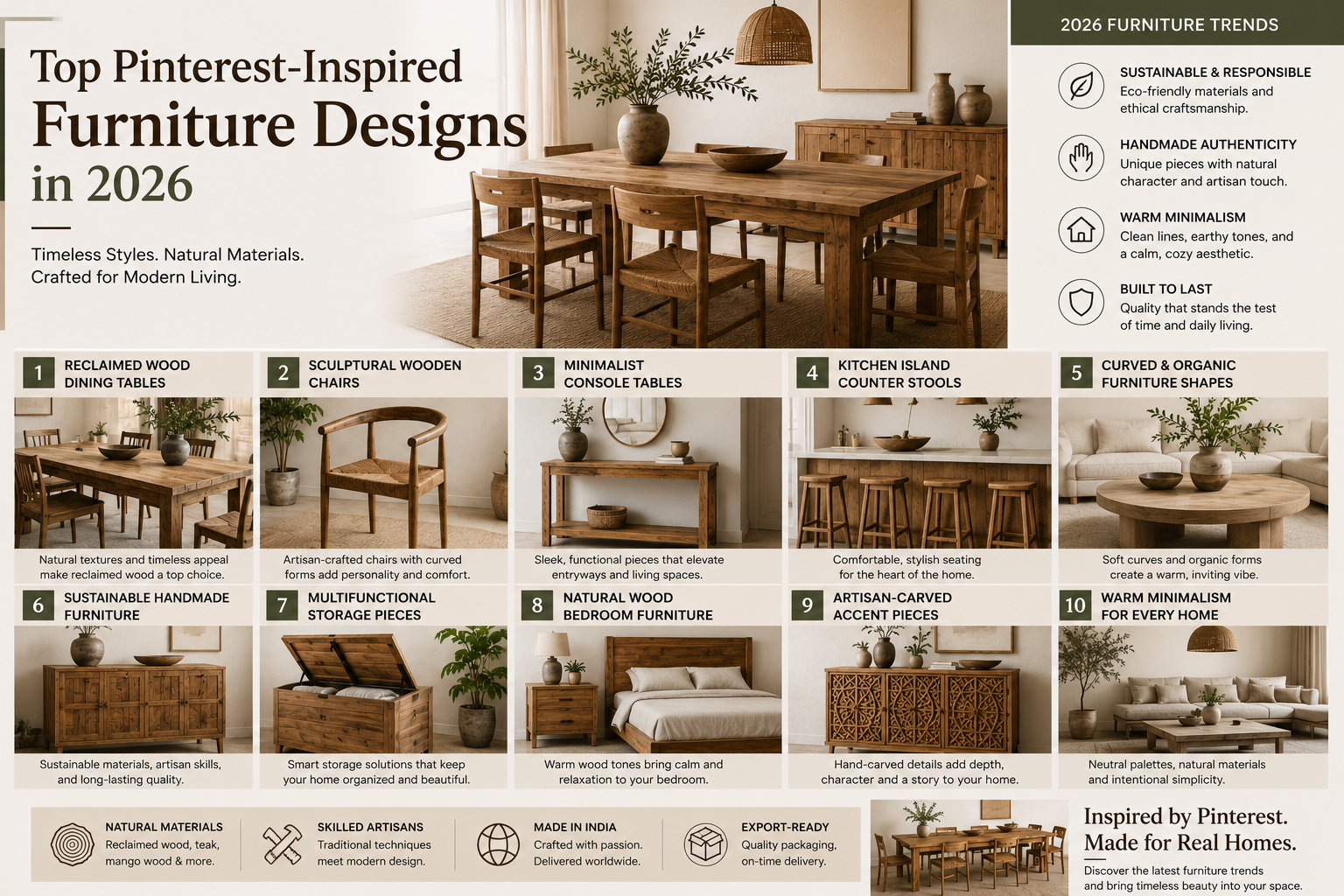
Table of Contents
- Curves are quietly taking over
- Warm woods and the return of teak
- The entryway as a design moment
- Statement mirrors that do more than reflect
- Designing for slow living
- From workshop to your home
- The reclaimed wood revival
- FAQ
- Final thoughts
Curves Are Quietly Taking Over
If 2026 has a shape, it’s the circle. Sharp corners and rigid rectangles are giving way to rounded edges and soft silhouettes, and Pinterest is absolutely covered in them. The appeal is partly visual and partly practical. Round forms feel gentler in a room, they ease foot traffic, and they photograph beautifully, which never hurts a pin.
Dining is where this shows up most. A round table transforms the atmosphere of a meal by eliminating the head of the table, promoting easier conversation, and fitting more efficiently into smaller spaces. A piece like this handcrafted round dining table in reclaimed teak captures the look exactly: a circular top with genuine grain variation, the kind of surface that reads warm rather than slick.
Curves beyond the dining room
The trend doesn’t stop at dinner. Home entertaining is having a moment, and the round bar table is one of the more unexpected pins climbing this year. Tucked into a corner with two stools, something like this reclaimed teak round bar table turns dead space into a little gathering spot. It’s the kind of piece that quietly invites people to linger.
Warm Woods and the Return of Teak
Cool grays and stark whites are fading from the most-saved boards. In their place: honeyed timber, deep browns, and the rich amber of teak. Warm wood tones make a room feel grounded and lived-in, and they pair effortlessly with the cream, terracotta, and olive palettes trending alongside them.
Teak in particular is back, partly for its looks and partly for its toughness. It resists moisture, ages gracefully, and develops a patina that synthetic surfaces simply can’t fake.
The coffee table as a centrepiece
The living room’s focal point is the sculptural coffee table—less a flat surface and more a work of art where you can place a mug.
A hand-carved reclaimed teak coffee table fits this brief, where the carving and grain give it presence even before you style it with books and a candle. The trick is letting one strong piece breathe rather than crowding it.
The Entryway as a Design Moment
For years the entryway was an afterthought, a spot to dump keys and kick off shoes. Pinterest has decided otherwise. The “first impression hallway” is everywhere in 2026, and the console table is its hero.
A console does real work in a narrow space, offering a landing surface, a place for a lamp and a small vase, and a chance to set the tone the moment someone walks in. A mid-century style reclaimed teak console table hits the sweet spot people keep saving: clean lines, slim legs, and warm wood that softens an otherwise functional zone. Style it with a single sculptural object and you’ve got the look.
Statement Mirrors That Do More Than Reflect
Mirrors have quietly become décor’s hardest-working players. The right one bounces light into dim corners, makes a small room feel twice its size, and adds shape to a flat wall. In 2026, the round wooden-framed mirror is the standout, echoing all those soft curves trending elsewhere.
Hung above a console or in a bedroom, a round reclaimed teak mirror frame ties a scheme together without shouting for attention. The wooden frame keeps it warm rather than clinical, which is exactly why these keep getting pinned.
Designing for Slow Living
Underneath all these trends sits a quieter shift. People are painting rooms that feel restful, not rooms that feel expensive. The phrase floating around design circles is “slow living,” and it shows up as natural materials, fewer but better pieces, and furniture that’s built to outlast a trend cycle.
A few practical ways to bring that calm home:
- Buy fewer, choose better. One solid wood piece you love beats three disposable ones you’ll replace.
- Mix textures, not just colors. Pair smooth timber with linen, wool, or woven jute to keep a room from feeling flat.
- Leave breathing room. Negative space is a design choice. Don’t fill every corner.
- Let materials age. A scratch or a deepening patina on real wood is character, not damage.
From Workshop to Your Home
It’s easy to forget that the perfectly styled pin you saved started as a rough plank in someone’s workshop. Handmade pieces follow a slower path than flat-pack furniture, and that’s the whole point.
Timber is dried for weeks or months, then cut, joined, and shaped, often by a single artisan who sees the piece from start to finish. Sanding happens in stages until the surface feels soft underhand, followed by oiling or waxing with drying time between coats. Only then is it wrapped, crated, and shipped, sometimes across oceans, before it lands in your room. When a piece feels like it has weight and warmth in person, this is why. You’re holding time and craft, not just a product.
The Reclaimed Wood Revival
One thread runs through nearly every trend above: reclaimed wood. Salvaged from old beams, retired boats, and dismantled structures, this timber arrives with a history already written into it: faded marks, old nail holes, and grain you couldn’t replicate if you tried.
Handmade reclaimed wood furniture suits the 2026 mood perfectly because it’s sustainable, characterful, and genuinely one of a kind. No two boards match, which means no two finished pieces do either. For anyone tired of furniture that looks identical to a neighbor’s, that’s the appeal. It’s also kinder to the planet, giving old wood a second life instead of felling more.
FAQ
What furniture style is trending on Pinterest in 2026?
Curved silhouettes, warm wood tones, and natural materials lead the boards, with round dining tables, sculptural coffee tables, and statement mirrors among the most saved.
Why is teak wood popular again?
Teak combines a rich, warm look with real durability and moisture resistance, and it develops a beautiful patina over time, which fits the warm, lasting aesthetic of 2026.
Are round dining tables practical?
Yes. They improve conversation flow, suit smaller rooms thanks to a compact footprint, and have no awkward “head” of the table.
Is reclaimed wood furniture worth it?
For most buyers, yes. It’s durable, sustainable, and unique, and reclaimed hardwood is often denser and more stable than freshly cut timber.
How do I follow a trend without my home looking dated later?
Invest in timeless materials like solid wood and keep trend-chasing to easily swapped accessories like cushions and art.
Final Thoughts
Trends come and go, but the ones worth saving usually point at something simple: a wish for rooms that feel warm, calm, and genuinely yours. The 2026 boards are full of curves, honeyed wood, and pieces with a bit of soul, and most of that comes back to natural, handmade materials.
If any of these designs caught your eye, it’s worth browsing a few handmade reclaimed teak pieces to see how much character real wood brings in person. Save the pins, sure, but pick the pieces you’ll still love long after the trend has moved on.