
Small entryways often feel like an afterthought—tight, transitional spaces that collect clutter faster than they create impressions. But in reality, they hold incredible design potential.
A well-styled console table can completely transform even the narrowest entryway into something functional, intentional, and welcoming. It becomes more than furniture; it becomes a daily touchpoint where design meets routine.
Whether you’re a homeowner trying to maximize space or a designer working with compact layouts, the key lies in styling with purpose.
In this guide, we’ll explore five smart, real-world ways to style a console table in small entryway spaces—ideas that balance beauty, practicality, and spatial awareness.
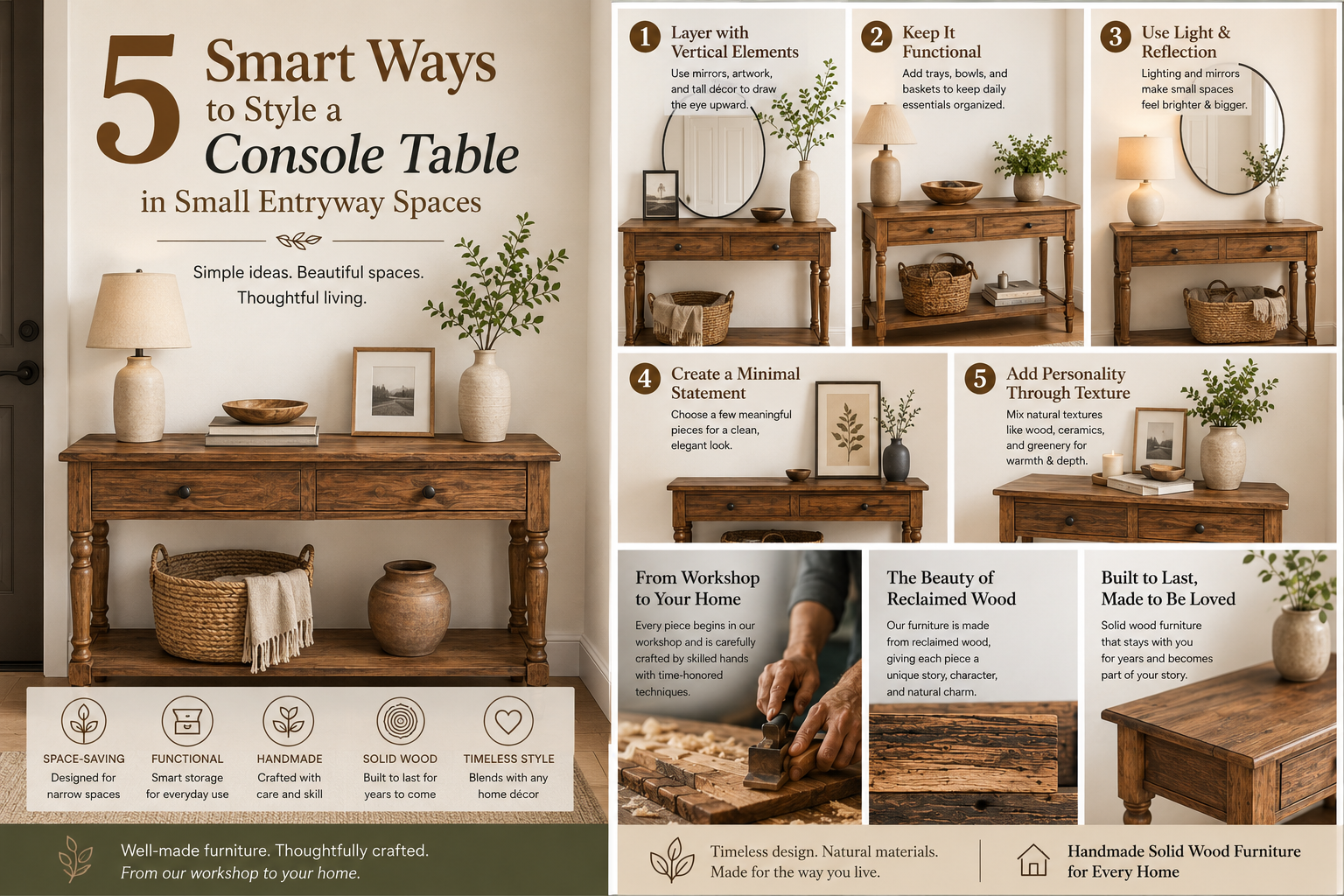
Table of Contents
- Why Console Tables Work in Small Entryways
- Styling Idea #1: The Minimal Drop Zone
- Styling Idea #2: Vertical Layering for Depth
- Styling Idea #3: Hidden Storage Styling
- Styling Idea #4: Statement Without Bulk
- Styling Idea #5: Dual-Purpose Console Setup
- Defining 5 Console Table Styles
- Practical Tips for Small Entryways
- From Workshop to Your Home
- The Role of Handmade Reclaimed Wood
- FAQs
- Conclusion
Why Console Tables Work in Small Entryways
Console tables are uniquely suited for compact spaces. Their slim depth allows movement to flow naturally, while their surface provides just enough room for essentials and decor.
More importantly, they anchor the entryway visually—creating structure where there might otherwise be none.
1 Styling Idea: The Minimal Drop Zone
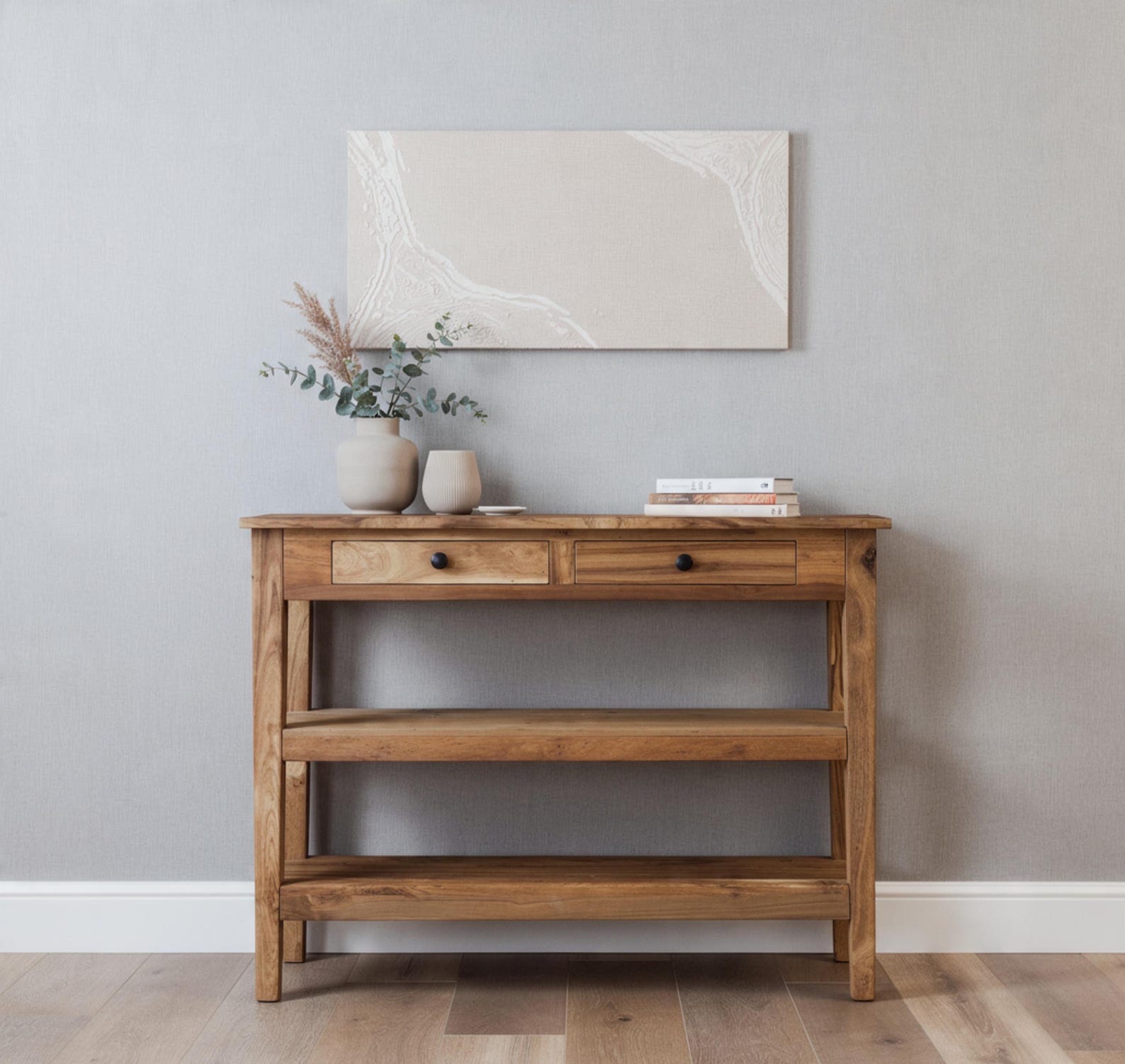
In small spaces, clarity beats complexity.
What to Include:
- A compact tray for keys and essentials
- A small lamp or wall light
- One natural decor element (ceramic, wood, or glass)
Why It Works:
It keeps your entryway clean and functional without overwhelming it.
Minimal Solid Wood Console Table
2 Styling Idea: Vertical Layering for Depth
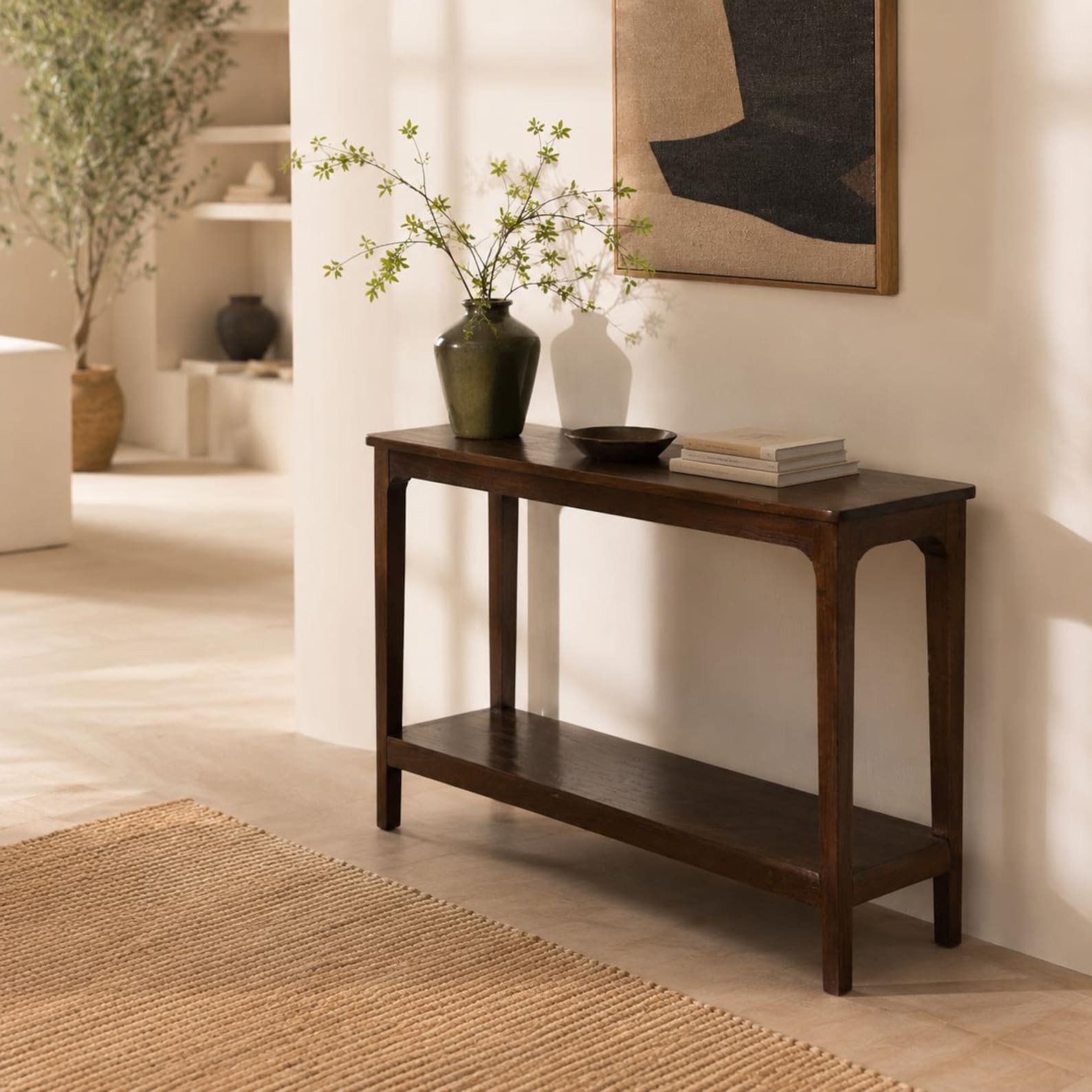
When floor space is limited, go vertical.
How to Style:
- Place a mirror or artwork above
- Add a tall vase or lamp
- Layer smaller decor in front
Why It Works:
It draws the eye upward, making the space feel larger than it is.
Modern Narrow Entryway Console
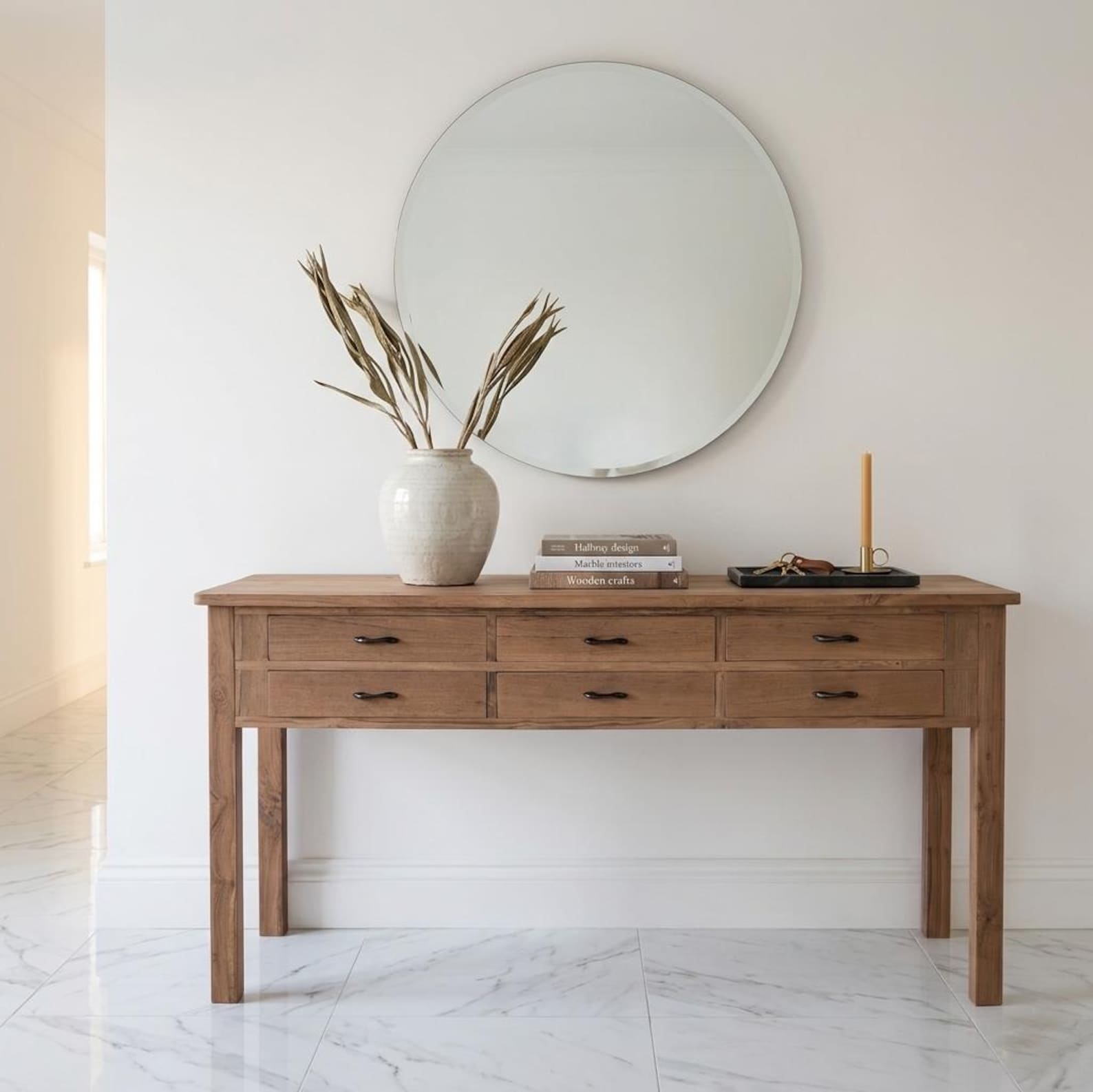
3 Styling Idea: Hidden Storage Styling
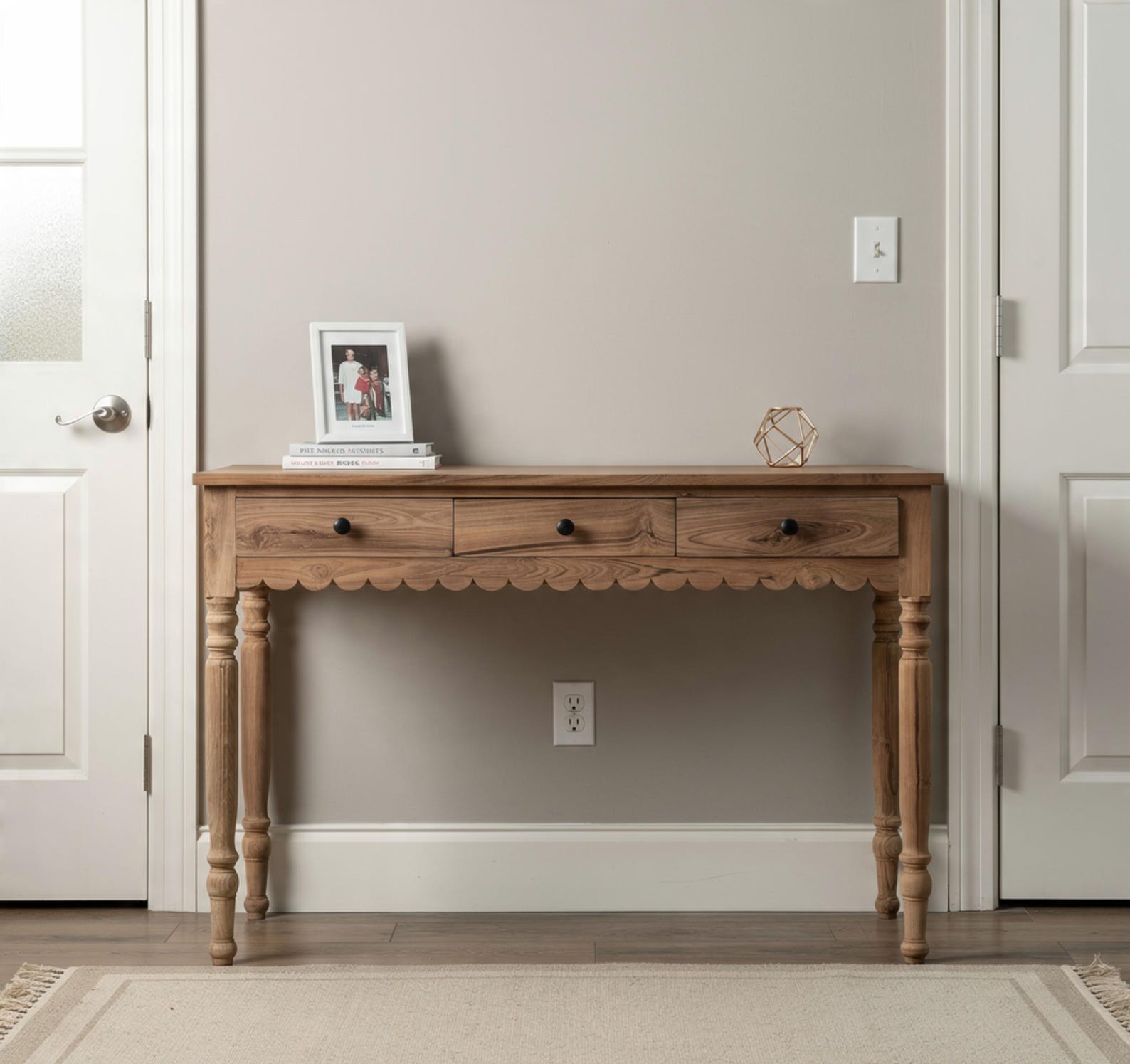
Clutter is the biggest enemy of small entryways.
Smart Additions:
- Baskets underneath
- Drawers for essentials
- Closed compartments
Why It Works:
You maintain a clean look while increasing functionality.
Console Table with Storage Drawers
4 Styling Idea: Statement Without Bulk
Small doesn’t mean boring.
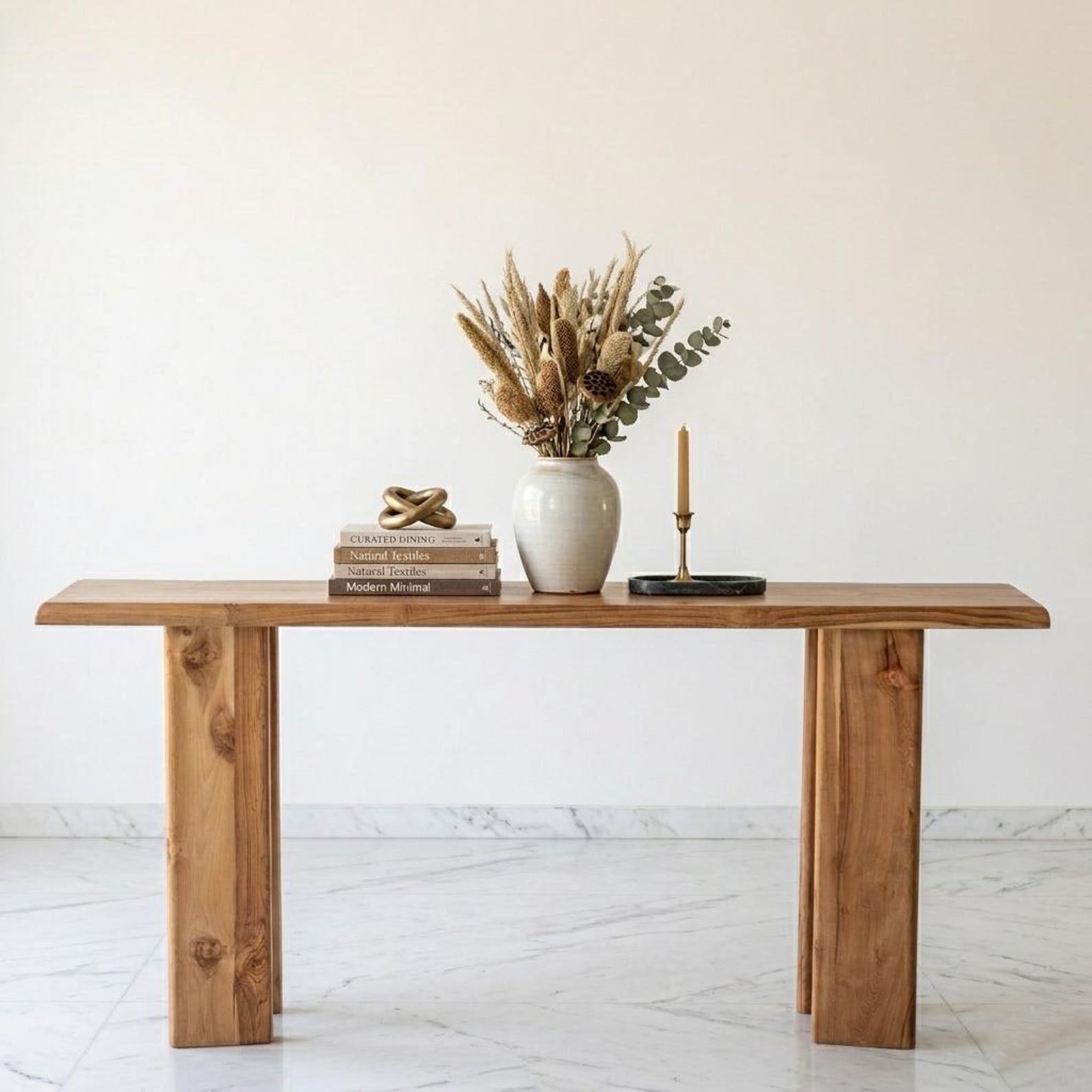
How to Create Impact:
- Choose a bold wood grain or texture
- Use one large décor piece instead of many small ones
- Add contrast through lighting or wall art
Why It Works:
It creates a focal point without overcrowding the space.
Rustic Solid Wood Console Table
5 Styling Idea: Dual-Purpose Console Setup
In compact homes, every piece should earn its place.
Use It As
- A mini workspace
- A vanity
- A functional display surface
Why It Works:
It maximizes usability without adding more furniture.
Multi-Functional Wooden Console Desk
Defining 5 Console Table Styles
Understanding console styles helps you choose the right one:
1. Minimal Slim Console
Clean lines, open base, ideal for tight entryways.
2. Storage Console
Includes drawers or shelves for hidden organization.
3. Rustic Wood Console
Focuses on texture, grain, and natural character.
4. Statement Console
Bold design or structure that acts as a focal point.
5. Multi-Functional Console
Doubles as a desk, vanity, or workspace.
Practical Tips for Small Entryways
Keep Depth in Check
10–14 inches is ideal for narrow spaces.
Use Mirrors Strategically
They reflect light and visually expand the area.
Stick to a Tight Color Palette
Neutral tones and wood textures maintain calm.
Leave breathing space.
Avoid filling every inch—negative space matters.
From Workshop to Your Home
Behind every well-made console table is a process that often goes unseen.
It begins in a workshop, where raw wood is selected not just for uniformity but for character. Each plank carries subtle variations, and skilled hands shape it into something functional and lasting.
The process is slower than mass production. It involves attention to joinery, finishing, and proportion. These details may not always stand out immediately, but they’re what make a piece feel right in your home.
When placed in an entryway, such furniture doesn’t just serve a purpose—it carries a story of craftsmanship.
The Role of Handmade Reclaimed Wood
There’s a certain authenticity that reclaimed wood brings into a space.
Its imperfections—grain variations, marks, tonal shifts—add depth that manufactured materials often lack. In small entryways, where every element is more noticeable, this texture becomes even more valuable.
It creates warmth without excess. Character without clutter.
And because entryways are high-traffic zones, durability matters. Solid wood furniture naturally stands up to daily use while aging gracefully over time.
FAQs
1. What should I put on a console table in a small entryway?
Keep it minimal—a keys tray, lighting, and one decor piece.
2. How do I style without cluttering the space?
Focus on fewer, larger items instead of many small ones.
3. Can a console table have storage?
Yes, drawers and baskets are ideal for small spaces.
4. What is the ideal size for a console table?
A 10–14 inch depth works best for compact entryways.
5. Is wood a good material for entryways?
Yes, it’s durable, timeless, and adds natural warmth.
Conclusion
Styling a small entryway isn’t about adding more—it’s about choosing better.
A thoughtfully styled console table can bring structure, function, and personality into even the most compact space. Whether you lean toward minimal setups or layered styling, the key is intentional design.
Start with a piece that fits your space and your lifestyle. From there, build around it with purpose.
Because a well-designed entryway doesn’t just welcome guests—it sets the tone for how you experience your home every day.