
Acacia and sheesham come up constantly in the same breath when people are shopping for solid wood furniture, and it’s easy to see why. Both are widely available hardwoods, both show up in everything from dining tables to bed frames, and both get marketed as durable, long-lasting choices. But “better” depends entirely on what you’re optimizing for, hardness, grain character, cost, or how the wood responds to humidity, and the two don’t perform identically across all of those categories.
This isn’t a case of one wood clearly beating the other. It’s a case of two genuinely good hardwoods with different strengths, and the right pick depends on your specific furniture piece and how it’ll actually be used. Here’s an honest look at how they compare.
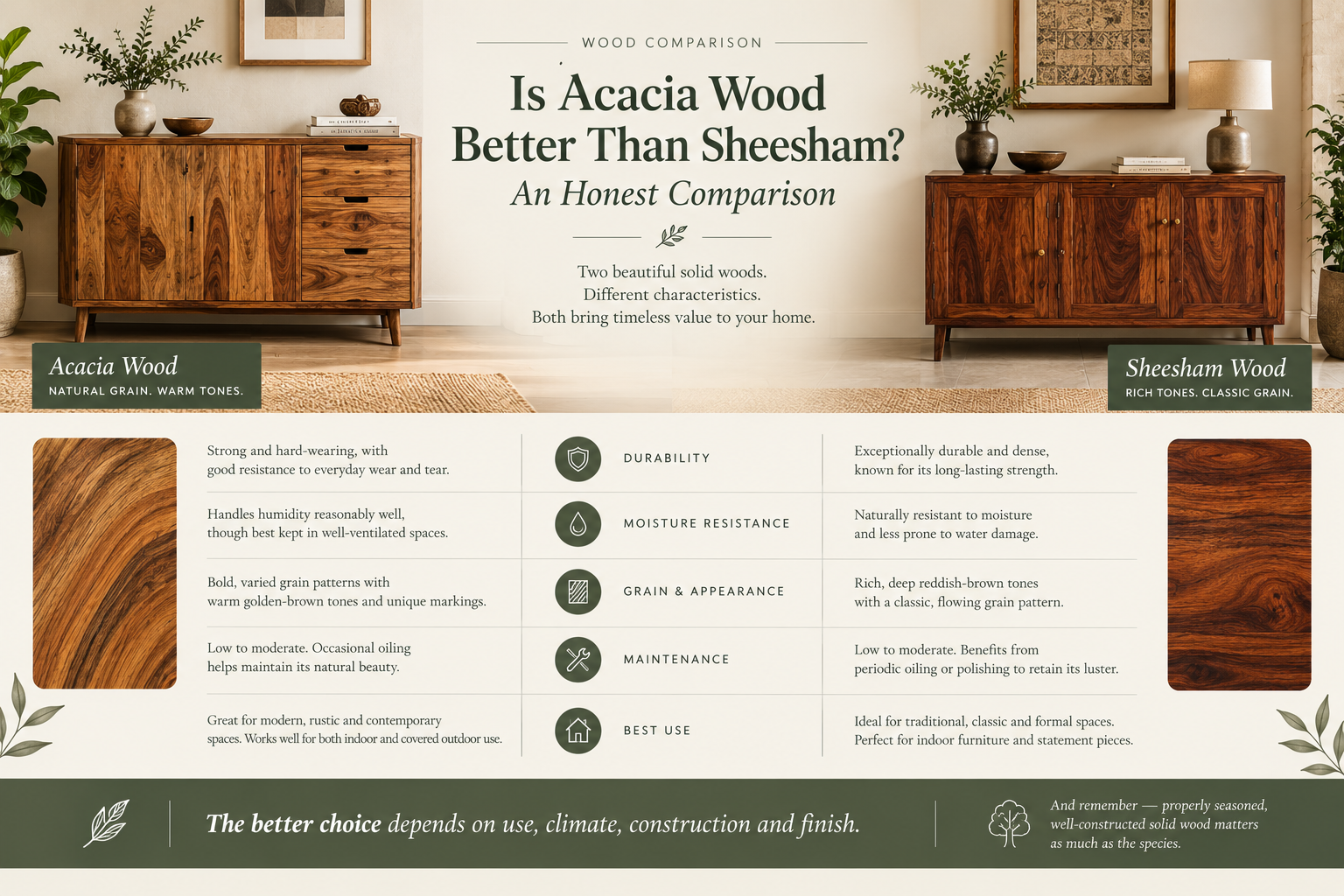
Table of Contents
- Where the Two Woods Come From
- Hardness and Everyday Durability
- Grain Pattern and Appearance
- Moisture and Climate Resistance
- Workability and Finishing
- Cost and Availability
- Which Wood Suits Which Furniture
- From Workshop to Home: Choosing the Right Timber for the Job
- A Note on Reclaimed Wood and These Two Species
- FAQ
- Conclusion
Where the Two Woods Come From
Sheesham, also known as Indian rosewood, is native to the Indian subcontinent and has a long history in traditional Indian furniture making, prized for its rich grain and strength. Acacia, by contrast, is a broader genus with many species grown around the world, and most furniture-grade acacia today comes from fast-growing plantation varieties, which have made it a more widely available and often more sustainably sourced option in recent years.
This difference in sourcing history is part of why sheesham has historically carried a more premium, traditional association, while acacia has become popular partly because of its availability and more consistent plantation supply.
Hardness and Everyday Durability
Both woods are genuinely hard, durable hardwoods, but acacia generally tests as the harder of the two on the Janka scale, which measures resistance to denting and wear. Reported figures vary by source and by the specific acacia species involved, but acacia commonly lands somewhere in the range of 1,700 to over 2,000 pounds-force, while sheesham typically falls closer to 1,600 to 1,800. In practical terms, that generally translates to acacia holding up slightly better against dents and scuffs in very high-traffic use, such as a dining table that sees daily wear from kids or frequent entertaining.
That said, the difference isn’t dramatic enough to make sheesham a weak choice. Both woods are considered well above average hardness for furniture-grade timber, and either one, properly constructed, will hold up to years of normal household use.
Grain Pattern and Appearance
This is where the two woods diverge most visibly. Sheesham tends to have bold, dramatic grain, deep brown tones with dark streaking, and a richer, more varied look that reads as more traditional or ornate. Acacia generally has a somewhat smoother, more uniform grain pattern, though it can still show attractive variation, and its tone often runs a bit lighter or more golden-brown depending on the specific species and finish.
Neither is objectively better here; it’s a matter of which one suits your space. A room leaning toward a more classic or statement-making aesthetic often suits Sheesham’s bolder grain, while a room going for a cleaner, more contemporary look may suit Acacia’s more even appearance.
Moisture and Climate Resistance
Acacia is generally reported as more naturally water-resistant than sheesham, which is part of why it’s commonly recommended for kitchen, bathroom, or even some outdoor-adjacent furniture applications. Sheesham is strong and durable but is typically considered somewhat more sensitive to prolonged moisture exposure and benefits more from consistent care in humid environments.
If your furniture is headed somewhere with regular moisture exposure, a kitchen island, or a bathroom vanity, acacia’s natural water resistance is a meaningful practical advantage. For a formal dining room or living room with more controlled conditions, this difference matters less.
Workability and Finishing
Acacia is generally considered a bit easier to work with during construction, since it’s slightly less dense than sheesham, which can make for smoother machining and finishing. Sheesham’s greater density gives it real strength but can make it more demanding to shape and finish, though skilled craftsmen work with it successfully for highly detailed, traditional furniture designs specifically because of the finished look it produces.
Neither wood is difficult for an experienced builder to work with well, but acacia’s slightly more forgiving nature during construction is part of why it’s become popular across a wider range of contemporary furniture styles.
Cost and Availability
Sheesham has historically carried a premium price point, tied to its traditional reputation and somewhat more limited supply compared to plantation-grown acacia. Acacia tends to be more affordable and more widely available, partly due to faster tree growth and more extensive plantation cultivation, which has made it an increasingly common choice for furniture makers looking to offer solid hardwood at a more accessible price.
This cost difference isn’t a reflection of quality so much as supply and tradition; both woods are genuinely solid hardwood choices, but your budget may reasonably factor into which one makes more sense for a given piece.
Which Wood Suits Which Furniture
For furniture that takes heavy daily contact, dining tables, kitchen islands, and pieces exposed to some moisture, acacia’s combination of hardness and water resistance tends to be the more practical choice. For furniture where grain character and a traditional, statement look matter most, a formal dining table or an ornately detailed sideboard, sheesham’s richer grain often wins out, provided it’s cared for with reasonable attention to humidity and moisture.
Neither answer is universal. It genuinely comes down to the specific piece, the room it’s going into, and which qualities, hardness and water resistance versus grain drama and tradition, matter more to you.
From Workshop to Home: Choosing the Right Timber for the Job
Builders working with solid wood furniture typically choose between acacia, sheesham, and other hardwoods based on the specific piece being built, not a blanket preference for one species. A kitchen island built to withstand spills and daily use calls for different material priorities than a formal dining table meant to be the visual centerpiece of a room. That selection process happens before any construction begins, since the wood’s natural properties shape decisions about joinery, finish, and overall design from the start.
This piece-by-piece selection is part of what separates thoughtful, handmade furniture from furniture built around whatever material happens to be cheapest or most available at the time.
A Note on Reclaimed Wood and These Two Species
Both acacia and sheesham can be sourced as reclaimed timber, wood salvaged from structures or furniture that had already served a full life before being reshaped into something new. Reclaimed wood in either species tends to bring additional natural stability, since the timber has already been through years of environmental exposure and settling, along with visible character that newly milled wood doesn’t carry. If you’re deciding between the two for your own home, it’s worth browsing a shop like Modern Karigar and asking directly which wood, and which piece, best fits your specific use case.
FAQ
Is acacia wood harder than sheesham?
Generally yes. Acacia typically tests harder on the Janka hardness scale, though both are solid, durable hardwoods well suited to furniture use.
Which wood is more water-resistant, acacia or sheesham?
Acacia is generally considered more naturally water-resistant, which makes it a common choice for kitchens or other moisture-prone spaces.
Is sheesham more expensive than acacia?
Typically yes, due to its traditional reputation and comparatively more limited supply, while acacia’s plantation availability tends to keep costs more moderate.
Which wood has a more dramatic grain pattern?
Sheesham generally has a bolder, more varied grain with deeper tones and streaking, while acacia tends to have a smoother, more uniform appearance.
Can both woods be used for reclaimed furniture?
Yes, both acacia and sheesham are available as reclaimed timber, and reclaimed wood in either species tends to offer added stability from its prior natural aging.
Conclusion
Acacia and sheesham are both genuinely strong, durable hardwoods, and neither one is simply “better” across the board. Acacia generally edges ahead on hardness, water resistance, and cost, while sheesham tends to win on dramatic grain character and traditional appeal. The right choice depends on the specific piece, the room, and which of those qualities actually matters most to you. If you’re still deciding, it’s worth looking at both in person or asking directly before committing to one for your next piece.