
Most furniture arrives with no story at all. It comes from a factory you can’t picture, built by people you’ll never meet, and the only thing you know about it is the product photo. That’s fine for a lot of purchases. For a table you’ll eat at for twenty years, it’s worth knowing who made it.
That’s the reason for this post. Modern Karigar builds handmade solid wood furniture from reclaimed wood in India, and this is a look at how we work, what we care about, and what we’d want to know if we were buying from a maker we’d never met. We’ve also included a few practical questions you can ask any furniture maker, since those are useful whether you buy from us or not.
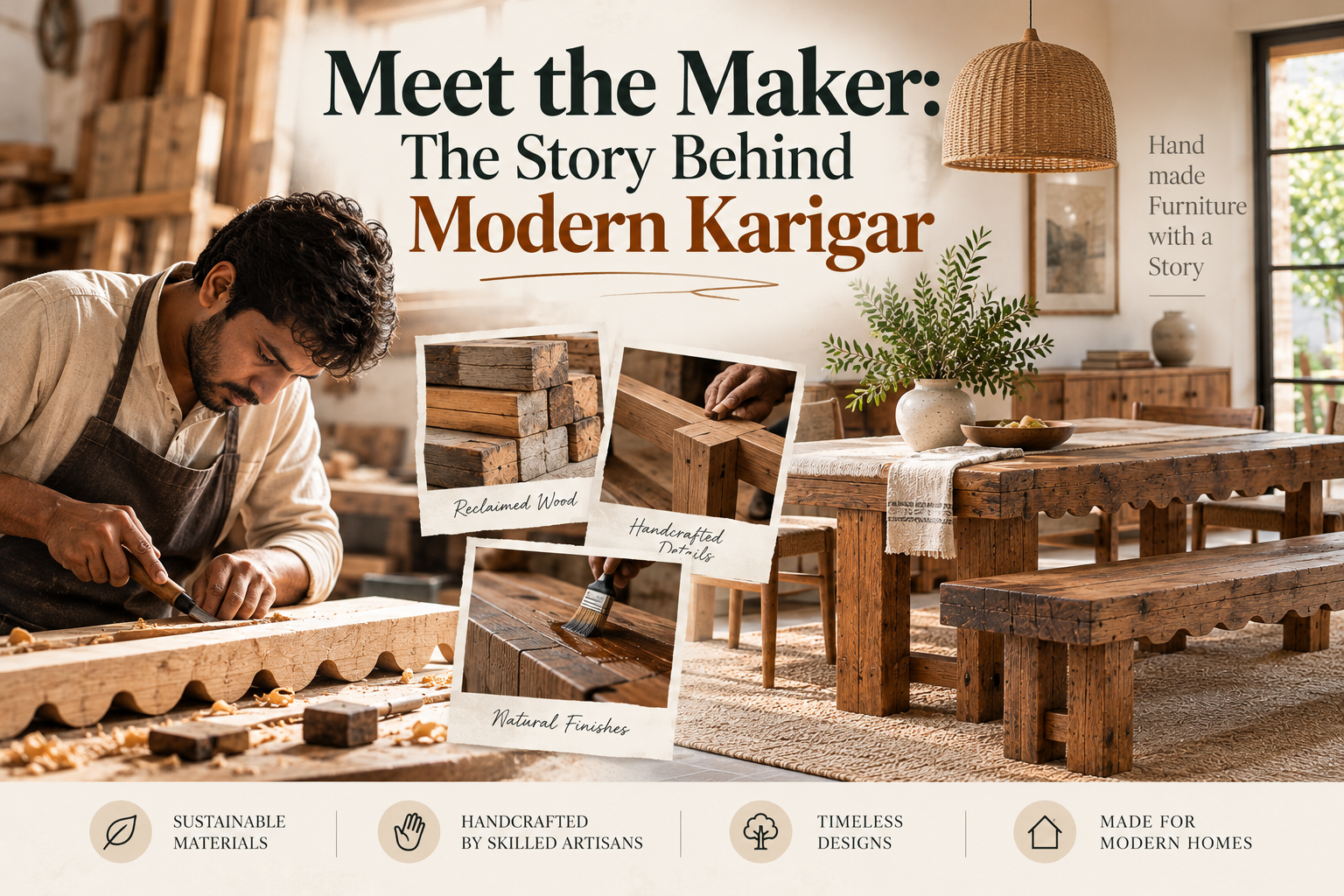
Table of Contents
- What the Name Means
- How It Started
- What We Build, and From What
- How We Choose the Wood
- Made by Hand, Piece by Piece
- Working With Customers on Custom Orders
- Questions to Ask Any Furniture Maker
- From Workshop to Your Home
- A Note on Reclaimed Wood
- FAQ
- Conclusion
What the Name Means
“Karigar” is a term in Hindi and Urdu that translates to “craftsman” or “artisan.” It’s a commonly used term in India that reflects the skill and dedication of those who create with their hands. I chose this name because it embodies the essence of craftsmanship and the artistry involved in our work.
The word is a good fit for how we think about the work. Furniture is a craft, and craft depends on skilled people who care about the result.
How It Started
I started my woodworking journey a few years ago, inspired by my love for nature and sustainability. Growing up, I was always surrounded by my grandfather’s workshop, where he taught me the value of craftsmanship. Choosing reclaimed wood felt natural; it lets me create beautiful pieces while giving new life to materials with a story. Each project is a blend of my passion and the rich history of the wood I work with.
What We Build, and From What
We make solid wood furniture: dining tables, chairs, benches, consoles, sideboards, desks, bedroom pieces, and more. Our pieces are built mainly from reclaimed teak and oak, with acacia used for some designs.
Each piece is solid wood rather than veneer over particleboard. That matters in practice because solid wood can be sanded and refinished years later, while a thin veneer can’t.
How We Choose the Wood
Reclaimed wood isn’t one material. It varies by source, density, and condition, so the first job is sorting. Boards are checked for stability, grain, and soundness, and pieces that don’t meet the standard for a given design don’t get used for it. Our reclaimed timber comes from different parts of India, including old buildings, furniture, and other sustainable materials, ensuring each piece has a unique story and character.
This is also where we answer a question buyers sometimes ask: Is reclaimed wood really more stable? In many cases, yes. Because the timber has already been through years of seasoning, it tends to be less prone to the movement that can affect freshly cut wood. It’s still wood, and it still responds to humidity, but the starting point is a good one.
Made by Hand, Piece by Piece
Our furniture is shaped, joined, and finished by hand, piece by piece, rather than run through a single automated line. Our process involves traditional mortise and tenon joinery for strength and durability, and each piece is hand-sanded and finished with natural oils to enhance the wood’s beauty. Typically, a small team of skilled artisans collaborates on each piece, ensuring attention to detail and quality craftsmanship.
Hand-making takes longer, and it means no two pieces are identical. Grain, tone, and small natural marks vary from one board to the next. We think that’s the point. It’s what makes reclaimed wood furniture look like it has a history, because it does.
Working With Customers on Custom Orders
A lot of our work starts with a customer asking for something slightly different: a longer table, a narrower console, a different finish. Because the furniture is made by hand, we can often accommodate that. Customers have written about the process in their reviews, mentioning quick answers to their questions and pieces that arrived well-protected and easy to assemble.
The best custom orders begin with clear information. Exact measurements, a photo of the room, and an idea of how the piece will be used all help us get it right the first time.
Questions to Ask Any Furniture Maker
Whether you buy from us or someone else, these questions help you judge a handmade piece:
- What wood is it, exactly? Species matters, and a clear answer is a good sign.
- Is it solid wood or veneer? Solid wood is capable of being repaired and refinished.
- How is it joined? Traditional joinery tends to outlast glue and staples alone.
- How is it finished? The finish influences both appearance and upkeep.
- What’s the real timeline? Ask for production time and shipping time separately.
- What’s the return or exchange policy? Read it before you order. Ours covers manufacturing defects, so it’s worth understanding what’s included.
A maker who answers these directly is usually one worth trusting.
From Workshop to Your Home
Once a piece has been built and finished, it is packed for transportation. Most of our furniture is shipped over long distances, so packaging is just as important as construction, and customers frequently mention it in their reviews. We wrap the pieces with bubble wrap and cardboard sheets. We ship globally. The order takes three weeks to produce, with a delivery time of about 7-10 working days.
When the piece arrives, it’s meant to be simple to put together and ready for daily use. That’s the end of one journey and the start of another, since the table or bench becomes part of someone’s home.
A Note on Reclaimed Wood
Reclaimed wood is the thread that runs through everything we build. It gives each piece visible character, and it gives old timber a second life instead of letting it go to waste. It isn’t a gimmick or a style choice for us. It’s the material we like working with best. If you’d like to see how this looks in finished pieces, you can browse the collection at Modern Karigar.
FAQ
What does “Modern Karigar” mean?
“Karigar” is a Hindi and Urdu word for a craftsman or artisan.
Where is Modern Karigar furniture made?
Our furniture is handmade in India.
What wood do you use?
Mainly reclaimed teak and oak, with acacia used for some designs.
Can I order a custom size or finish?
Often, yes. Because pieces are made by hand, custom sizes and finishes can frequently be arranged. Send measurements and a photo of your space to get started.
Do you offer returns?
We have a return and exchange policy that covers manufacturing defects. It’s worth reading the details on the listing before you order.
Conclusion
Knowing who made your furniture changes how you feel about it. It’s not just a table; it’s something built by people who care how it turns out. We hope this gives you a clearer picture of how Modern Karigar works and what to look for in any handmade piece. If you’d like to see what we build or have a question about a custom order, we’d be glad to hear from you.