
Introduction
Furniture is often treated as something we simply buy, place, and use. A dining table fills an empty room. A coffee table anchors a living space. A sideboard gives storage a more graceful shape. But behind every well-made piece of solid wood furniture, there is a longer story, one that begins long before the furniture arrives at your door.
That story starts with the wood itself.
In the case of reclaimed wood furniture, the journey may begin in an old barn, warehouse, mill, cottage, or architectural structure where the timber has already lived one life. Instead of being discarded, the wood is carefully chosen, restored, shaped, and given a new purpose. By the time it reaches a home, it carries both craftsmanship and character.
For homeowners, interior designers, and furniture buyers, understanding this journey helps you choose pieces with more confidence. It also helps you appreciate why handmade solid wood furniture feels different from mass-produced alternatives. It is not only about how it looks. It is about how it was made, what it is made from, and how naturally it belongs in a real home.
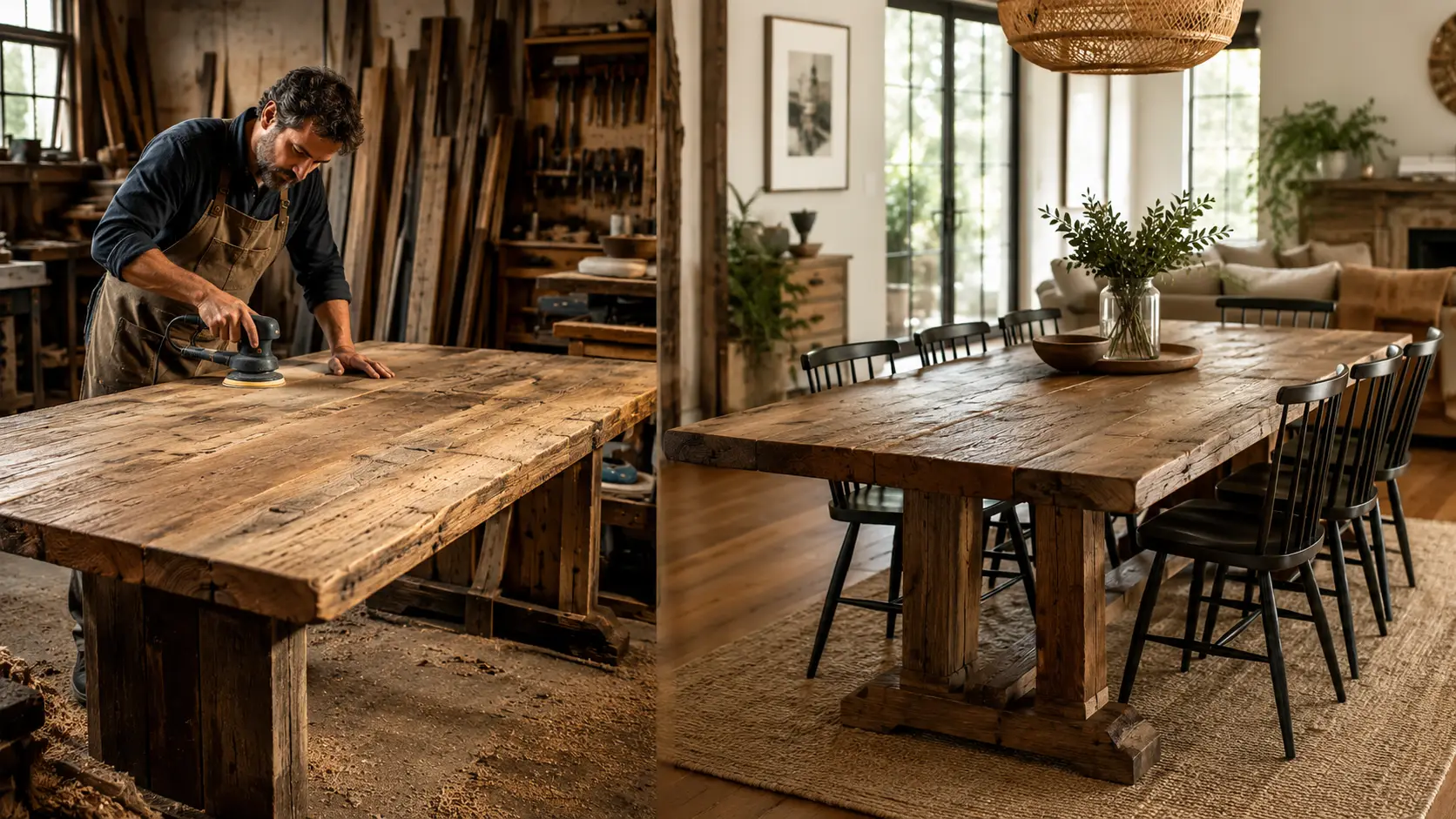
Table of Contents
- Why the Furniture Journey Matters
- Choosing the Right Wood
- From Reclaimed Timber to Usable Material
- The Design Stage: Where Function Meets Form
- Crafting Handmade Solid Wood Furniture
- Finishing: Protecting the Beauty of Wood
- From Workshop to Your Home
- Styling Ideas for Reclaimed Wood Furniture
- How to Care for Solid Wood Furniture
- FAQ
- Conclusion
Why the Furniture Journey Matters
A piece of furniture is more than a product. It affects how a room feels, how people gather, and how daily routines unfold.
A dining table becomes the place where meals, conversations, celebrations, and quiet morning coffee happen. A wooden bench near the entryway becomes part of leaving and returning home. A cabinet may hold everyday essentials, but it can also define the mood of a room.
When furniture is handmade, the journey matters even more. Every choice—wood selection, joinery, proportions, surface texture, finish, and detailing, shapes the final piece. Unlike factory-made furniture that is produced in large batches, handcrafted furniture tends to have small variations. These details are not flaws. They are signs of human work and natural material.
This is especially true with reclaimed wood. Its knots, grain patterns, saw marks, color changes, and weathered surfaces tell you that the material has a past. The maker’s role is not to erase that history, but to bring it forward in a way that feels useful, beautiful, and lasting.
Choosing the Right Wood
Understanding Solid Wood
Solid wood furniture is made from real timber rather than thin veneers or synthetic boards. This gives it strength, weight, and a natural depth that is hard to imitate. It can be sanded, repaired, refinished, and often enjoyed for generations when cared for properly.
Different woods have different personalities. Some have bold grain and rustic markings. Others are smoother, calmer, and more refined. For furniture buyers, this means the type of wood matters not only for durability but also for the overall mood of the space.
Why Reclaimed Wood Has Unique Character
Reclaimed wood is valued because it has already aged naturally. Over time, wood develops color, texture, density, and surface detail that new timber may not yet have. Weather exposure, old construction methods, nail holes, and natural wear can all become part of the finished piece.
In handmade reclaimed wood furniture, these features are often preserved thoughtfully. A maker may keep a weathered edge, highlight an old saw mark, or position a knot where it adds balance to the design. The goal is not to make every board look identical. The goal is to create harmony from natural variation.
From Reclaimed Timber to Usable Material
Before reclaimed wood can become furniture, it needs careful preparation.
First, the timber is inspected. Not every old board is suitable. Some wood may be too damaged, unstable, or unsuitable for furniture making. Good reclaimed furniture starts with selecting pieces that have both beauty and structural integrity.
Next comes cleaning and de-nailing. Old nails, screws, staples, or metal fragments must be removed before the wood can be cut or shaped. This stage takes patience, but it protects both the craftsman’s tools and the final furniture.
After that, the wood is usually milled, planed, or sanded depending on the desired finish. Some pieces are made smooth and refined. Others keep a more rustic surface. Moisture content is also important. Wood that is too wet or unstable can move, warp, or crack later. Proper drying and acclimation help make the finished furniture more reliable in a home environment.
This preparation stage is not glamorous, but it is essential. It is where rough timber begins to become furniture.
The Design Stage: Where Function Meets Form
Designing for Real Homes
Good furniture design starts with real life. A table should not only look impressive in a photo; it should also fit the room, allow comfortable seating, and stand up to daily use. A coffee table should suit the scale of the sofa. A console table should leave enough walking space in a hallway. A cabinet should offer useful storage without overwhelming the room.
Interior designers often think in terms of proportion, balance, texture, and flow. Homeowners may think more practically: Will this fit? Is it easy to maintain? Will it work with children, guests, pets, or everyday meals?
The best handmade furniture considers both.
Balancing Rustic and Modern Style
Reclaimed wood furniture can suit many interiors, not just rustic homes. In a modern space, a reclaimed wood dining table adds warmth and contrast. In a farmhouse interior, it feels grounded and familiar. In an industrial-style room, it pairs beautifully with metal accents, exposed brick, or simple lighting.
The key is balance. If the wood has a strong texture, keep surrounding elements calmer. If the room is minimal, let the furniture become the natural focal point. If your space already has many patterns and finishes, choose a piece with cleaner lines.
Crafting Handmade Solid Wood Furniture
Cutting, Shaping, and Joinery
Once the design is clear and the wood is prepared, the workshop process begins. Boards are measured, cut, arranged, and joined. For tables, makers may spend considerable time matching boards so the grain flows naturally across the surface.
Joinery is one of the quiet signs of quality. Strong joints help furniture last. Depending on the design, makers may use traditional woodworking techniques, modern methods, or a thoughtful combination of both. The aim is always the same: strength, stability, and a clean finish.
The Human Touch
Handmade furniture has a rhythm to it. It is measured by eye as well as by ruler. Edges are softened. Surfaces are checked by hand. Small decisions are made throughout the process.
This human touch is what gives handcrafted furniture its warmth. The piece is not rushed through a production line. It is shaped slowly, with attention to the wood’s natural movement and character.
That is why two handmade pieces may never be exactly the same. Even if they share the same design, the wood grain, markings, and subtle details will differ. For many buyers, that individuality is part of the appeal.
Finishing: Protecting the Beauty of Wood
A finish does more than make furniture look polished. It protects the surface from daily wear, moisture, spills, and stains.
Some finishes create a natural matte appearance. Others add a richer tone or slight sheen. The right choice depends on the furniture’s purpose. A dining table needs a durable, practical finish. A decorative console may need less heavy-duty protection. A bathroom vanity or kitchen piece may require extra resistance to moisture.
For reclaimed wood, finishing is also about restraint. Too much polishing can remove the very texture that makes the material special. A thoughtful finish enhances the wood without making it feel artificial.
From Workshop to Your Home
This is the part of the journey where the furniture leaves the maker’s hands and becomes part of daily life.
Before delivery, the piece is usually checked carefully. Surfaces are inspected. Joints are reviewed. Drawers, doors, legs, or hardware are tested. If the furniture needs assembly, each part should fit securely and logically.
When it arrives at your home, placement matters. Solid wood furniture should be positioned with enough space around it to breathe visually and function comfortably. Avoid placing wood furniture directly against radiators, heating vents, or areas with intense sunlight for long periods, as extreme temperature and humidity changes can affect the wood over time.
Once the piece is in place, the room often changes immediately. Reclaimed wood brings texture, warmth, and a sense of permanence. It softens modern interiors, adds depth to neutral rooms, and gives character to spaces that might otherwise feel too polished.
The journey is complete only when the furniture begins to be used. A table becomes meaningful through meals. A bench becomes familiar through daily routines. A cabinet becomes part of the room’s rhythm. That is the real destination: not simply your home, but your life inside it.
Styling Ideas for Reclaimed Wood Furniture
Pair Wood with Soft Textures
Solid wood has visual weight, so it pairs beautifully with softer materials. Linen curtains, wool rugs, cotton cushions, boucle chairs, or upholstered seating can create balance.
For example, a reclaimed wood dining table looks inviting with fabric dining chairs or a simple woven rug underneath. The contrast keeps the room from feeling too heavy.
Mix Old and New
Reclaimed wood does not require an entirely vintage setting. In fact, it often looks best when mixed with modern pieces. Try pairing a rustic wood coffee table with a clean-lined sofa, or a reclaimed sideboard with contemporary artwork.
This mix creates a collected look rather than a showroom look.
Use Lighting to Highlight the Grain
Warm lighting brings out the grain, color, and texture of wood. Pendant lights above a dining table, a wall sconce near a console, or a table lamp on a wooden side table can make the material feel richer and more inviting.
Keep the Décor Simple
When the furniture has natural character, it does not need much decoration. A ceramic vase, a stack of books, a linen runner, or a bowl of seasonal fruit may be enough. Let the wood remain visible.
How to Care for Solid Wood Furniture
Caring for handmade solid wood furniture is simple when done consistently.
Dust regularly with a soft cloth. Clean spills quickly, especially on dining tables and coffee tables. Use coasters, placemats, and trivets to protect the surface from heat, moisture, and scratches. Avoid harsh chemical cleaners, which may damage the finish.
Wood naturally responds to its environment. Seasonal movement is normal, especially in areas with major humidity changes. Keeping your home at a steady humidity level can help reduce excessive expansion or contraction.
With reclaimed wood furniture, minor marks often blend naturally into the piece’s character. Still, regular care helps preserve both beauty and function for years.
FAQ
Is reclaimed wood furniture durable?
Yes, reclaimed wood furniture can be very durable when the timber is properly selected, prepared, and crafted. Many reclaimed boards come from older structures and may be dense, seasoned, and full of character. Quality construction and proper finishing are key.
Does handmade solid wood furniture require special care?
It does not require complicated care, but it does benefit from gentle maintenance. Wipe spills quickly, avoid harsh cleaners, use coasters or mats, and keep the furniture away from extreme heat or direct sunlight when possible.
Is reclaimed wood furniture only suitable for rustic interiors?
No. Reclaimed wood works well in rustic, modern, industrial, farmhouse, Scandinavian, and transitional interiors. The final look depends on the design, finish, and surrounding décor.
Why does reclaimed wood have marks and color variations?
These details come from the wood’s previous life, natural aging, weather exposure, old fasteners, saw marks, and grain changes. In handmade reclaimed wood furniture, these variations are often part of the charm.
How do I choose the right solid wood furniture for my home?
Start with size, function, and placement. Measure your room carefully, consider how the piece will be used, and choose a style that complements your existing materials. Look for strong construction, a suitable finish, and proportions that feel balanced in the space.
Conclusion
The journey from workshop to home is what gives handmade furniture its depth. It begins with raw material, often reclaimed from places with history, and continues through careful selection, preparation, design, craftsmanship, finishing, and placement.
By the time a piece of solid wood furniture enters your home, it has already been shaped by time, skill, and intention. That is what makes it feel different. It does not simply fill a space. It adds warmth, texture, function, and a quiet sense of permanence.
When choosing furniture for your home or design project, look beyond the surface. Ask where the wood came from, how the piece was made, and how it will live in the room. A thoughtfully made piece can become more than furniture. It can become part of the story of your home.
For those drawn to natural materials, lasting craftsmanship, and furniture with character, handmade reclaimed wood furniture is a beautiful place to begin.