
Dining chairs do much more than provide a place to sit; they shape the comfort, functionality, and style of your dining space. Whether you’re gathering with family for everyday meals or entertaining guests during special occasions, the right chairs can make a noticeable difference in how your dining room looks and feels.
Today, furniture buyers have more options than ever. Some prefer affordable, factory-made dining chairs that are widely available, while others are drawn to the craftsmanship and individuality of handmade pieces. At first glance, these two choices may appear similar, but the differences become clear when you look beyond the surface.
From material quality and construction techniques to comfort, durability, and sustainability, understanding how handmade dining chairs compare with factory-produced alternatives can help you make a purchase you’ll appreciate for years to come.
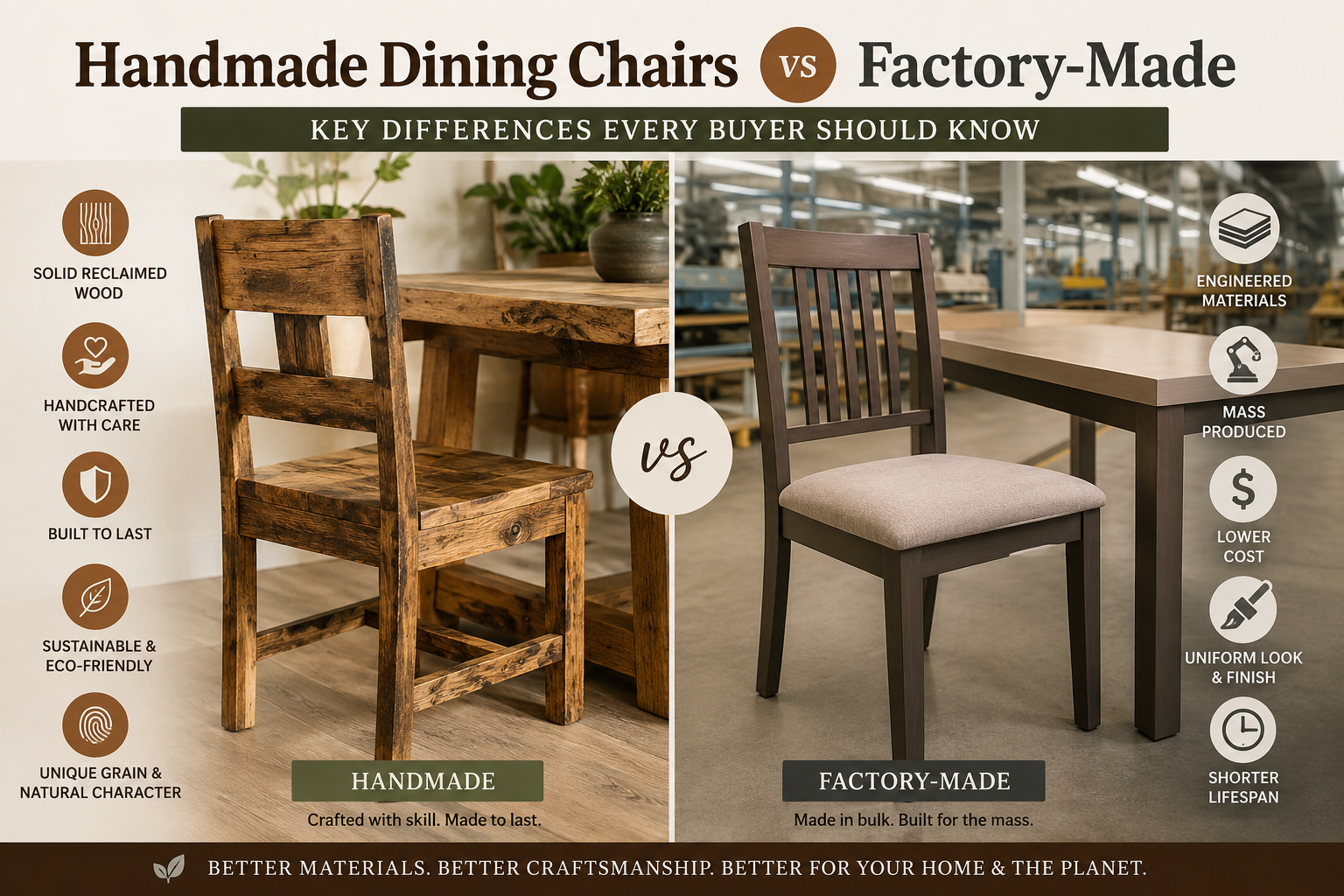
Table of Contents
- What Defines Handmade and Factory-Made Dining Chairs?
- Material Quality: The Foundation of Every Chair
- Craftsmanship and Construction
- Comfort and Ergonomic Design
- Appearance and Individual Character
- Durability and Long-Term Value
- Sustainability and Environmental Impact
- From the Workshop to Your Home
- Why Handmade Reclaimed Wood Furniture Stands Out
- Tips for Choosing the Right Dining Chairs
- Frequently Asked Questions
- Conclusion
What Defines Handmade and Factory-Made Dining Chairs?
Before comparing the two, it’s helpful to understand how they are made.
Handmade Dining Chairs
Handmade dining chairs are crafted individually by skilled artisans. Every stage from selecting the wood to shaping, sanding, assembling, and finishing is completed with close attention to detail. Natural variations in the wood are embraced, making every chair slightly unique.
Factory-Made Dining Chairs
Factory-made chairs are produced in large quantities using automated machinery and standardized manufacturing processes. Their main advantages are consistency, faster production, and lower costs.
Both are purposeful, but their designs emphasize different priorities.
Material Quality: The Foundation of Every Chair
The quality of the wood has a significant impact on a chair’s strength and longevity.
Handmade dining chairs often feature carefully selected solid wood, allowing the natural grain, texture, and character to remain visible. Reclaimed wood is especially valued because it has already matured over decades, giving it exceptional stability and distinctive appearance.
Factory-made furniture, on the other hand, frequently incorporates engineered wood, MDF, plywood, veneers, or lower-grade timber to reduce production costs. While these materials can perform well for certain applications, they generally don’t offer the same lifespan or authentic character as solid wood.
When choosing dining chairs, material quality is often the biggest factor influencing durability.
Craftsmanship and Construction
The Difference Is in the Details
One of the most noticeable distinctions between handmade and factory-made furniture lies in how it’s built.
Experienced craftspeople inspect every component during construction, adjusting for natural variations in the wood and ensuring joints fit securely. This hands-on approach results in sturdy chairs designed for years of daily use.
Mass production focuses on efficiency. Automated assembly allows manufacturers to produce large quantities quickly, but individual attention is naturally more limited.
Small details such as smooth edges, carefully aligned grain, and precise finishing often distinguish handcrafted furniture from machine-produced alternatives.
Comfort and Ergonomic Design
Dining chairs need to feel as pleasant as they appear.
Handmade chairs are often designed with careful attention to seat height, back support, proportions, and overall balance. Skilled makers can refine subtle design elements that improve everyday comfort.
Factory-made chairs usually follow standardized dimensions intended to suit the widest range of customers. While practical, they may not provide the same level of ergonomic refinement or customization.
For households that spend extended time around the dining table, comfort becomes an important consideration.
Appearance and Individual Character
No two pieces of solid wood are identical.
Every handcrafted dining chair showcases unique grain patterns, knots, color variations, and textures that give it personality. These natural characteristics make each chair feel authentic rather than identical.
Factory-made chairs typically emphasize uniformity. Consistent color, shape, and finish make matching sets easy to produce, but they often lack the visual richness that comes with genuine wood variation.
For homeowners looking to create warm, inviting interiors, natural imperfections often become the most admired design feature.
Durability and Long-Term Value
Furniture should be evaluated not only by its purchase price but also by how long it performs well.
Handmade solid wood dining chairs are built with durability in mind. Strong construction, quality materials, and repairable components often allow them to remain functional for decades with proper care.
Factory-made chairs can be suitable for short-term needs or tighter budgets, but lower-cost materials and faster assembly methods may reduce their lifespan under heavy everyday use.
Investing in well-crafted furniture often means replacing it less frequently, making it a practical long-term decision.
Sustainability and Environmental Impact
More homeowners are considering environmental responsibility when choosing furniture.
Handmade reclaimed wood furniture supports sustainability by giving existing timber a second life rather than relying solely on newly harvested wood. This approach helps reduce waste while preserving the beauty and strength of aged timber.
Additionally, handcrafted production often generates less waste than large-scale manufacturing, where speed and volume are primary goals.
For environmentally conscious buyers, reclaimed wood offers an appealing combination of sustainability and timeless design.
From the Workshop to Your Home
The journey of a handmade dining chair begins long before it reaches your dining room.
Each reclaimed wood plank is carefully selected, prepared, cut, assembled, sanded, and finished by experienced artisans. Every stage receives individual attention to ensure both strength and visual appeal.
Before shipping, chairs are inspected thoroughly and packaged to help protect their surfaces and structural integrity during transit.
Once placed around the dining table, handmade chairs bring warmth and authenticity that often become more noticeable with everyday use. Rather than looking manufactured, they reflect the craftsmanship behind their creation.
Why Handmade Reclaimed Wood Furniture Stands Out
Handmade reclaimed wood furniture offers qualities that extend beyond appearance.
Because reclaimed timber carries decades of natural aging, each dining chair displays distinctive grain patterns, subtle color variations, and rich textures that cannot be reproduced artificially.
The combination of solid wood, traditional craftsmanship, and sustainable sourcing creates furniture that feels both timeless and practical. Whether paired with a reclaimed dining table or incorporated into a modern interior, handmade chairs blend functionality with lasting character.
Tips for Choosing the Right Dining Chairs
Keep these practical considerations in mind before making your decision:
Match the Chair Height to Your Table
Allow approximately 10–12 inches of clearance between the seat and tabletop for comfortable seating.
Prioritize Solid Construction
Look for strong joints, sturdy frames, and quality craftsmanship that can withstand everyday use.
Consider Your Interior Style
Handmade wood chairs work beautifully with farmhouse, rustic, Scandinavian, industrial, and contemporary interiors.
Think About Maintenance
Choose finishes that fit your household’s lifestyle and are easy to care for.
Buy for the Long Term
Furniture that lasts longer often provides better overall value than frequently replacing lower-cost alternatives.
FAQ
Are handmade dining chairs stronger than factory-made chairs?
In many cases, yes. Handmade chairs often use solid wood and carefully assembled joints, contributing to excellent long-term durability.
Why are reclaimed wood dining chairs popular?
They combine sustainability, distinctive natural character, and the strength that comes from well-aged timber.
Do handmade chairs all look exactly the same?
No. Natural wood grain, knots, and color variations ensure every handcrafted chair has its own unique appearance.
Can handmade dining chairs suit modern interiors?
Absolutely. Their clean lines and natural textures pair well with both contemporary and traditional dining spaces.
How do I maintain solid wood dining chairs?
Dust regularly, clean spills promptly, avoid excessive moisture, and use furniture care products recommended for solid wood finishes.
Conclusion
Choosing between handmade and factory-made dining chairs ultimately depends on your priorities. While handmade dining chairs offer craftsmanship, uniqueness, and long-lasting quality that many homeowners value over time, factory-produced options provide affordability and convenience.
If you’re looking for furniture that combines natural beauty, durability, and thoughtful craftsmanship, handmade reclaimed wood dining chairs are a timeless option that can complement a wide range of interior styles. Exploring handcrafted collections can help you find seating that brings both comfort and character to your dining space for years to come.