
As more homeowners become conscious of how their purchasing decisions affect the planet, furniture has become an important part of sustainable living. While mass-produced furniture often prioritizes speed and low costs, handmade furniture tells a different story—one built on quality, craftsmanship, and longevity.
Choosing handcrafted furniture isn’t simply about aesthetics. It’s about investing in pieces that are designed to last for decades while reducing unnecessary waste and making better use of natural resources. When reclaimed wood is part of the process, the environmental benefits become even greater.
Whether you’re furnishing a new home, renovating a space, or selecting timeless statement pieces, understanding the environmental value of handmade furniture can help you make more responsible choices without compromising on style.
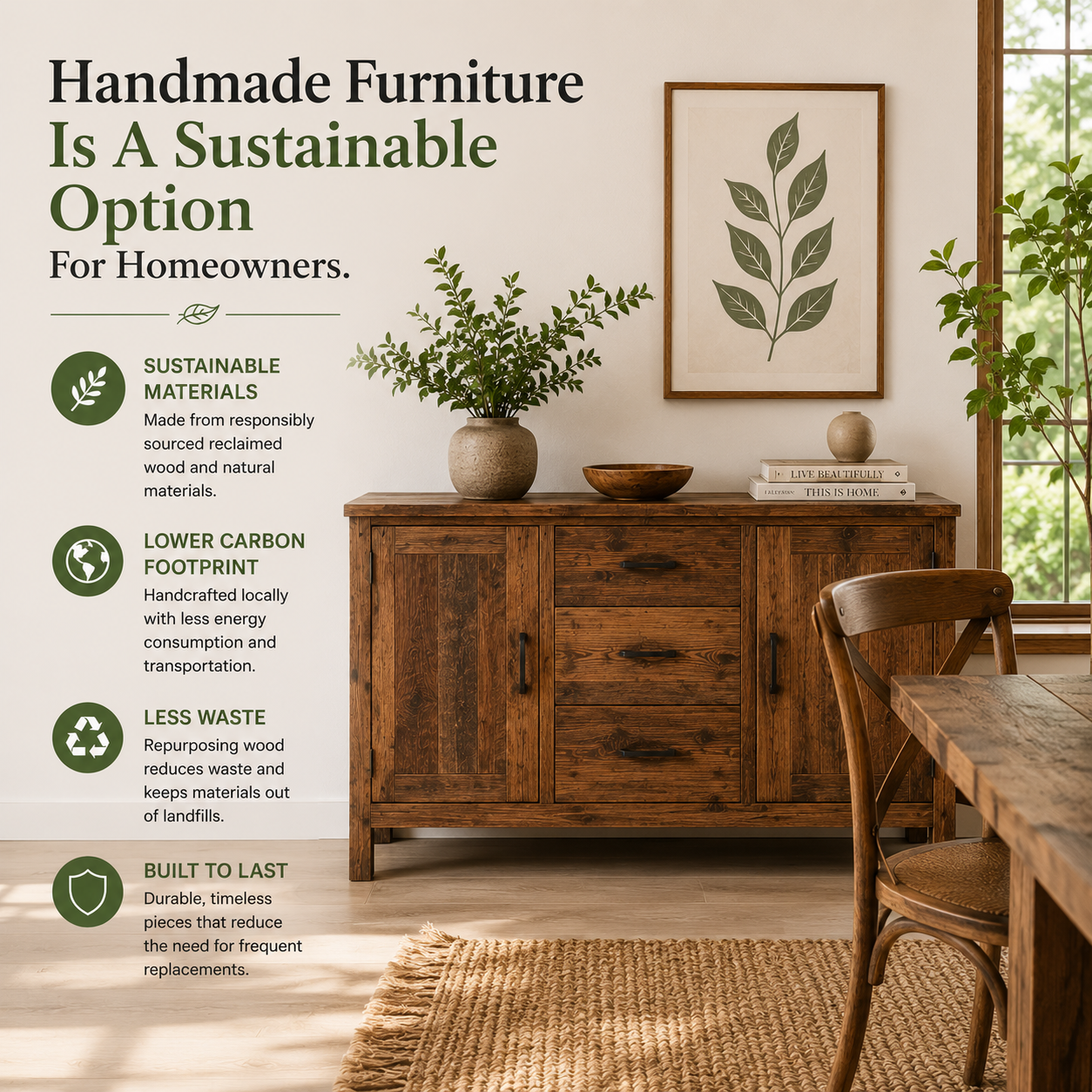
Table of Contents
- Why Furniture Choices Matter
- How Handmade Furniture Supports Sustainability
- The Environmental Benefits of Reclaimed Wood
- Less Waste, More Longevity
- Lower Carbon Footprint Through Local Craftsmanship
- The Journey from the Workshop to Your Home
- Why Handmade Reclaimed Wood Furniture Stands Apart
- Practical Tips for Choosing Sustainable Furniture
- Frequently Asked Questions
- Conclusion
Why Furniture Choices Matter
Furniture production has a significant environmental footprint. Large-scale manufacturing often relies on freshly harvested timber, synthetic materials, heavy industrial machinery, chemical finishes, and complex international supply chains.
Unfortunately, many inexpensive furniture pieces are designed with short lifespans. After only a few years, they frequently end up in landfills, creating unnecessary waste and increasing demand for new raw materials.
Handmade furniture encourages a completely different mindset—buy fewer pieces, choose better quality, and enjoy them for many years.
How Handmade Furniture Supports Sustainability
Built to Last
One of the most sustainable products is one that doesn’t need replacing.
Handmade furniture is typically constructed using stronger joinery techniques, carefully selected hardwoods, and meticulous craftsmanship. Instead of disposable furniture cycles, handcrafted pieces often remain functional for generations.
Every extra year a piece stays in use reduces the environmental cost of manufacturing a replacement.
Lower Material Waste
Artisans generally work with each piece of wood more thoughtfully than automated production lines.
Many workshops carefully plan cuts to maximize material usage, transforming smaller offcuts into shelves, decorative accents, or smaller furniture pieces instead of discarding them.
This efficient use of materials significantly reduces waste throughout the manufacturing process.
Small-Batch Production
Unlike mass production, handmade furniture is often created in small batches or made to order.
This approach minimizes excess inventory, reduces unnecessary manufacturing, and prevents perfectly usable furniture from being discarded simply because trends have changed.
The Environmental Benefits of Reclaimed Wood
Among the most sustainable materials available today, reclaimed wood deserves special attention.
Instead of cutting down new trees, reclaimed wood gives existing timber a second life. The material may come from old buildings, warehouses, factories, barns, or other structures where high-quality hardwood has already served for decades.
Using reclaimed wood helps:
- Reduce demand for newly harvested timber
- Keep valuable hardwood out of landfills
- Preserve forests and biodiversity
- Lower the energy required to process new lumber
- Celebrate the unique character and history of aged wood
Every reclaimed plank carries distinctive grain patterns, knots, natural markings, and textures that simply cannot be replicated with newly manufactured materials.
Less Waste, More Longevity
Fast furniture has become increasingly common because it’s affordable and readily available. However, its short lifespan creates a growing environmental problem.
Handmade solid wood furniture offers an alternative by emphasizing durability over disposability.
Rather than replacing a coffee table every few years, homeowners can invest in one that’s designed to withstand everyday use and even become more beautiful with age.
Solid wood furniture can also be
- Refinished
- Repaired
- Restored
- Repurposed
These possibilities dramatically extend its usable life and reduce unnecessary consumption.
Lower Carbon Footprint Through Local Craftsmanship
Mass-produced furniture often travels thousands of miles before reaching its final destination.
Raw materials may be harvested in one country, processed in another, assembled elsewhere, and finally shipped across oceans before arriving at a customer’s home.
Many handmade furniture businesses operate with shorter supply chains, producing pieces closer to where they are designed and crafted.
Shorter transportation distances often mean:
- Lower transportation emissions
- Reduced packaging requirements
- Better quality control
- More responsible sourcing practices
Supporting skilled artisans also helps preserve traditional woodworking techniques that emphasize quality rather than quantity.
The Journey from the Workshop to Your Home
Every handcrafted furniture piece begins long before it reaches your living room.
The journey starts with carefully selecting reclaimed wood, where each plank is inspected for strength, stability, and natural beauty. Craftspeople then clean, prepare, and thoughtfully design each component, allowing the wood’s unique character to guide the finished piece.
Every cut, joint, sanding stage, and finish is completed with close attention to detail. Rather than moving quickly through an assembly line, each piece develops through multiple hands-on stages.
By the time the furniture arrives in your home, it represents not only skilled craftsmanship but also the preservation of materials that may have otherwise been discarded.
That story adds depth and authenticity to every room while reducing environmental impact through thoughtful reuse.
Why Handmade Reclaimed Wood Furniture Stands Apart
Handmade reclaimed wood furniture combines sustainability with timeless design.
Instead of hiding natural imperfections, reclaimed wood celebrates them. Weathered textures, visible grain, small marks, and rich color variations become part of the furniture’s identity.
This creates pieces that feel warm, authentic, and unique while reducing demand for newly harvested resources.
Whether used in dining rooms, living spaces, home offices, or bedrooms, reclaimed wood furniture blends beautifully with modern, rustic, industrial, Scandinavian, and farmhouse interiors.
- Reclaimed Wood Dining Tables
- Solid Wood Coffee Tables
- Handmade Console Tables
- Wooden TV Units
- Reclaimed Wood Sideboards
- Wooden Office Desks
- Wooden Bar Stools
- Solid Wood Bookshelves
- Entryway Benches
- Wooden Nightstands
Shop our handmade furniture collection: https://modernkarigar.etsy.com
Practical Tips for Choosing Sustainable Furniture
Prioritize Quality Over Quantity
Invest in fewer, better-made pieces that can serve your home for decades.
Look for Reclaimed Materials
Furniture made from reclaimed wood reduces demand for newly harvested timber while giving valuable materials a second life.
Choose Timeless Designs
Classic silhouettes remain stylish far longer than trend-driven furniture.
Maintain Your Furniture
Regular cleaning, occasional polishing, and protecting surfaces from excessive moisture can significantly extend a piece’s lifespan.
Support Skilled Craftsmanship
Choosing handmade furniture supports artisans who focus on durability, responsible material use, and traditional woodworking techniques.
FAQ
Is handmade furniture more environmentally friendly?
In many cases, yes. Handmade furniture often uses fewer industrial processes, creates less waste, and is built to last much longer than mass-produced
alternatives.
Why is reclaimed wood considered sustainable?
Reclaimed wood reuses existing timber instead of requiring newly harvested trees, reducing landfill waste while conserving natural resources.
Does handmade furniture last longer?
Quality handmade solid wood furniture is typically built using durable construction methods that can last for generations with proper care.
Is reclaimed wood durable?
Absolutely. Much reclaimed wood comes from older structures built with slow-grown hardwoods, making it exceptionally strong and stable.
Can handmade furniture fit modern interiors?
Yes. Handmade reclaimed wood furniture complements contemporary, minimalist, industrial, farmhouse, Scandinavian, and transitional interior styles.
Conclusion
Sustainable living isn’t about making perfect choices; it’s about making better ones whenever possible.
Choosing handmade furniture crafted from reclaimed wood helps reduce waste, extends the life of valuable materials, and supports craftsmanship that values quality over mass production. These pieces offer lasting beauty while encouraging more responsible consumption.
If you’re exploring timeless furniture designed with sustainability in mind, handcrafted reclaimed wood collections can provide lasting value, distinctive character, and a meaningful story behind every piece.