
Most furniture today is built around a quiet assumption: when it wears out, you replace it. Engineered wood, laminate, and composite materials are usually designed to look good for a while and then get swapped for something new once the surface starts failing. Solid wood works differently, and it’s worth understanding why, because it changes how you should think about furniture as a purchase.
A solid wood piece doesn’t just resist wear better than most alternatives. When it does eventually show scratches, dents, or a tired finish, it can actually be restored, sanded back down to bare wood, and refinished, essentially starting over on the surface while keeping the same structurally sound piece underneath. That combination, genuine durability plus real repairability, is what sets solid wood apart, and it’s worth unpacking both halves of that claim.
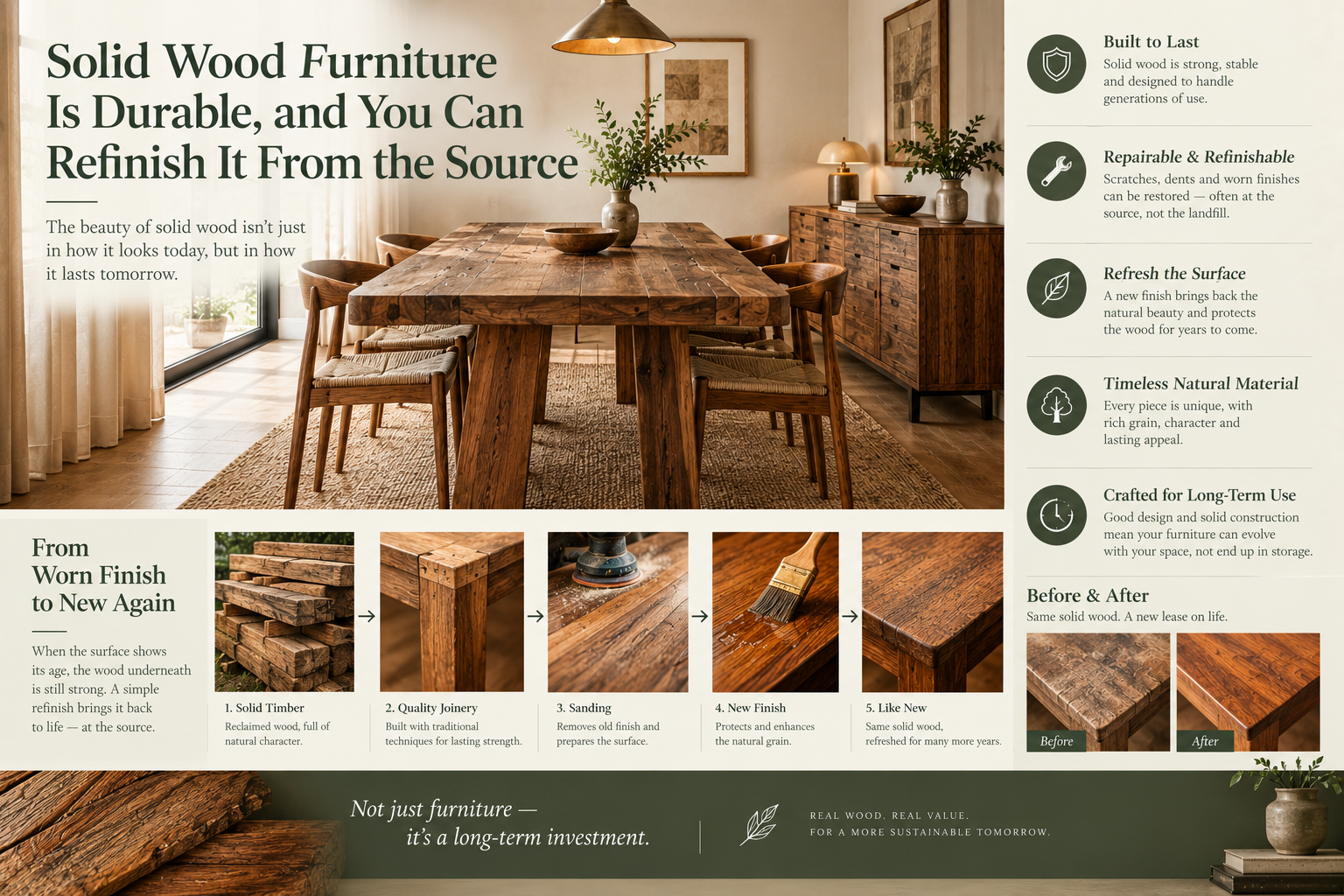
Table of Contents
- Durability: What It Actually Means for Wood Furniture
- Why Solid Wood Holds Up Differently Than Engineered Alternatives
- What Refinishing Actually Involves
- When Refinishing Makes Sense vs. When It Doesn’t
- How Construction Quality Affects Refinishing Potential
- The Long-Term Math: Replacement vs. Restoration
- From Workshop to Home: Building Furniture That’s Meant to Be Restored
- A Note on Reclaimed Wood and a Second Life, Twice Over
- FAQ
- Conclusion
Durability: What It Actually Means for Wood Furniture
Durability for furniture isn’t just about surviving the first few years without visible damage. It’s about how a piece ages, whether minor wear accumulates into something that looks tired and dated, or whether the material underneath stays fundamentally sound even as the surface shows some history. Solid wood holds up well on both fronts. The wood itself resists structural failure far longer than composite materials, and surface wear, scratches, minor dents, and sun fading don’t compromise the piece’s integrity the way it would with a thin veneer or laminate surface.
This distinction matters because a lot of furniture marketed as durable is really just describing how it performs in the first year or two. Solid wood’s durability claim holds up over a much longer timeline, often decades, which is a meaningfully different standard.
Why Solid Wood Holds Up Differently Than Engineered Alternatives
Engineered wood and laminate furniture typically consist of a core material, particleboard or MDF, covered with a thin veneer or printed laminate layer. That surface layer is where almost all of the furniture’s visual identity lives, and it’s also the first thing to fail. Once it chips, peels, or wears through at an edge or corner, there’s no solid material underneath to repair; you’re looking at the core material itself, which isn’t designed to be seen or restored.
Solid wood doesn’t have this vulnerability. The material is the same all the way through, so wear at the surface doesn’t expose anything structurally different underneath. A scratch in solid wood is a scratch in the wood itself, not a breach in a thin protective layer sitting over something else entirely.
What Refinishing Actually Involves
Refinishing a solid wood piece typically starts with sanding down the existing finish, removing the old stain, varnish, or oil along with minor surface imperfections, scratches, water rings, and sun fading, down to clean, bare wood. From there, a new finish gets applied, which could mean returning to the original color and sheen or taking the opportunity to change the tone entirely if your style or room has shifted since the piece was first finished.
This process works because solid wood has enough material depth to sand through multiple layers of wear without compromising the piece’s thickness or structural integrity. A well-built solid wood table could realistically be refinished several times over its lifetime, each time essentially restoring it to a like-new surface while keeping the same underlying piece.
When Refinishing Makes Sense vs. When It Doesn’t
Refinishing is worth considering when the wood itself is still structurally sound, with no loose joints, no significant cracking or rot, but the surface finish has worn unevenly, faded, or no longer suits your space. It’s a particularly good option for inherited furniture or secondhand solid wood pieces that have good bones but a dated or damaged finish.
It makes less sense for furniture with structural problems beyond the surface, loose joinery, warping, or significant damage, where the issue isn’t cosmetic and refinishing alone won’t resolve it. In those cases, a piece may need actual repair work in addition to, or instead of, refinishing.
How Construction Quality Affects Refinishing Potential
Not all solid wood furniture is equally suited to refinishing, even though the material itself allows for it. Thinner solid wood components, particularly in lower-cost furniture that uses minimal material to keep costs down, have less depth to sand through before you risk going too thin and weakening the piece. Furniture built with more substantial timber, common in handmade pieces where material thickness isn’t minimized to cut costs, generally has more room for multiple refinishing cycles over its lifetime.
This is one of the less obvious reasons that well-built solid wood furniture tends to be a better long-term investment than solid wood furniture built to a lower price point. The wood type might be the same, but the construction approach affects how many times that wood can actually be restored.
The Long-Term Math: Replacement vs. Restoration
A piece of engineered wood furniture that starts showing wear generally faces one option: replacement. A solid wood piece facing the same kind of surface wear has a second option that often costs significantly less than buying new: refinishing. Over a ten or twenty-year span, that difference adds up, both financially and in terms of how much furniture ends up in landfills rather than continuing to serve a household for decades.
This is part of why solid wood furniture, despite a higher upfront cost in many cases, often works out to be the more economical choice over the long run, especially for larger, harder-to-replace pieces like dining tables or substantial storage furniture.
From Workshop to Home: Building Furniture That’s Meant to Be Restored
Builders working with solid, often reclaimed, timber generally choose material thickness and construction methods specifically with longevity and future refinishing in mind, not just how the piece looks on delivery day. That means selecting boards with enough depth to withstand sanding cycles down the road and using joinery, mortise-and-tenon joints, and dovetails that hold up structurally over decades rather than relying on glue or hardware that can fail well before the wood itself shows any wear.
This is a meaningfully different approach than mass-produced furniture built to a price point, where material thickness is often minimized specifically to reduce manufacturing costs, at the expense of how much life the piece has left once its surface starts to wear.
A Note on Reclaimed Wood and a Second Life, Twice Over
Reclaimed wood furniture carries an interesting extension of this idea, since the timber has typically already had one full life before becoming furniture, as part of an old structure, a boat, or an earlier piece of furniture that had reached the end of its use. That means a reclaimed wood piece isn’t just durable and refinishable in the traditional sense; it’s already demonstrated that durability once, surviving decades in a prior form before being reshaped into something new. If you value furniture built with this kind of long-term thinking, it’s worth browsing a shop like Modern Karigar for reclaimed wood pieces built with the material depth and joinery to be restored for decades to come.
FAQ
How many times can solid wood furniture be refinished?
It depends on the thickness of the wood and how much material is removed each time, but well-built solid wood furniture can often be refinished multiple times over its lifetime, sometimes spanning decades between each restoration.
Is refinishing cheaper than buying new furniture?
Generally yes, particularly for larger pieces like dining tables, where refinishing an existing solid wood piece typically costs less than replacing it entirely.
Can engineered wood or laminate furniture be refinished?
Not in the same way. Once the thin veneer or laminate surface is damaged, there’s usually no solid material underneath to sand and restore, which limits repair options significantly.
Does refinishing weaken the furniture over time?
Done properly and in moderation, no. The main risk is sanding too aggressively on furniture with thinner wood components, which is why material thickness during original construction matters for long-term refinishing potential.
Is reclaimed wood furniture as durable as new solid wood furniture?
Yes, often more so, since the timber has already proven its stability and strength through its prior use before being reshaped into new furniture.
Conclusion
Solid wood furniture’s durability isn’t just about resisting damage; it’s about what happens after wear eventually shows up. Unlike engineered or laminate alternatives, a solid wood piece can be sanded back down and refinished, essentially restored rather than replaced. That repairability, combined with genuine structural durability, is a large part of why solid wood furniture remains a smart long-term investment. If you’re furnishing your home with pieces meant to last decades rather than a few years, it’s worth looking closely at the wood and construction behind what you’re buying.