
There’s a moment most of us hit with our own living room. You walk in and instead of feeling anything, you just register it. Same sofa. Same flatpack side table that wobbles a little on one leg. Nothing’s wrong, exactly. Nothing feels right either.
A makeover doesn’t have to mean tearing the whole room apart or spending a fortune. More often than not, the quickest way to make a space feel like yours again is to bring in real, solid, honest wood. It does something to a room that a coat of paint and a few new cushions never quite manage. Warmth. Weight. A sense that the room has been thought about.
Here’s how to actually pull it off without it turning into a Pinterest board that never leaves your phone.
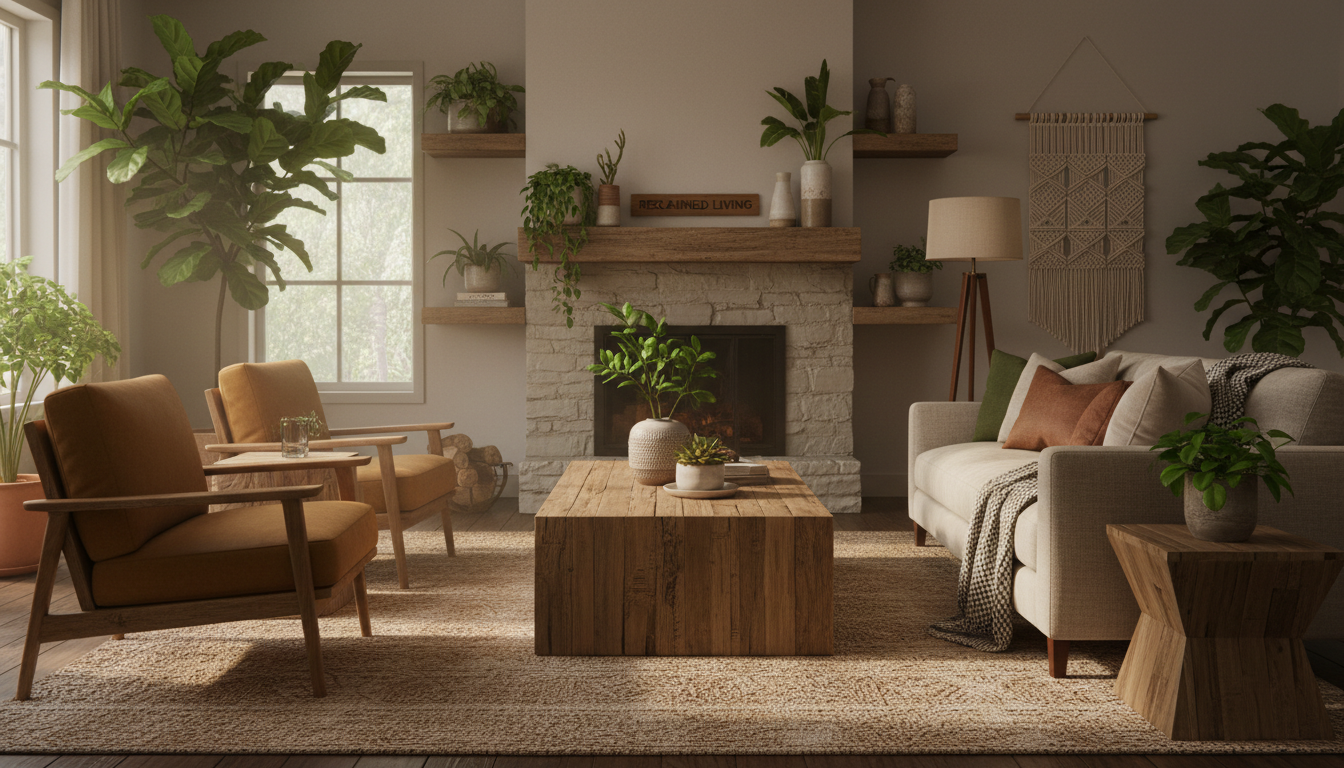
Table of Contents
- Why wood is the easiest win in a makeover
- Start with one anchor piece
- Mixing wood tones without the mess
- Building warmth around the wood
- Styling a small living room efficiently
- From the workshop to your floor
- The quiet case for reclaimed wood
- FAQs
- Where to go from here
Why wood is the easiest win in a makeover
Most makeovers stall because people try to change everything at once. New wall color, new sofa, new rug, new lamps suddenly it’s a project with a budget and a timeline and a lot of standing around in showrooms.
Wood short-circuits that. Swap one tired piece for a solid wood one, and the whole room recalibrates around it. A good wooden coffee table or sideboard doesn’t just fill a gap; it gives the eye somewhere to land. It sets a tone the rest of the room quietly follows.
Additionally, wood gains charm and richness as it gets older. That mass-produced particleboard unit looks its best on day one, and it’s downhill from there. A well-made wooden piece looks better in year five than it did in year one. You’re not decorating so much as investing.
Start with one anchor piece
If you take one thing from this, take this: pick a single anchor piece and build outward.
For most living rooms, that’s either the coffee table or a sideboard. Both sit in your line of sight the second you walk in, and both do a lot of visual heavy lifting. A chunky reclaimed teak coffee table can carry a room full of otherwise neutral furniture. A long sideboard against a bare wall solves storage and style in one move.
Resist the urge to buy a matching “set.” Matching sets are how living rooms end up looking like furniture store displays: technically coordinated and completely lifeless. One strong piece, chosen well, beats five safe ones.
Mixing wood tones without the mess
This is where people freeze up. They’ve got an oak floor and a walnut TV unit they inherited, and now they want to add a teak table, and they’re convinced it’ll clash.
It usually doesn’t. To make it work smoothly, stick to these simple guidelines:
Stick to two or three tones
Beyond that, the space can start to feel overcrowded. Pick a dominant tone, a secondary one, and maybe a small accent. That’s plenty.
Use one tone as a bridge
Repeat your main wood tone at least twice across the room say, the coffee table and a shelf. Repetition reads as intention. One lonely dark piece in a sea of light wood looks like a mistake; two look like a choice.
Let undertones do the matching, not the shade
Woods with warm undertones (teak, sheesham, and cherry) sit happily together even at different shades. Mixing a warm-toned piece with a cool, grey-washed one is where things start to feel off. Match the temperature, not the exact color.
Building warmth around the wood
Wood gives you the bones. The rest is layering.
Soften all that hard surface with texture: a chunky knit throw, a jute or wool rug, and linen cushions. The contrast between a smooth wooden tabletop and a rough woven rug is what makes both look better.
Lighting matters more than people think. Wood grain comes alive under warm, low light and goes flat under harsh white bulbs. Replace the cool LEDs with something in the 2700K range (that’s the warm, slightly golden end of the spectrum) and see the whole room come down.
And add something living. A trailing plant on the sideboard, a fern by the window. Green against wood is one of those pairings that just works every single time.
Styling a small living room efficiently
Small rooms and solid wood aren’t enemies; you just choose differently.
Go for pieces with visible legs rather than solid-to-the-floor blocks. Seeing the floor underneath tricks the eye into reading the room as bigger. Lean toward lighter wood tones, which bounce light instead of soaking it up. Utilize upward space: a sleek wooden shelf or wall shelf offers storage and visual interest without occupying your floor area.
One properly made piece in a small room does more than three cheap ones crammed in. Space is the luxury here; don’t fill it just because you can.
From the workshop to your floor
It’s easy to forget that furniture is made by someone. With most of what’s sold today, it genuinely isn’t; it’s cut by a machine, boxed by a machine, and shipped before anyone’s really touched it.
The journey of handmade solid wood furniture is one of patience and craftsmanship. It starts with reclaimed timber, old teak, and sheesham pulled from beams, doors, and structures that have already lived one life. That wood gets cleaned, sorted, and left to settle so it won’t warp once it’s in your home. Then it’s cut, joined, sanded by hand, and finished with oil that soaks into the grain rather than sitting on top of it.
Every step leaves a mark. A slightly different grain here, a knot the maker chose to keep there. By the time a piece reaches your living room, it’s already got history in it, and it’s about to start collecting yours.
The quiet case for reclaimed wood
Reclaimed wood earns its place for reasons beyond looks, though the looks are a big part of it.
The character is real and unfakeable: the small imperfections, the depth of an old grain, and the sense that this timber has been around. Each piece of wood has its own character, making every finished item one of a kind. Yours is genuinely yours.
There’s the environmental side too. Reusing old hardwood means no new tree comes down for your table, and old teak and sheesham are famously dense and durable, often tougher than freshly milled wood. You get a piece that lasts decades and a smaller footprint at the same time. That’s a rare combination.
You can see how that plays out across a full range of handmade reclaimed wood living room pieces if you want a feel for the variety.
FAQs
What type of wood is best for living room furniture?
Dense hardwoods like teak and sheesham are ideal; they’re durable, resist wear, and their grain looks richer over time. Reclaimed versions of these are often even sturdier than new stock.
How to mix wood tones in one room?
Stick to two or three tones, repeat your main one at least twice so it reads as deliberate, and match undertones (warm with warm) rather than exact shades.
Is reclaimed wood furniture durable?
Very. Reclaimed hardwood has already survived years of use and drying, which makes it dimensionally stable and less likely to warp or crack than younger timber.
How should I maintain solid wood furniture?
Wipe with a soft, slightly damp cloth, keep it out of direct harsh sunlight, and re-oil once or twice a year to keep the grain nourished. That’s genuinely all most pieces need.
Does wooden furniture work in small living rooms?
Yes, choose lighter tones, pieces with visible legs, and vertical storage. One well-made piece adds warmth without crowding the space.
Where to go from here
You don’t need a full renovation to make your living room feel different. Start with one honest wooden piece, a table, a sideboard, or something with a bit of weight to it, and let the room build itself around that.
If you’re after pieces with actual character rather than another flatpack box, it’s worth taking a slow look through a handmade reclaimed wood collection and seeing what catches your eye. No rush. The right piece will tend to make itself clear.