
Outdoor furniture gets a harder life than almost anything inside the house. Rain, direct sun, temperature swings, and in some climates, snow sitting on the surface for weeks at a time. A garden bench that looks beautiful in a showroom can start falling apart within a season or two outside if it wasn’t actually built with that exposure in mind.
The good news is that solid wood, specifically certain types, has been used for outdoor furniture for centuries precisely because it handles weather well when built and finished correctly. The key is knowing what to actually look for, since not every “outdoor” wood bench is equally prepared for the elements. Here’s what separates a garden bench that lasts for decades from one that needs replacing in a few years.
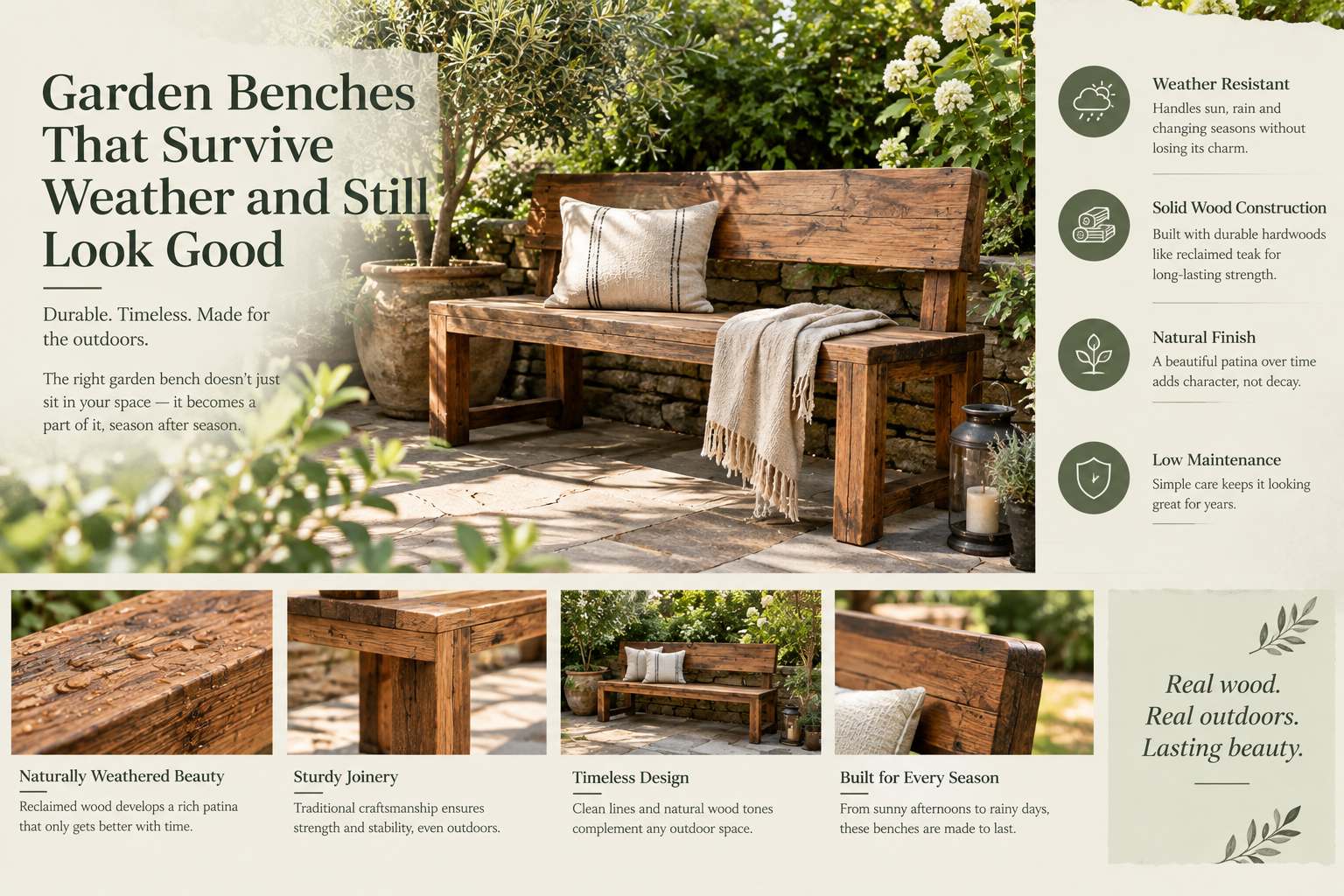
Table of Contents
- Why Some Woods Handle Weather Better Than Others
- What Makes Teak a Strong Outdoor Choice
- Finish: To Seal or Let It Weather Naturally
- Placement and Drainage Matter More Than People Realize
- Seasonal Care That Actually Extends Lifespan
- Signs a Bench Is Built for the Outdoors
- From Workshop to Garden: How These Benches Are Made
- A Note on Reclaimed Wood Outdoors
- FAQ
- Conclusion
Why Some Woods Handle Weather Better Than Others
Not all wood responds the same way to moisture and sun exposure. Softer woods and those with lower natural oil content tend to absorb water more readily, which leads to swelling, warping, and eventually rot if the furniture sits outside unprotected for long periods. Denser hardwoods with higher natural oil content resist that moisture absorption much more effectively, which is why certain wood species have been the standard choice for outdoor furniture for generations.
This difference matters most in climates with real seasonal variation, heavy rain, humid summers, or freezing winters, where a wider range of conditions tests furniture than in a consistently mild, dry climate.
What Makes Teak a Strong Outdoor Choice
Teak has a long-standing reputation as one of the best woods for outdoor furniture, and that reputation is rooted in its natural composition. Teak contains natural oils that make it inherently water-resistant and discourage rot, insects, and fungal growth, all without requiring heavy chemical treatment. This natural resistance is part of why teak furniture has historically been used in shipbuilding and other applications where constant moisture exposure was unavoidable.
That natural oil content also means teak can be left untreated outdoors and will develop a silvery-gray patina over time rather than degrading structurally. Whether that weathered look is desirable or something to prevent with regular oiling is largely a style preference rather than a durability concern, since the wood underneath stays structurally sound either way.
Finish: To Seal or Let It Weather Naturally
Garden bench owners generally choose one of two approaches. Letting teak weather naturally results in that recognizable silvery-gray finish, which many people actually prefer for an outdoor piece, since it ages evenly and doesn’t require ongoing maintenance to look intentional. Applying teak oil periodically, typically every few months during the outdoor season, maintains the original warm amber-brown tone, but it does require consistent reapplication to keep that look over time.
Neither approach affects the wood’s underlying durability significantly, since teak’s natural resistance to moisture and decay exists regardless of surface treatment. This comes down to aesthetic preference more than a practical durability decision.
Placement and Drainage Matter More Than People Expect
Even weather-resistant wood benefits from thoughtful placement. A bench sitting directly on wet grass or soil for extended periods takes on more moisture at the base than one placed on a hard, well-draining surface like a patio or deck. Where possible, position a garden bench on a stable, draining surface rather than directly on soil, and avoid low spots in the yard where water tends to pool after rain.
Partial shade or an overhang, where available, also reduces the intensity of direct sun exposure, which can help maintain the finish or natural tone longer, though it’s not strictly necessary for the wood’s structural durability.
Seasonal Care That Actually Extends Lifespan
A light cleaning once or twice a year with a soft brush and mild soapy water removes dirt and organic buildup that can otherwise trap moisture against the wood’s surface. For benches where you want to maintain the original wood tone rather than let it weather naturally, reapplying teak oil before and after the heaviest-use season helps protect the finish.
In climates with harsh winters, a breathable outdoor furniture cover can reduce snow and ice buildup on the surface, though solid teak generally doesn’t require covering to survive winter conditions the way lower-quality woods might.
Signs a Bench Is Built for the Outdoors
Beyond wood species, construction quality matters just as much for outdoor durability. Look for joinery, mortise-and-tenon joints or similar solid wood construction, rather than furniture held together primarily with screws or metal brackets, which can rust or loosen with repeated moisture exposure. Check hardware specifically: stainless steel or brass fittings resist corrosion far better than standard steel, which will rust visibly within a season or two outdoors.
A reclaimed teak wood garden bench built with traditional joinery and minimal metal hardware reflects this kind of outdoor-ready construction, relying on the wood’s natural strength and resistance rather than hardware that could fail over time.
From Workshop to Garden: How These Benches Are Built
A garden bench built to survive outdoor conditions takes more consideration during construction than an equivalent indoor piece. Builders working with reclaimed teak select boards specifically for density and grain quality, since the wood needs to hold up to years of direct weather exposure rather than the more controlled environment of an indoor room. Joinery gets built to accommodate natural wood movement from temperature and humidity swings, which outdoor furniture experiences more dramatically than anything kept inside.
A rustic reclaimed teak garden bench reflects that same construction approach, built with the understanding that it needs to hold its shape and strength through seasons of rain, sun, and temperature change, not just look good on delivery day.
A Note on Reclaimed Wood Outdoors
Reclaimed teak brings a particular advantage to outdoor furniture, since the wood has often already been exposed to years of environmental conditions in its previous life, which means much of its natural settling and adjustment has already occurred before it’s shaped into a new bench. Combined with teak’s inherent weather resistance, this makes reclaimed teak garden furniture a genuinely practical long-term choice rather than purely a stylistic one. If you’re furnishing an outdoor space and want seating built to actually hold up outside, it’s worth browsing a shop like Modern Karigar for reclaimed teak options.
FAQ
Does teak need to be sealed to survive outdoors?
No, teak’s natural oils make it inherently weather-resistant even without sealing, though regular oiling can help maintain its original color if you prefer that look over the natural gray patina.
How often should I oil an outdoor teak bench?
Roughly every few months during the active outdoor season if you want to maintain the original warm tone. If you’re fine with the natural silvery patina, oiling isn’t necessary for durability.
Is a gray, weathered look a sign the wood is deteriorating?
No. The silvery-gray patina teak develops over time is a surface-level natural change, not a sign of structural damage or decay.
Should I cover my garden bench in winter?
It’s not strictly necessary for solid teak, though a breathable cover can reduce buildup in climates with heavy snow or ice.
Is reclaimed teak as durable outdoors as new teak?
Yes, generally. Reclaimed teak retains the same natural oil content and density, and its prior exposure and aging can actually contribute to its stability.
Conclusion
A garden bench built to survive weather comes down to the right wood, solid joinery, and corrosion-resistant hardware, more than any particular style or finish. Teak, especially reclaimed teak, checks all of those boxes naturally, holding up to rain, sun, and seasonal changes without demanding constant upkeep. If you’re furnishing an outdoor space and want a bench that looks good now and still holds up in a few years, it’s worth looking closely at the wood and construction before you buy.