
Small bedrooms have a specific kind of storage problem: there’s rarely space for a full dresser and a closet system and a nightstand and everything else a bedroom is supposed to hold, so something usually gets sacrificed, and it’s often storage. Clothes end up in bins under the bed, or a closet gets so overloaded that half of it becomes unreachable.
A well-chosen drawer chest solves more of this than people expect, mostly because chests are built to maximize storage within a narrow footprint, which is exactly the constraint a small bedroom deals with. The trick is choosing the right proportions and placement, not just grabbing the smallest chest available and hoping it fits. Here’s how to truly make it work.
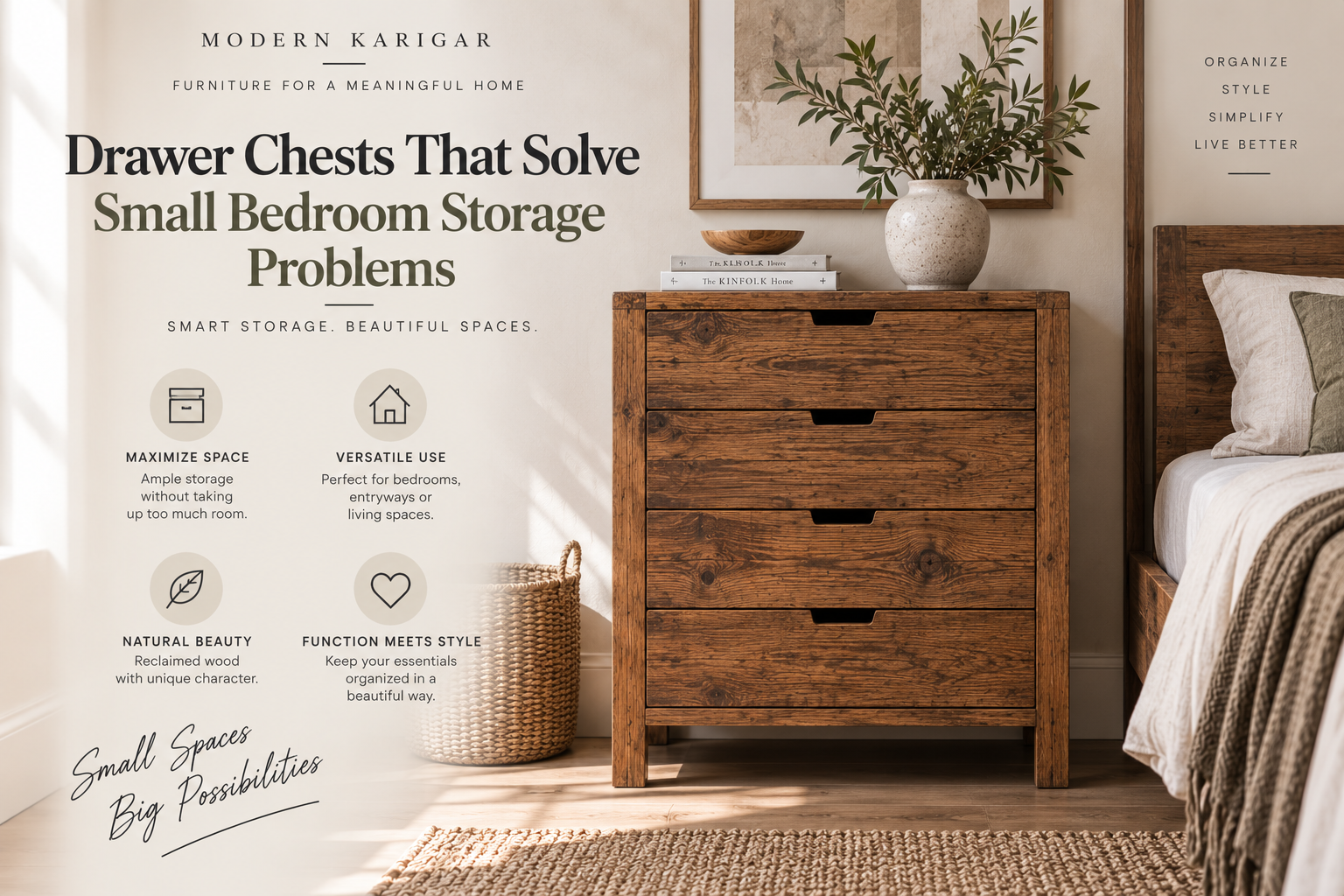
Table of Contents
- Why a Drawer Chest Solves Small Bedroom Storage Better Than a Dresser
- Measuring Your Space Correctly
- Drawer Count and Depth: What Actually Matters
- Placement Ideas for Tight Bedrooms
- Choosing a Style That Doesn’t Overwhelm the Room
- Maximizing What’s Inside
- From Workshop to Bedroom: How These Chests Are Made
- A Note on Reclaimed Wood in Bedroom Storage
- FAQ
- Conclusion
Why a Drawer Chest Solves Small Bedroom Storage Better Than a Dresser
Dressers are typically wider and shallower, built to spread storage across a horizontal surface that also serves as display space for a mirror or decor. That footprint doesn’t work in a lot of small bedrooms, where wall length is limited and every inch of floor space matters.
Chests are built the opposite way: narrower and taller, stacking storage vertically instead of spreading it horizontally. That makes them a better fit for small rooms, since they take up significantly less floor space while often holding a comparable amount of clothing, especially folded items that don’t need to hang.
Measuring Your Space Correctly
Before shopping, measure the actual wall space you’re considering, not just an estimate. A chest under 36 inches wide fits most small bedroom walls without dominating the room, and depth matters more than people expect: anything under 18 inches deep leaves enough walking clearance in a tight room, while anything deeper starts to eat into usable floor space.
Also check the swing clearance for any nearby doors, closets, or drawers on adjacent furniture. A chest that fits the wall but blocks a door from opening fully creates a daily annoyance that’s easy to miss during a quick measurement.
Drawer Count and Depth: What Actually Matters
More drawers isn’t automatically better in a small bedroom. A chest with five or six shallower drawers organizes clothing into more specific categories, such as socks, underwear, and folded shirts, but it also means more individual drawer fronts taking up the same vertical space that fewer, deeper drawers could use more efficiently.
For most small bedrooms, four to five drawers of moderate depth strike a reasonable balance: enough separation to keep categories organized, without so many drawers that each one becomes too shallow to hold much. If you fold bulkier items like sweaters, prioritize at least one or two deeper drawers rather than uniform shallow ones throughout.
Placement Ideas for Tight Bedrooms
Behind the Door
An often-overlooked wall, the space behind a door when it’s fully open, can fit a narrow chest if the door doesn’t swing past 90 degrees. This works especially well for chests under 30 inches wide.
At the Foot of the Bed
A low, wide chest at the foot of a bed can double as a bench-like surface while adding storage, provided there’s enough clearance left to walk around the bed comfortably.
In an Unused Corner
Corners often go unused in small bedrooms because most furniture is built for flat walls. A narrower chest, angled slightly or placed flush against one wall of the corner, can use that dead space without disrupting the room’s flow.
Choosing a Style That Doesn’t Overwhelm the Room
In a small room, a chest with simple, minimal hardware tends to feel less visually heavy than one with elaborate detailing, even at the same physical size. Straight lines and a clean silhouette read as more compact than they actually are, while ornate carving or bulky hardware can make even a modestly sized chest feel like it’s taking over the room.
Wood tone matters here too. A lighter or medium wood tone against light walls tends to keep a small room feeling open, while a very dark chest against light walls can look striking but also visually heavier, worth considering if the room already feels tight.
Maximizing What’s Inside
Drawer dividers and small fabric bins inside each drawer make a meaningful difference in how much a chest can actually hold, since loose items shift and waste space over time without some kind of internal organization. Rolling clothes instead of folding them flat can also increase usable capacity in a drawer by a noticeable margin, particularly for casual clothing like t-shirts and leggings.
From Workshop to Bedroom: How These Chests Are Made
A solid wood drawer chest starts as reclaimed timber, sorted by hand for grain and stability before any cutting begins. Builders account for the specific structural demands a chest faces: drawers that need to glide smoothly under repeated daily use and joinery strong enough to support the weight of filled drawers without warping the frame over time.
That kind of construction takes longer than a mass-produced chest built from engineered board and machine-cut joints, but it results in drawers that continue to operate smoothly years into daily use, rather than sticking or loosening the way lower-quality furniture often does.
A Note on Reclaimed Wood in Bedroom Storage
Reclaimed wood brings genuine advantages to bedroom storage furniture specifically. It tends to be denser and more stable than newly milled lumber, which matters for drawers that need to hold weight and slide smoothly for years without warping. It also carries visible grain and natural character, which turns a purely functional piece into something with real visual presence in a room. A piece like this mid-century reclaimed teak chest of drawers brings both of those qualities to a small bedroom that needs storage without sacrificing style, and a similarly built reclaimed teak wood dresser works well if a slightly wider, lower profile suits the room better.
FAQ
What’s the ideal chest width for a small bedroom?
Under 36 inches wide generally fits most small bedroom walls without dominating the room, though it’s worth measuring your specific wall space before deciding.
How many drawers should a small bedroom chest have?
Four to five drawers of moderate depth usually balances organization and storage capacity better than more numerous, shallower drawers in a limited vertical space.
Can a chest fit behind a door in a small bedroom?
Yes, if the chest is narrow enough and the door doesn’t swing past 90 degrees, that wall space is often unused and can fit a chest under 30 inches wide.
Is reclaimed wood durable enough for daily drawer use?
Yes. Reclaimed wood tends to be more stable than newer lumber, which helps drawers continue to glide smoothly and resist warping over years of regular use.
Should I choose a lighter or darker wood tone for a small bedroom?
Lighter to medium tones tend to keep a small room feeling open, especially against light walls, while darker tones can look striking but add more visual weight to the space.
Conclusion
A small bedroom doesn’t need less storage; it needs storage that’s shaped to fit the space correctly. A well-proportioned drawer chest, measured carefully and placed thoughtfully, can solve more of the problem than people expect from a single piece of furniture. If your bedroom storage has felt like a losing battle, it might be worth starting with the right chest rather than adding more bins and organizers to a system that was never going to hold everything.