
Every beautiful piece of reclaimed wood furniture has a story that began long before it entered a living room or dining space. Unlike newly harvested timber, reclaimed wood carries decades, sometimes centuries, of history within its grain. It may have once supported an old farmhouse, formed part of a railway sleeper, or stood proudly in a historic building before finding a second life as handcrafted furniture.
Today, homeowners, interior designers, and furniture enthusiasts are embracing reclaimed wood not only for its environmental benefits but also for its unmatched character. Each knot, weathered mark, and natural variation tells a story that cannot be recreated by mass-produced furniture.
In this guide, we’ll explore the fascinating journey of reclaimed wood from forgotten timber to luxurious handmade furniture and discover why these timeless pieces continue to gain popularity in modern interior design.
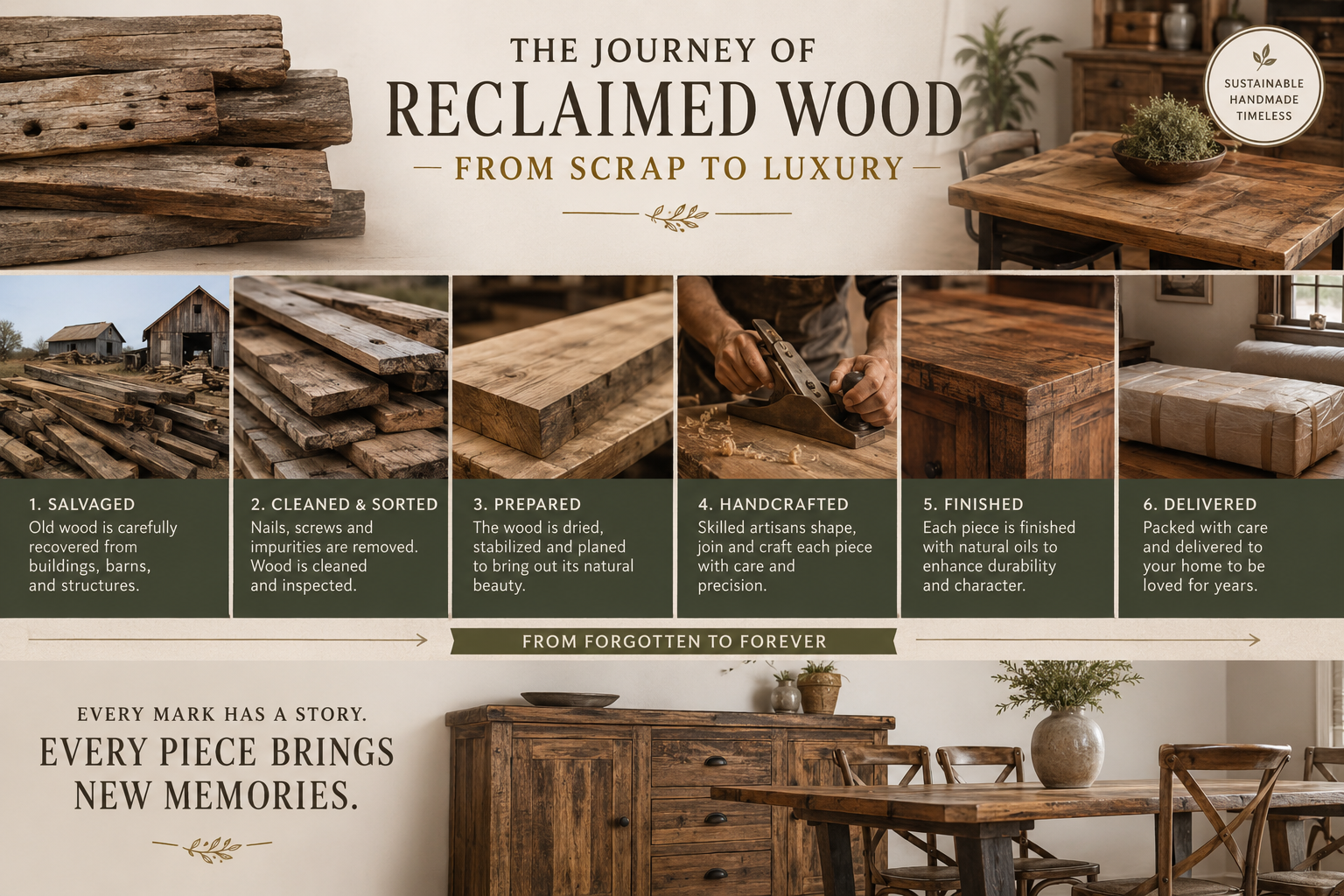
Table of Contents
- What Is Reclaimed Wood?
- Why Reclaimed Wood Is Worth Saving
- The Journey Begins: Recovering Forgotten Timber
- Preparing Reclaimed Wood for Furniture
- The Art of Handmade Craftsmanship
- From Workshop to Your Home
- Why Every Piece Is Truly One of a Kind
- Design Ideas for Reclaimed Wood Furniture
- Caring for Reclaimed Wood Furniture
- FAQ
- Conclusion
What Is Reclaimed Wood?
Reclaimed wood refers to timber recovered from old buildings, warehouses, barns, factories, bridges, shipping structures, and other wooden constructions that have reached the end of their original purpose.
Instead of being discarded, burned, or sent to landfills, this valuable wood is carefully salvaged and transformed into furniture and home décor.
Unlike freshly milled lumber, reclaimed wood often comes from mature trees that grew slowly over many decades, resulting in dense, durable timber with exceptional strength.
Why Reclaimed Wood Is Worth Saving
Sustainability Without Sacrificing Beauty
One of the biggest reasons reclaimed wood has become so desirable is its positive environmental impact.
By giving old timber a second life, reclaimed wood helps:
- Reduce unnecessary tree harvesting
- Minimize construction waste
- Lower landfill contributions
- Preserve natural resources
- Promote sustainable manufacturing practices
Choosing reclaimed wood furniture is often considered one of the easiest ways to introduce environmentally responsible design into a home without compromising on aesthetics.
Character That Cannot Be Manufactured
Fresh timber is beautiful, but reclaimed wood possesses something far more unique: history.
Natural imperfections such as
- Weathered textures
- Nail marks
- Grain variation
- Color changes
- Small knots
- Time-earned patina
create visual depth that simply cannot be replicated through artificial distressing techniques.
The Journey Begins: Recovering Forgotten Timber
Step 1: Careful Salvaging
The journey starts with recovering usable wood from old structures scheduled for demolition or renovation.
Rather than treating the material as waste, experienced workers carefully dismantle beams, planks, and wooden components to preserve as much usable timber as possible.
Each piece is inspected for structural quality before moving to the next stage.
Step 2: Cleaning and Inspection
Recovered timber often contains:
- Old nails
- Screws
- Dust
- Paint residue
- Surface dirt
Every board undergoes thorough cleaning and metal detection to remove hidden fasteners that could damage woodworking equipment.
The wood is then inspected for cracks, stability, moisture levels, and overall integrity.
Preparing Reclaimed Wood for Furniture
Before reclaimed timber becomes furniture, it requires careful preparation.
Drying and Stabilization
Proper moisture control helps ensure long-term durability.
The wood is dried until it reaches suitable moisture levels, reducing the likelihood of future movement or cracking once it becomes furniture.
Selecting the Best Boards
Every reclaimed plank has its own personality.
Furniture makers select boards based on:
- Grain patterns
- Color consistency
- Structural strength
- Desired furniture style
This thoughtful selection process ensures that each finished piece showcases the wood’s natural beauty.
The Art of Handmade Craftsmanship
Machines can cut wood, but craftsmanship gives reclaimed timber its soul.
Skilled artisans carefully shape, join, sand, and finish every component while respecting the natural characteristics of the material.
Unlike factory-produced furniture, handmade reclaimed wood furniture embraces natural variations rather than hiding them.
This approach results in furniture that feels authentic, warm, and timeless.
Many craftsmen also preserve distinctive features like aged grain patterns or subtle imperfections that celebrate the wood’s previous life instead of erasing it.
From Workshop to Your Home
The final stage of reclaimed wood’s journey is perhaps the most rewarding.
Once craftsmanship is complete, each furniture piece is carefully inspected, finished, and prepared for shipping.
Protective packaging helps ensure the furniture arrives safely, ready to become part of everyday life.
Whether it’s a dining table where families gather, a console table welcoming guests, or handcrafted seating that becomes a favorite reading spot, reclaimed wood begins an entirely new chapter.
Over time, it continues collecting memories of family dinners, celebrations, conversations, and everyday moments that make a house feel like home.
Why Every Piece Is Truly One of a Kind
Mass-produced furniture often looks identical.
Reclaimed wood furniture never does.
Each piece differs because every original timber board has experienced unique weather conditions, aging patterns, and historical use.
No two grain patterns are exactly alike.
No two natural markings are identical.
This individuality gives reclaimed wood furniture its lasting appeal, making every piece feel genuinely personal.
Design Ideas for Reclaimed Wood Furniture
Rustic Farmhouse Interiors
Weathered reclaimed wood pairs beautifully with neutral colors, linen fabrics, and vintage-inspired décor.
Modern Minimalist Homes
Natural wood textures soften clean architectural lines while adding warmth to contemporary spaces.
Industrial Design
Combine reclaimed wood with black steel frames for a balanced industrial aesthetic.
Scandinavian Style
Light interiors become warmer and more inviting when accented with natural reclaimed wood furniture.
Hospitality & Commercial Spaces
Restaurants, cafés, hotels, and boutique offices increasingly use reclaimed wood furniture to create welcoming, memorable environments.
Caring for Reclaimed Wood Furniture
Proper care helps reclaimed wood maintain its beauty for years.
Simple maintenance includes:
- Dust regularly with a soft cloth.
- Clean spills promptly.
- Avoid prolonged standing water.
- Keep furniture away from excessive direct sunlight.
- Maintain consistent indoor humidity.
- Use coasters and placemats for added protection.
- Refresh the finish when recommended by the maker.
With proper care, reclaimed wood furniture often becomes even more beautiful as it naturally ages.
Handmade Reclaimed Wood Furniture: Why It Matters
Choosing handmade reclaimed wood furniture means investing in craftsmanship rather than mass production.
Each piece reflects careful planning, skilled woodworking, and thoughtful material selection. Instead of producing identical items in large quantities, artisans work with the natural characteristics of reclaimed timber to create furniture that celebrates individuality.
Whether it’s a handcrafted dining table, a rustic coffee table, or a beautifully finished stool, handmade reclaimed wood furniture brings warmth, authenticity, and lasting value to interiors while extending the life of remarkable materials.
For readers looking to explore examples of handcrafted reclaimed wood seating, product references can fit naturally within discussions of kitchen seating or rustic décor, such as a reclaimed teak counter stool or a handcrafted solid oak stool.
FAQ
Is reclaimed wood stronger than new wood?
In many cases, yes. Older reclaimed timber often comes from mature trees with denser grain structures, making it exceptionally durable.
Does reclaimed wood require special maintenance?
Not usually. Routine dusting, prompt cleaning of spills, and avoiding excessive moisture are generally sufficient.
Why does reclaimed wood have different colors?
Natural aging, weather exposure, previous finishes, and the wood species all contribute to its distinctive color variations.
Is reclaimed wood furniture sustainable?
Yes. Reusing existing timber reduces waste and helps conserve forests by decreasing demand for newly harvested wood.
Why is every reclaimed wood furniture piece unique?
Because every reclaimed board has a different history, no two pieces share identical grain patterns, textures, or markings.
Conclusion
The journey of reclaimed wood is one of transformation, craftsmanship, and renewal. What begins as forgotten timber can become a beautiful piece of furniture that serves a new purpose for generations to come.
Beyond its environmental benefits, reclaimed wood offers something increasingly rare in today’s world authenticity. Every mark, grain, and texture tells a story that cannot be manufactured.
If you’re designing a home or selecting furniture that combines lasting quality with timeless character, handmade reclaimed wood furniture offers a meaningful way to bring history, sustainability, and craftsmanship into everyday living. Explore thoughtfully crafted reclaimed wood collections to find pieces that fit your space while continuing the remarkable journey of reclaimed timber.