
Boho and rustic get lumped together a lot, and it’s easy to see why; both styles lean into natural materials, both avoid anything too polished or corporate-feeling, and both photograph well with a few plants and warm light. But they’re not actually the same thing, and mixing them without a plan usually ends up looking like two different rooms got shoved into one.
Done well, though, boho and rustic complement each other better than almost any other style pairing. Rustic brings structure and weight, solid wood, straightforward joinery, and a sense of permanence. Boho brings texture and looseness, layered textiles, mixed patterns, and a room that feels collected rather than furnished all at once. The trick is knowing which elements to borrow from each and where to draw the line before it turns into visual noise. Here’s how to actually do that.
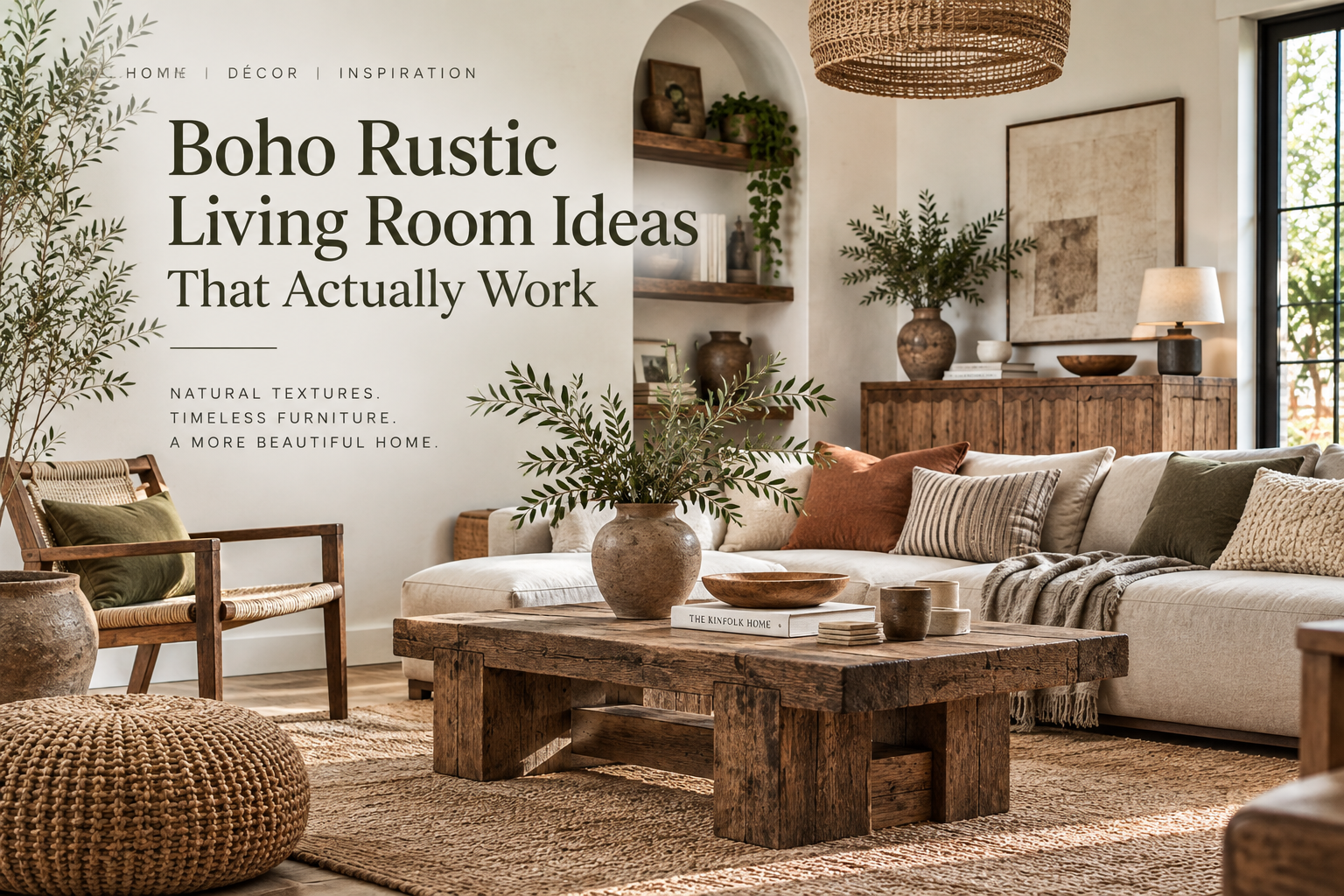
Table of Contents
- What Separates Boho From Rustic (and Why That Matters)
- The Anchor Piece Rule
- Texture Layering Without Overload
- Color Palette: Where the Two Styles Actually Agree
- Mixing Patterns Without It Looking Chaotic
- Common Mistakes That Cause the Clash
- From Workshop to Living Room: Where the Wood Comes From
- A Note on Reclaimed Wood as the Bridge Between Styles
- FAQ
- Conclusion
What Separates Boho From Rustic (and Why That Matters)
Rustic design is built around structure. Think farmhouse tables, exposed beams, straightforward wood furniture with visible joinery, and minimal ornamentation. It’s a style rooted in function first, decoration second.
Boho is the opposite instinct. It’s built around collection and texture, woven baskets, layered rugs, macramé, mismatched cushions, and plants that spill over their pots. Where rustic is about restraint, boho is about abundance, just not the shiny, maximalist kind.
Understanding that difference matters because it tells you where each style should do the heavy lifting in a room. Rustic works best as the bones, furniture, structure, and the pieces that don’t move. Boho works best as the layer on top of textiles, greenery, and the things that get swapped out seasonally. Treat it the other way around, with boho furniture and rustic accessories, and the room usually feels unfinished rather than intentional.
The Anchor Piece Rule
Every room that successfully mixes boho and rustic has one clear anchor: usually a solid wood piece, a dining table, a console, or a bed frame, that sets the tone before anything else gets added. That anchor should lean rustic, not boho, because furniture with real structure and weight is what keeps a room with a lot of loose texture from feeling scattered.
Once the anchor is in place, everything else gets built around it. A rustic reclaimed wood table with a woven jute rug underneath and a cluster of pampas grass on top is boho layered onto a rustic foundation, and that order matters. Flip it, with a boho rattan table as the anchor and rustic accessories layered on, and the room reads as less cohesive, because there’s no single structural piece holding the eye.
Texture Layering Without Overload
Start With Two Textures, Not Five
A common mistake is trying to include every boho texture at once, rattan, macramé, jute, chunky knits, and woven leather, in a single room. Pick two, maybe three, and repeat them across different pieces instead of introducing a new texture with every object.
Let Wood Grain Count as a Texture
Solid wood furniture, especially reclaimed pieces with visible grain and natural variation, already brings texture to the room on its own. That means you need less added texture elsewhere to avoid the space feeling overloaded; the wood is doing some of that work already.
Balance Rough With Smooth
Rustic wood tends to be rough or matte in finish; boho textiles are often nubby or woven. Balance that with at least one smooth element in the room, a ceramic vase, or a glass pendant light, so the whole space doesn’t read as one uniform texture from every angle.
Color Palette: Where the Two Styles Actually Agree
This is the easiest part to get right, because rustic and boho palettes overlap more than people expect. Both lean toward warm neutrals: terracotta, cream, sand, deep amber wood tones, and sage or olive green as an accent. Where they diverge is saturation; boho tends to introduce a bit more color through textiles (a patterned rug, a dyed throw), while rustic stays closer to natural, undyed material.
The safest approach is letting the wood tone set the base palette, then adding boho color through textiles that stay in the same warm family. A cool-toned blue rug or a bright synthetic color breaks the palette faster than almost anything else in the room.
Mixing Patterns Without It Looking Chaotic
Boho leans on pattern more than rustic does, but pattern needs boundaries in a mixed room. A good rule: one dominant pattern (a patterned rug, for instance) and everything else stays solid or subtly textured rather than patterned. Adding a second bold pattern, a patterned pillow next to a patterned rug, usually competes rather than complements, especially in a smaller room where both are visible at once.
Common Mistakes That Cause the Clash
The most common failure point is treating the two styles as equal partners in every part of the room instead of letting one lead. A room that’s 50/50 boho and rustic in every corner tends to look indecisive rather than blended. The stronger approach is roughly 60/40 in favor of whichever style suits the room’s actual function: rustic-leaning in a dining room built around a solid wood table, boho-leaning in a reading nook built around texture and softness.
The second common mistake is skipping the anchor piece altogether and building the room entirely out of smaller boho accessories. Without one substantial piece of furniture grounding the space, the room can end up feeling like a display of objects rather than a lived-in room.
From Workshop to Living Room: Where the Wood Comes From
The rustic anchor piece in a boho-rustic room usually starts as reclaimed timber, wood that’s already lived a full life somewhere else, in an old structure, a boat, or a piece of furniture that had reached the end of its use. That wood gets sorted by hand for grain and stability, then shaped, joined, and finished individually rather than run through a single automated process.
That slower process is part of why a handmade rustic piece works so well as an anchor in a mixed-style room. The grain variation, the visible joinery, and the slightly imperfect finish, all of it reads as intentional character rather than a flaw, which is exactly the quality a boho-leaning room is already built to appreciate.
A Note on Reclaimed Wood as the Bridge Between Styles
Reclaimed wood sits naturally between rustic structure and boho texture, which is part of why it works so well as the anchor in a mixed room. It has the weight and permanence rustic design calls for, but the natural grain variation and slightly irregular character give it a handmade, collected feel that fits right alongside boho textiles instead of fighting them. If you’re building a room around this pairing, it’s worth browsing a shop like Modern Karigar for reclaimed wood pieces that can carry that anchor role without looking too polished or too rough.
FAQ
Can boho and rustic really work in the same room without clashing?
Yes, as long as one style leads. Let a solid wood anchor piece set a rustic foundation, then layer boho texture and color on top rather than treating both styles as equal.
What’s the biggest mistake people make mixing these two styles?
Trying to include every element of both styles at once. Limiting texture to two or three types and pattern to one dominant piece keeps the room from feeling chaotic.
Does reclaimed wood furniture fit better with boho or rustic?
Both, which is part of why it works so well as a bridge. The structure suits rustic design, while the natural grain variation and imperfect character align with boho’s love of collected, textured pieces.
What colors work best for a boho-rustic mix?
Warm neutrals, terracotta, cream, sand, olive, work well as a shared base, since both styles tend to lean warm rather than cool.
Should I choose rustic or boho lighting for a mixed room?
Lean toward simple, warm-toned fixtures rather than heavily styled boho pendants or rustic wrought iron. Neutral lighting lets the furniture and textiles carry the style instead of competing with it.
Conclusion
Boho and rustic aren’t opposites, but they do need a clear hierarchy to work together in the same room. Let a solid wood piece anchor the space, layer in texture and warmth without overloading it, and keep the palette in the same warm family throughout. Get that balance right, and the room ends up feeling collected rather than mismatched. If you’re planning a space built around this kind of pairing, it’s worth starting with the anchor piece and building outward from there.