
Wooden furniture is more than just a functional addition to your home. It brings warmth, character, and timeless appeal to every space. Whether it’s a dining table where families gather, a handcrafted coffee table that becomes the centerpiece of your living room, or a solid wood bed built to last generations, proper care plays a significant role in preserving its beauty.
Unlike synthetic materials, real wood continues to respond to its environment. Changes in humidity, direct sunlight, accidental spills, and daily use can all affect its appearance over time. The good news is that with a few simple habits and preventive measures, you can keep your wooden furniture looking beautiful for decades.
This guide shares practical tips that homeowners, interior designers, and furniture buyers can use to protect wooden furniture from everyday damage while preserving its natural charm.
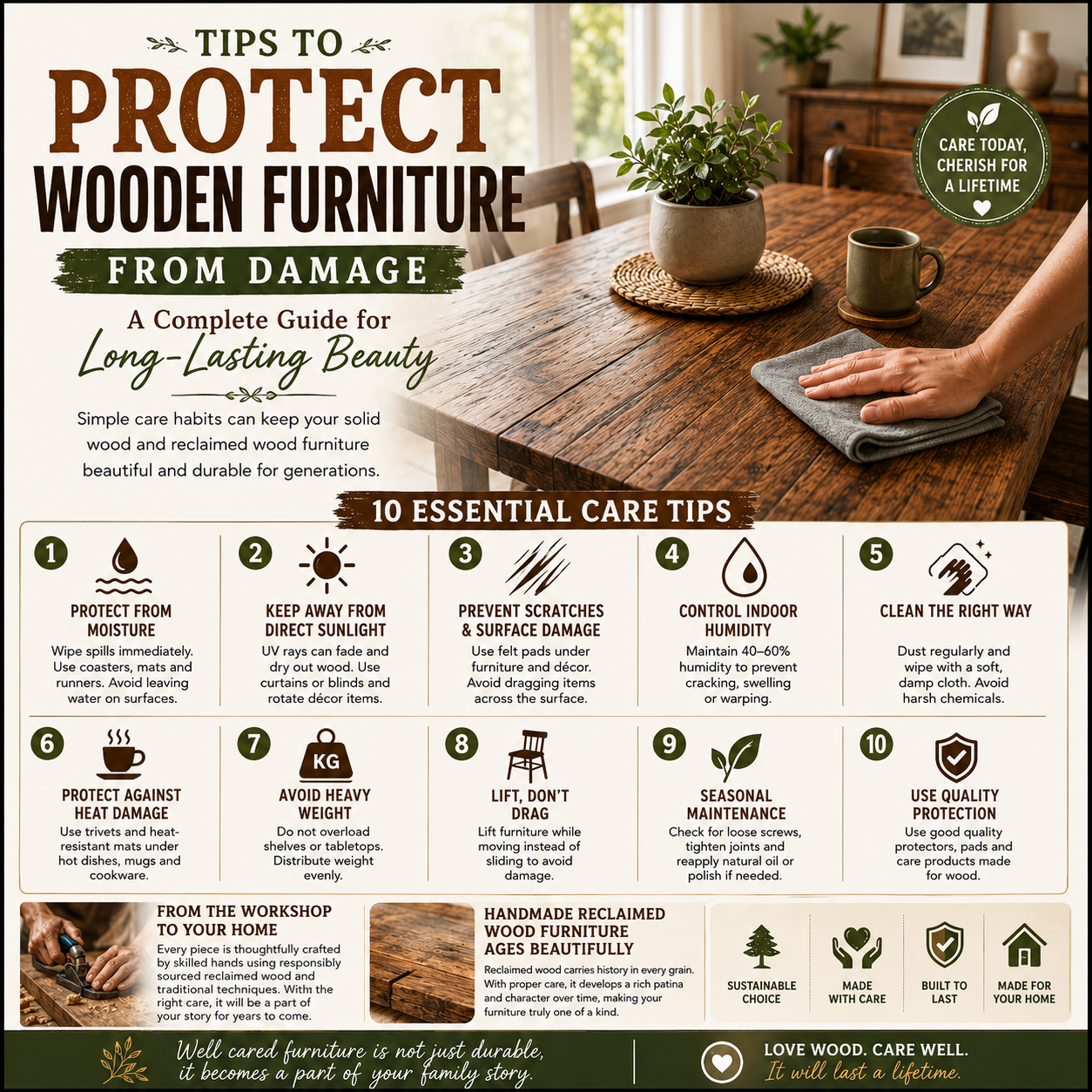
Table of Contents
- Why Wooden Furniture Needs Protection
- Protect Furniture from Moisture
- Keep Furniture Away from Direct Sunlight
- Prevent Scratches and Surface Damage
- Control Indoor Humidity
- Clean Wooden Furniture the Right Way
- Protect Against Heat Damage
- Avoid Heavy Weight and Dragging
- Seasonal Maintenance Tips
- From the Workshop to Your Home
- Why Handmade Reclaimed Wood Furniture Ages Beautifully
- Frequently Asked Questions
- Conclusion
Why Wooden Furniture Needs Protection
Solid wood is a natural material. Even after being transformed into furniture, it continues to expand and contract slightly as humidity and temperature change.
Without proper care, wooden furniture may experience:
- Surface scratches
- Water rings and stains
- Fading from UV rays
- Minor cracks caused by dry air
- Loose joints from excessive movement
- Dull finishes over time
Fortunately, most of these issues are preventable with regular maintenance and thoughtful everyday use.
Protect Furniture from Moisture
Wood furniture is greatly threatened by moisture.
Water that sits on the surface for extended periods can leave white rings, cause discoloration, or even cause the wood to swell. Kitchens, dining areas, and patios often expose furniture to accidental spills.
Best Practices
- Use a soft, dry cloth to promptly remove any spills.
- Always use coasters under glasses and mugs.
- Place mats beneath flower pots.
- Use table runners or placemats during meals.
- Avoid leaving wet cleaning cloths on wooden surfaces.
Small daily habits can prevent permanent damage.
Keep Furniture Away from Direct Sunlight
Natural sunlight brightens a room, but prolonged UV exposure gradually changes the color of wood.
Some species become lighter, while others darken unevenly over time. Continuous sunlight may also dry the finish, making it appear faded.
Ways to Reduce Sun Damage
- Position furniture away from south-facing windows whenever possible.
- Install curtains or UV-filtering blinds.
- Rotate decorative objects occasionally to prevent uneven fading.
- Rearrange furniture every few months if only one side receives sunlight.
These simple adjustments help maintain an even, natural appearance.
Prevent Scratches and Surface Damage
Daily use often causes more damage than major accidents.
Moving decorative items, sliding plates across a dining table, or dragging chairs can leave fine scratches that accumulate over the years.
Easy Prevention Tips
Use Protective Pads
Attach felt pads beneath:
- Dining chairs
- Side tables
- Benches
- Decorative accessories
Avoid dragging furniture.
Lift furniture instead of sliding it across floors. This protects both the furniture and your flooring.
Keep Sharp Objects Away
Keys, metal décor, ceramic bottoms, and rough pottery can scratch wood finishes unexpectedly.
Control Indoor Humidity
Wood naturally absorbs and releases moisture from the surrounding air.
Extreme humidity causes expansion, while overly dry environments may lead to shrinking or minor cracking.
The ideal indoor humidity level generally falls between 40% and 60%.
Helpful Tips
- Use a humidifier during dry winters.
- Run a dehumidifier in humid climates.
- Maintain steady indoor temperatures.
- Avoid placing furniture directly beside heaters or air-conditioning vents.
A stable indoor environment helps solid wood remain structurally sound for many years.
Clean Wooden Furniture the Right Way
Cleaning doesn’t have to be complicated.
In fact, excessive polishing or using harsh chemicals often causes more harm than good.
Weekly Cleaning Routine
- Dust with a microfiber cloth.
- Clean using a lightly damp cloth when necessary.
- Dry immediately with a soft towel.
- Avoid abrasive scrubbers.
Products to Avoid
- Bleach
- Ammonia-based cleaners
- Strong household chemicals
- Excessive water
- Silicone-heavy sprays
Using gentle cleaning methods preserves both the finish and the natural grain.
Protect Against Heat Damage
Hot cookware, coffee mugs, and serving dishes can leave permanent marks on wooden surfaces.
Heat softens certain finishes and may create white rings or discoloration.
Use Protective Accessories
- Trivets
- Heat-resistant mats
- Table runners
- Cork pads
These inexpensive accessories can significantly extend the life of dining tables and coffee tables.
Avoid Heavy Weight and Dragging
Although solid wood furniture is exceptionally durable, placing excessive weight on unsupported sections can create unnecessary stress.
Avoid:
- Standing on tables
- Overloading shelves
- Dragging loaded cabinets
- Leaning heavily on extended table edges
Even sturdy furniture performs best when weight is evenly distributed.
Seasonal Maintenance Tips
Wood reacts differently throughout the year.
During Summer
- Increase ventilation.
- Watch for excess humidity.
- Keep furniture away from intense afternoon sunlight.
During Winter
- Maintain indoor humidity.
- Avoid placing furniture close to fireplaces.
- Dust more frequently as indoor air becomes drier.
Every Six Months
Inspect your furniture for:
- Loose hardware
- Minor scratches
- Dry finishes
- Wobbling legs
Addressing small issues early prevents larger repairs later.
From the Workshop to Your Home
Every handcrafted wooden piece begins long before it arrives in your living room.
The journey begins with selecting the finest timber, continuing with intentional design, skilled craftsmanship in joinery, thorough sanding, and hand-finishing touches. Each stage contributes to the furniture’s strength, durability, and unique character.
Once the furniture reaches your home, proper care becomes the next chapter of its story. Everyday maintenance, such as cleaning gently, protecting surfaces, and maintaining a stable indoor environment, helps preserve the craftsmanship invested during production.
Well-maintained furniture doesn’t simply last longer; it develops a richer appearance over time, reflecting years of everyday life and meaningful moments.
Why Handmade Reclaimed Wood Furniture Ages Beautifully
Handmade reclaimed wood furniture possesses qualities that mass-produced alternatives often cannot replicate.
Because reclaimed wood has already matured over many years, it offers distinctive grain patterns, natural texture, and a unique history. Small knots, subtle variations in color, and naturally occurring imperfections contribute to its authentic character rather than diminishing its beauty.
With proper care, reclaimed wood furniture often develops an attractive patina instead of simply showing wear. Gentle maintenance allows these pieces to evolve gracefully, making them an excellent choice for homeowners who appreciate craftsmanship, sustainability, and timeless design.
Rather than chasing perfection, reclaimed wood celebrates individuality; each piece tells a story that continues with every home it becomes part of.
FAQ
How often should I clean wooden furniture?
Dust weekly and clean with a lightly damp microfiber cloth whenever needed. Avoid allowing dirt or spills to remain on the surface for extended periods.
Can sunlight permanently damage wooden furniture?
Yes. Continuous exposure to direct sunlight can fade finishes, alter wood color, and dry out protective coatings. Curtains or UV-filtering window treatments help reduce this effect.
Is Reclaimed wood furniture difficult to maintain?
Not at all. It requires the same routine care as other solid wood furniture: regular dusting, prompt spill cleanup, and protection from excessive moisture, heat, and direct sunlight.
Should I use furniture polish regularly?
Only when recommended by the manufacturer. Overusing polish can create buildup that dulls the natural finish over time.
How can I prevent water rings?
Always use coasters, wipe spills immediately, and avoid placing wet objects directly on wooden surfaces.
Conclusion
Wooden furniture is designed to be enjoyed for years, but its longevity depends on thoughtful care. Protecting it from moisture, sunlight, scratches, heat, and changing humidity doesn’t require complicated routines—just a few consistent habits that become part of everyday living.
Whether you’re furnishing a new home, designing an interior space, or investing in handmade solid wood furniture, proper maintenance helps preserve both its appearance and structural integrity. Pieces crafted from reclaimed wood are especially rewarding to own, developing even more character as they age with care.
If you’re exploring handcrafted solid wood furniture, take the time to understand how it’s made and how to care for it. A well-crafted piece deserves thoughtful maintenance, and in return, it can remain a beautiful part of your home for generations.